

Dr Manmeet Motan, Dr. Mandeep Singh Azad
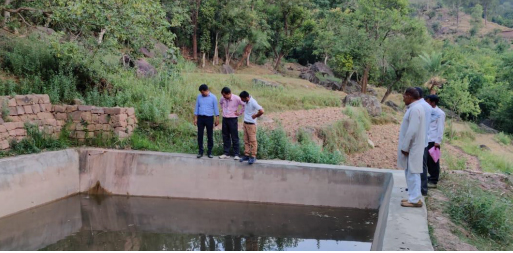
Recently while interacting directly with farmers during 15 days Viksit Krishi Sampark Abhiyan in district Udhampur the main problem being faced by the farmers of Ramnagar, Udhampur, Dudu and adjoining areas was extreme water scarcity for farming fields which has led to decrease in production as well as returns. Farmers of these remote areas are mainly dependent on rain water for irrigating their fields. In these areas water scarcity has emerged as a major constraint to sustainable agricultural development and rural livelihood security. Despite the region receiving a fair amount of rainfall annuallylargely concentrated during the monsoon season the availability of water for irrigation, livestock, and even household use is alarmingly low during the rest of the year. The Himalayas, the Western Ghats & the Eastern Ghats regions are confronted with two major water-related problems:
(i) Heavy and intense rainfall with increased surface run-off during monsoons leading to soil erosion and siltation of water bodies downstream; catastrophic events, like landslides; avalanches; earthquakes, flash floods etc. add to thecrisis; and
(ii) Drought situation during summer season leading to acute scarcity of water for drinking and agriculture.
The Water Scarcity Challenge in Udhampur
Udhampur and its adjoining tehsil Ramnagar, Dudu are largely mountainous regions, inhabited by small and marginal farmers who practice rain-fed agriculture. The uneven terrain, deforestation, poor vegetation cover, and absence of water retention structures result in fast surface runoff and very low groundwater recharge.
Some of the major reasons behind the water crisis in these areas include:
* Seasonal Rainfall: Most of the annual rainfall occurs in a few months, leading to periods of water abundance followed by long dry spells.
*Lack of Water Storage Infrastructure: There are minimal check dams, ponds, or percolation tanks to store the rainwater.
* Depleting Natural Sources: Traditional water sources like bawlis (step wells), naars (natural springs), and chashmas are drying up due to climate change and poor upkeep.
* Topography-Induced Runoff: The sloped landscape causes rainwater to flow away quickly without getting absorbed, leaving very little for local use or groundwater recharge.
* Low Irrigation Coverage: According to local agricultural data, more than 70% of the farmland in Dudu,Ramnagar and Udhampur is rain-fed and not supported by assured irrigation sources.
* Impact of Climate Change: Rising temperatures and erratic rainfall have made traditional cropping cycles unreliable, increasing the vulnerability of farmers.
How Water Harvesting Can Offer a Solution
The pressing need for effective water harvesting mechanisms is now more important than ever.Water harvesting is the collection, storage, and efficient utilization of rainwater. In the context of Udhampur, this technique can become a game-changer in ensuring water availability for agriculture and allied activities.
Here’s how:
Groundwater Recharge
Water harvesting structures like percolation tanks, recharge pits, and contour trenches can help replenish the groundwater. This is crucial as most handpumps and wells in these regions are running dry.
Assured Irrigation for Crops
Rainwater stored in ponds, check dams, or farm reservoirs during the monsoon can be used to irrigate rabi and summer crops. This not only increases crop yields but also reduces the dependence on erratic rainfall.
Improved Livestock Management
With stored water, farmers can provide regular drinking water to cattle, especially during the dry summer months. This is vital for maintaining milk production and livestock health.
Reviving Traditional Water Bodies
Restoring and desilting ancient stepwells (bawlis) and springs (chashmas) can improve water availability and reconnect communities with their heritage practices.
Multiple Uses of Harvested Water
Besides irrigation and drinking, harvested water can be used for kitchen gardening, fisheries, vermicomposting, and household needs, enhancing rural income and nutritional security.
Successful Models and Government Initiatives
Pradhan Mantri Krishi Sinchayee Yojana (PMKSY): PRADHAN MANTRI KRISHI SINCHAI YOJNA, formerly known as IWMP (Integrated watershed management programme, 2009-10) was a modified programme of DPAP (Drought prone areas programme),DDP(Desert development programme) and IWDP(Integrated wasteland development programme) by the department of Land Resources. The scheme aims to enhance adequate access of water on farms and stretch cultivable area under assured irrigation, intensify the water usage in farm more structurally. The scheme amidst focuses on water conservation as well. The scheme was launched in the year 2015 under hegemony of PM Narendra Modi. Watershed Development is one among the four components namely AIBP (Accelerated Irrigation Benefit Programme), Her khet ko pani, per drop more crop and watershed development of the Pradhan Mantri Krishi Sanchaye Yojana (PMKSY). It mainly aims at effective management of runoff water, improved soil and moisture conservation activities such as ridge areas treatment, drainage line treatment and other allied activities on watershed basis.
The district administration of Udhampur, in recent years, has taken noteworthy steps to combat water scarcity. Some successful examples include:
Construction of Check Dams and Water Storage Tanks in Panchari and Chenani Blocks: Under MGNREGA, several small check dams and farm ponds were constructed to collect monsoon rainwater, which are now being used to irrigate off-season vegetables and support livestock.
Revival of Traditional Bawlis in Ghordi and Dudu-Basantgarh: In collaboration with local communities, desilting and renovation of age-old water structures were carried out, rejuvenating natural springs that now serve multiple villages.
Pilot Projects for Roof-Top Rainwater Harvesting in Government Schools and Panchayat Ghars:
Adoption of Micro-Watershed Approach: Under integrated watershed management programs (IWMP), the district initiated micro-watershed planning in hilly villages, resulting in reduced surface runoff and better moisture retention.
Use of Geo-tagging and Satellite Monitoring: The Rural Development Department introduced GIS mapping for identifying vulnerable water-stressed hamlets, ensuring focused intervention and transparency in fund utilization.
Call for Community Participation and Policy Support
Water harvesting is not just a technical solution; it requires a people’s movement. Farmers, youth, women’s self-help groups, and local institutions must be actively engaged in identifying sites, building structures, and managing water collectively. Capacity-building, training, and financial support must accompany infrastructure development.
Additionally, policymakers should prioritize:
* Mapping of water-stressed areas
* Micro-watershed planning
* Incentives for water conservation technologies
* Integration of water harvesting into school and college curricula
Water harvesting holds the promise of making Udhampur, Dudu and Ramnagar climate-resilient, agriculturally productive, and environmentally sustainable. As we face increasing water challenges amid growing rural distress, embracing this traditional yet powerful technique is not just an option, it is a necessity.
Let us make water harvesting a cornerstone of rural development in Jammu and Kashmir. Only then can we ensure “Jal Hai Toh Kal Hai.”
(The authors are SDM Dudu and Scientist SKUAST-Jammu)
 Follow our WhatsApp channel
