

Lt Col Ankit Sharma
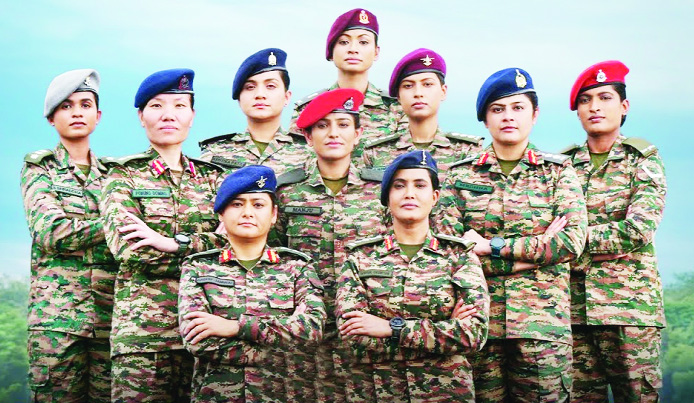
In a nation where courage is often measured by sacrifice, it’s time we turn our attention to the warrior women of the Indian Army. These are not just stories of service, they are powerful declarations of strength, resilience, and unshakable patriotism. These women wear the uniform with pride, carry rifles with authority and lead troops with unmatched discipline and grace as a reflection of their unwavering commitment and capability.
They serve beyond limits, beyond fear and far beyond expectations. From the harsh terrain of border posts to commanding units in high-pressure operations, they continue to prove that courage knows no gender. They are fighter pilots, combat engineers, military doctors, intelligence officers, and front-line leaders, each one a living example of what it means to rise above stereotypes and societal constraints. Their battle is not just on the field, but in boardrooms, in mindsets and in traditions that long underestimated their potential.
They don’t just wear olive green, they embody it. Every salute they earn, every mission they complete and every barrier they break sends a powerful message, the Indian woman is not just capable of supporting the nation, she’s fully equipped to defend it.
In a country shaped by deep-rooted customs and evolving social dynamics, the presence of women in uniform is no longer a novelty, it is a necessity. These women in boots and braids are rewriting the rules, changing the face of leadership and inspiring a generation that now sees strength, service and sacrifice through a broader, more inclusive lens. This is India’s new reality and it’s braver, bolder and more balanced than ever before.
SACRIFICES BEYOND THE UNIFORM
Behind the uniform lies a journey of immense sacrifice, one that often goes unseen and unheard. Women officers in the Indian Army endure some of the toughest training at premier military academies, where they are pushed beyond physical limits and mental boundaries. They learn to combat, command and conquer not just enemies, but doubts, fears and centuries of bias.
The transformation begins the moment they step into the academy. For many, the first symbol of sacrifice is deeply personal, cutting their beloved hair, shedding a part of their identity in order to embrace a new one forged in discipline and duty. Days start before dawn and end long after sunset, filled with grueling drills, tactical exercises, and academic rigour. Every blister, bruise and burn becomes a silent testament to their determination to earn the olive green.
They are trained to operate in some of the harshest terrains, from scorching deserts to freezing heights, carrying the same rucksacks, running the same miles, firing the same weapons, and meeting the same expectations as their male counterparts. And yet, for women, the stakes are often higher. They are constantly battling not just the enemy, but the societal question of “Can she really do it?” A question they answer with every mission, every promotion, and every salute.Their sacrifices are stitched into the very fabric of their uniforms, invisible to many, but deeply felt by those who understand what it truly means to serve. They don’t just wear the olive green, they earn it, every single day.
BALANCING DUTY AND FAMILY LIFE
Family life, for these warriors, often takes a back seat, not out of neglect, but out of necessity. Balancing the demands of field postings, long separations and high-stakes operations requires a level of emotional strength and personal sacrifice that few outside the forces can truly comprehend. While many of us wake up to the sound of loved ones, the warmth of home-cooked meals or the joy of shared milestones, these women wake up in remote outposts, sometimes in tents, sometimes in bunkers, often hundreds or even thousands of miles away from everything familiar. They carry not only the weight of their uniform, but the ache of absence, tucked away quietly beneath their armor of discipline.
They miss birthdays, anniversaries, first steps, school events, family rituals, and the simple comforts of home. What they trade in comfort, they gain in commitment. Every phone call they cut short, every celebration they attend over a video screen and every night spent on duty while others sleep peacefully, all become invisible acts of devotion to a cause larger than themselves.
And yet, they press on, not with complaint, but with quiet resilience. Their sacrifices extend far beyond the battlefield – into the very fabric of their personal lives, where love and duty are in constant negotiation.They hold their families together across distances, often mothering over phone calls and nurturing through letters. They lean on strength not only forged by training, but by love, for their nationand for the people they leave behind to protect it. Their resolve remains unshaken, not because they feel no pain, but because they choose purpose over comfort every single day.
In every salute they receive, every mission they complete and every moment they stand alone under the weight of their choices, they remind us that true service is not just about defending borders, it’s about sacrificing pieces of one’s own life so that others may live theirs in peace.
ICONS OF COURAGE
The participation of women in critical military operations such as Operation Sindoor has added a new chapter of glory to their ever-growing legacy. No longer confined to the sidelines, they now stand shoulder to shoulder with their male counterparts, not just as contributors, but as leaders, strategists, and front-line decision-makers. The recent presence of women officers in Operation Sindoor was not just operationally significant, it was symbolically powerful.
Take the example of Colonel Sofiya Qureshi, a name that has become synonymous with quiet strength and unflinching resolve. When she stood at the forefront during the national briefing for Operation Sindoor, she did more than deliver a report, she delivered a message. A message that echoed across ranks and regions: that leadership, intelligence, and valour are not confined to one gender. Her presence at the podium was a visual disruption of outdated perceptions, and a powerful reminder that excellence wears many faces, and some of them wear braids.
Such moments aren’t just symbolic victories; they are trans-formative. They shift narratives, inspire young girls and compel institutions to re-evaluate outdated systems. Women like Colonel Qureshi have proven, time and again, that courage is not about physical might alone, it’s about presence under pressure, clarity in chaos, and composure in conflict.
From coordinating logistics to leading troops into high-risk zones, these women officers have demonstrated tactical brilliance and unshakable grit. Their decisions impact lives, shape missions, and influence national outcomes. They’re not asking for space,they’re claiming it, with competence and quiet confidence.Their courage has inspired thousands across the country, not just aspiring officers, but everyday citizens who now see the Army through a broader, more inclusive lens. And in doing so, these women aren’t just redefining what it means to be a soldier,they’re redefining what it means to lead.
THEY ARE THE FUTURE
The message is loud and clear, India’s daughters are no longer asking for space, they are claiming it with quiet authority and undeniable competence. From deployments along the Line of Control to roles in elite training academies, from the engineering corps to intelligence and cyber warfare units, women are not just present, they are leading from the front. They are not waiting to be included, they are redefining the very standards of inclusion.
Today’s women officers are navigating terrains that were once deemed too tough, too dangerous, or too complex for them. They are flying combat helicopters, leading counter-insurgency operations, running military hospitals in conflict zones, and heading strategy units with unmatched precision. They are not just contributing,they are commanding. They are not simply adjusting to the system,they are reshaping it from within, forcing institutions to evolve and adapt to a new kind of leadership, one that is inclusive, empathetic and fiercely effective.
These trailblazers are building a future where gender is no longer a limitation but a strength. They are mentoring the next wave of cadets, inspiring schoolgirls in remote villages, and challenging societal norms just by doing their job exceptionally well. Every rank they earn, every medal they wear, and every mission they lead is a signal to the world that the Indian Army’s strength lies not in tradition alone, but in transformation.
They are writing a new narrative,one where bravery has no gender, and leadership wears many faces. In them, India doesn’t just see soldiers,it sees the future of a more courageous, more equal, and more powerful nation.
A SALUTE TO THE NATION’S DAUGHTERS
These women do not seek applause, they seek excellence. They do not ask for recognition, they earn it, silently, through their grit, sacrificeand unflinching loyalty to the tricolour. As the Indian Army evolves, embracing inclusivity with strength and sincerity, a message is being broadcast far beyond our borders: Indian women are not waiting for opportunities, they are claiming them, commanding them and creating history with every stride.
They represent more than gender progress, they represent national progress. Each time a woman officer leads a convoy, commands a battalion, briefs the nation or trains the next generation of soldiers, she is reshaping not just the Army, but India itself. She is the voice of a changing era, where courage isn’t confined to tradition and leadership isn’t limited by legacy.
To salute these daughters of the soil is to honour the very soul of a nation that is braver, bolder and more balanced because of them. They remind us that patriotism is not defined by who shouts the loudest, but by those who serve the longest, the hardest and the most selflessly.
The nation salutes its warrior women. They are the past, the present and the powerful future of the Indian Army.
To every young girl who dreams of donning the uniform, look no further for inspiration.
To every Indian look no further for heroes. The warrior women are here and they are here to lead and conquer.
 Follow our WhatsApp channel
