

Shivaji Sarkar
Severely singed by the Iran firing missiles across West Asia, India may have to go for drastic changes in the Union Budget by the Monsoon Session as prices soar, gas crisis derails households and businesses, FPI outflows near a record and the rupee has a mighty fall. The rupee forex reserves are down by $ 7.1 billion.
The cost of shipping gone up by 300 to 400 per cent to hit commodity prices. Iran’s targeting of Arab Gulf states has sharpened Delhi’s concerns. India’s equities in the Arab world – diaspora, remittances, energy, trade and institutional ties – are far deeper. India has been vocal about the “damage and destruction” there.
The blasting of Qatar gas facilities impacts India critically. So does US-Isarel attack on Iran’s crucial petroleum island Kharg and preparations for US marine assaults. European nations like Germany, Norway and others are withdrawing their support to the war. US President Donald Trump has lambasted UK for not bidding his orders. The retreat of US ships Abraham Lincoln and Gerald Ford have added to the criticality. Iran’s missiles are hitting critical US establishments hurting its companies like Exxon and others.
Europe is worried about its energy security as US sanctions already closed access to the Russian oil. Even India has reduced purchases from Russia. The developments are likely to hit India’s expenses, needing cut in constructions in the railways, transport, office and other sectors, look for a new energy policy with less dependency on petroleum as also inflation likely to hit the roof impacted by the rising global prices not only of fuel but most essentials.
It is likely to call for a revision of the Rs 5 -lakh crore budget allocations as financial and economics dynamics changes despite India safely keeping off the shadow of the war and supporting the US-Israel initiative. A redraw through a supplementary budget in the monsoon session could be more than a reality. Sectors like energy and defence may gain, while aviation, paints, and oil marketing companies face pressure.
The government might resort to more borrowings as also tighten the belt for development and welfare allocations. The country may have to rethink on its reconstruction activities of the railway stations, various government buildings and may be many transport and other activities like the suburban metro network and the glamorous bullet train.
The present borrowings are of about Rs 17 lakh crore. Interest rates for commercial borrowing are also rising making repayments expensive. The government has, meanwhile, announced a Rs 1000 crore war chest to meet the rising shipping and insurance expenses across the world. The impact still is uncharted.
The present Union Budget is to be formally passed by Parliament in a few days. Despite some relief in gold price fall of 7 percent, the country using it as an alternate currency for foreign trade payment, as the rupee falls to Rs 93.7 to a dollar. The surprise rise of the dollar may upset many calculations.
Imports have been falling during the last two years. The customs duty collections witnessed a notable decline, dropping approximately 7 percent% year-on-year between April and November 2025 (FY26) to around Rs1,429 billion, compared to Rs ,541 billion, also a fall, during the same period in 2024.
Customs duty collections in India for 2024–25 remained flat, projected at Rs 2.33 trillion compared to previous years, reflecting a stagnant trend rather than a sharp fall, while their share of GDP declined to 0.7 percent. It could be more acute this year. Overall, revenue collections could be hit as the industry profits could be hit as also there could be more demands for relief and incentives.
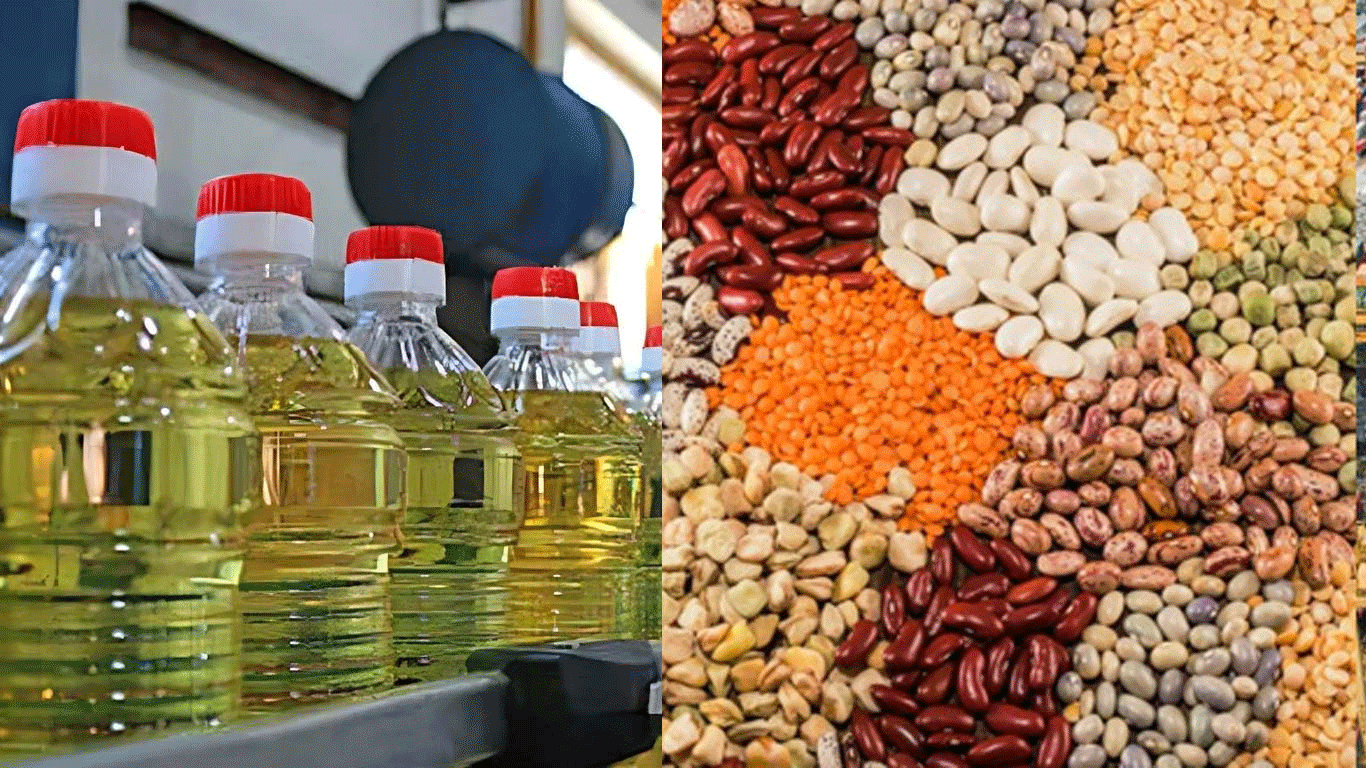
Edible oils, Pulse, Pharma to soar
It is likely to impact imports of edible oil, fertiliser, pulses, gas, pharma raw materials, health care, helium-based MRI, air-conditioners, cars, trucks and many other products. Even imported electronic goods, chips, electric vehicles, batteries and other items are also to have inflated prices. It can increase electric generation, governance and transportation costs by several notches.
The higher premium for shipping insurance has jolted the traders. The demand for war coverage has heavy cost. Industry can expect some relief with the Rs 1000 crore war chest but actuals may be more.
Every day the meter is ticking. Like a time bomb.’ Shipping giants are billing Indian exporters up to $3,000 per container in war surcharges — on cargo that sailed before the war began — as the Strait of Hormuz shuts down. Average premium rates have increased from 0.3 to 3 percent
India’s economic links with West Asia run deep: the region accounts for 17 percent of India’s exports, supplies 55 percent of its crude oil and generates 38 percent of its remittances, according to Jefferies, a brokerage firm. The fallout for India could show up in four places: energy, remittances, its Gulf diaspora and the loss of strategic Iranian port, Chabahar.
Gulf tensions have triggered a shipping crisis, with major carriers imposing war surcharges of up to $3,000 per container—even on cargo already at sea—causing a 300–400% spike in freight costs. Indian exporters, especially small firms, are hardest hit as flat charges often exceed cargo value. Shipments remain stranded at Gulf ports, with no legal or regulatory relief due to force majeure protections and insurance gaps. Perishables risk spoilage, threatening farm prices, while payment delays could spark RBI compliance issues and working capital stress.
Despite rhetoric on India–Iran ties, relations have long been constrained by Iran’s global isolation, pushing India to deepen engagement with key Gulf states—making regional instability a far greater concern for Delhi. Prime Minister Narendra Modi’s reluctance to criticise Israel during his recent visit, just days before the strikes, risks eroding India’s perceived neutrality, something Iran is unlikely to overlook, observes former Indian ambassador to Iran. KC Singh.
The coming days may have more trouble and increased financial rigours for India, including further job and production losses. It’s a difficult situation and the country has to chart out the new course during such turbulence. —INFA
(Copyright, India News & Feature Alliance)
New Delhi
21 March 2026
 Follow our WhatsApp channel
