

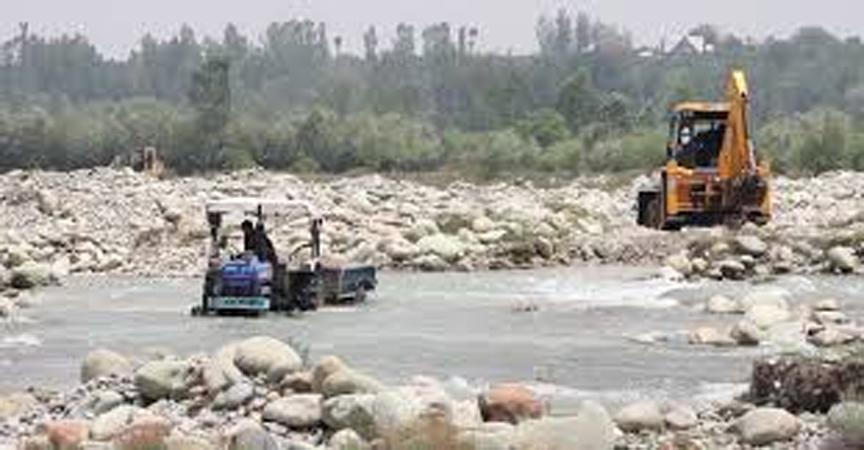
The Supreme Court’s decision to uphold the National Green Tribunal’s order barring riverbed mining in Budgam’s Shali Ganga stream is not just a legal judgment-it is a damning indictment of the UT’s environmental governance. The Apex Court did not mince words in castigating the J&K State Environmental Impact Assessment Authority and the J&K Expert Appraisal Committee for flouting mandatory guidelines, thereby compromising regulatory integrity. This case, which started as a citizen’s fight for environmental justice, has exposed systemic loopholes and the alarming nexus between Government agencies and private players. What is most shocking is the blatant disregard for established norms. The Ministry of Environment, Forest and Climate Change has issued comprehensive notifications (2016 and 2020) outlining stringent conditions for sand mining, including preparation of a scientific District Survey Report and replenishment data before granting clearances. Yet, the J&K authorities not only ignored these norms but proceeded with granting environmental clearance to NKC Projects Pvt. Ltd., despite being aware that the DSR was defective and lacked replenishment details. The Supreme Court’s observation that the JKEIAA “compromised with regulatory integrity” speaks volumes about the depth of institutional failure.
The environmental implications of such illegal mining practices are catastrophic. Riverbed mining, especially when done unscientifically and using heavy machinery, alters the river’s natural course. This leads to depletion of water levels downstream, impacting irrigation, drinking water supply, and the overall hydrological balance. Even more dangerous is the heightened risk of floods during the monsoon. When the riverbed is gouged indiscriminately, it loses its capacity to absorb and channel excess water, resulting in flash floods and erosion of riverbanks. The region, already ecologically fragile, cannot withstand such unregulated exploitation without disastrous consequences. Another grave fallout is the destruction of aquatic ecosystems. Fish and other aquatic species depend on stable riverbeds and consistent water flow. Uncontrolled extraction disturbs this delicate equilibrium, leading to biodiversity loss. Further, groundwater recharge-a crucial function of river systems-is severely hampered, pushing communities into water scarcity. The irony is that while climate change is already tightening water availability, our short-sighted greed is accelerating the crisis.
What makes this case even more disturbing is the stubbornness of the concerned authorities. Despite repeated objections from environmental activists and a categorical NGT order banning the activity in 2022, the authorities did not revoke the mining rights. Instead, they tacitly allowed the company to pursue its appeal in the Supreme Court. Such conduct raises a pertinent question: Are Government watchdogs becoming facilitators for private profiteering at the cost of public interest and ecological security?
The argument that development projects like highways require construction material cannot justify such brazen violations. Development that destroys natural systems is self-defeating. There are sustainable alternatives, including regulated mining with strict compliance, recycling of construction waste, and use of manufactured sand. But none of these options were explored because vested interests prioritised quick profits over environmental prudence.
This incident is not an isolated occurrence; it is just the beginning. Illegal mining is rampant across J&K, often operating with patronage and bureaucratic connivance. Bridges, embankments, and even habitations stand threatened because of indiscriminate extraction. If the Government fails to act decisively, nature will enforce its own course correction, as seen in the past.
The NGT and Supreme Court’s intervention must serve as both a wake-up call and a warning. The J&K Government must immediately order an independent audit of all mining leases, and every clearance should be checked for compliance with MoEF&CC norms, and officials who bypassed regulations must face strict accountability. Additionally, ensure real-time monitoring of mining activities, and involve local communities in environmental decision-making. Ecological security cannot be compromised for short-term economic gains. Unless systemic reforms follow, such legal victories will remain symbolic. The Government must seize this moment to demonstrate that the law of the land-and the laws of nature-cannot be subverted. If it fails, the cost will not just be legal embarrassment; it will be measured in floods, water crises, biodiversity collapse, and human suffering.
 Follow our WhatsApp channel
