

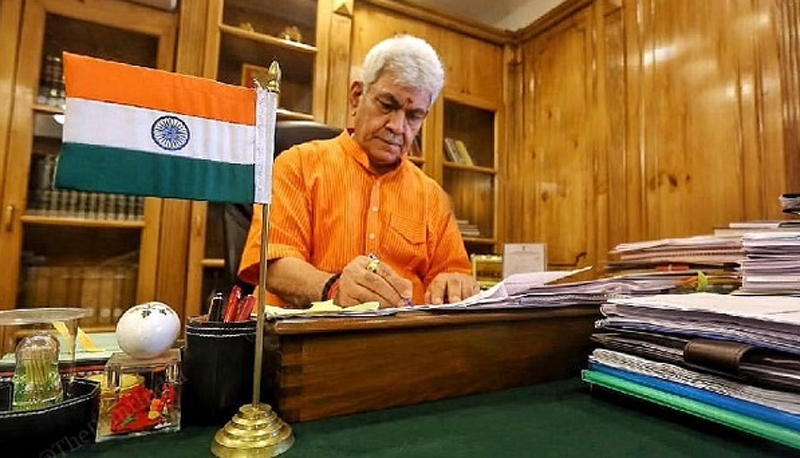
In a welcome and visionary move, the Lieutenant Governor of Jammu and Kashmir has announced the establishment of the Lieutenant Governor’s Sainik Sahayta Kendra (LGSSK)-a dedicated institutional platform to address civilian grievances of serving soldiers of the Indian Armed Forces and Central Armed Police Forces. The step is not only timely but also immensely meaningful, considering the sheer number of serving men connected with J&K, either by deployment or domicile. J&K, due to its strategic location and security sensitivities, has a significant presence of military and paramilitary forces. At the same time, a substantial number of its youth are serving the nation across various formations, often posted thousands of kilometres away from their home districts. While these brave hearts remain on the frontlines safeguarding national interests, their personal and civilian concerns-property disputes, revenue matters, legal proceedings, insurance claims, or bureaucratic hassles-often go unattended, causing avoidable distress.
Though soldiers are granted periodic leaves, it is practically impossible for them to return home every time an issue arises. Court dates, land disputes, administrative verifications, or even basic departmental work demand physical presence-something soldiers can ill afford during critical national duties. This is where the LGSSK initiative becomes a game-changer. Functioning as a Soldiers’ Assistance and Liaison Cell, the LGSSK promises to be a single-window mechanism for grievance redressal. Whether the soldier is posted within the UT or outside it, the cell will coordinate with the concerned district-level civil and police authorities to process and resolve complaints. The system is structured, technologically equipped, and designed to work on strict timelines, with clear escalation protocols, follow-up schedules, and performance dashboards to monitor effectiveness.
What sets this initiative apart is the seriousness reflected in its staffing. An IAS officer of Secretary rank will head the Kendra, supported by an IPS officer (SSP rank), two JKAS officers, and dedicated clerical staff. This high-level administrative commitment underlines the Government’s recognition of the long-standing need for such an initiative and its resolve to make it work. Importantly, the Government has provided for the use of digital tools, case-tracking systems, and feedback mechanisms to ensure transparency and accountability. Offices are being set up at both the Jammu and Srinagar Civil Secretariat campuses, ensuring wide accessibility.
Moreover, the protocol for routing grievances through the respective unit commanding officers will ensure authenticity and maintain security discipline. Each case will be assessed for jurisdictional clarity and-if required-supported by virtual interaction with the complainant. The seven-day and fifteen-day review schedules, coupled with one-month escalation triggers, provide a well-defined timeline for redressal. This thoughtful provision ensures that soldiers are not left unsupported for indefinite periods.
What also deserves applause is the cell’s inclusivity-it does not limit its services to soldiers posted in J&K. Still, it extends support to those hailing from the UT and currently serving outside. This greatly widens its impact, making it a genuine support system for thousands of personnel. This is more than an administrative mechanism- a gesture of respect, acknowledgement, and reassurance. Our soldiers carry the weight of national security on their shoulders. The least the state can do is ensure that its domestic worries do not distract or distress them. With this cell in place, they no longer need to run from pillar to post or burden their family members to chase paperwork or appointments in Government offices.
By integrating technology with human interface and by placing the responsibility on senior officials, the LG administration has adopted a pragmatic and scalable model. The system is not just efficient but empathetic. The promptness with which operations have been scheduled to begin and the robust framework for monitoring further build confidence. At a time when national security needs are paramount and operational commitments for soldiers are intense, easing their civilian burdens is both a strategic and humanitarian imperative. This initiative, by bringing governance to their doorstep, marks a significant stride toward dignified service welfare. It’s a salute not just to the soldier’s duty but also to their dignity.
 Follow our WhatsApp channel
