

Prof (Dr.) Vikas Sharma, Nancy Vohra
vikas.skuast@gmail.com
Cissampelos pareira, a raw material plant in the pharmaceutical / ayurvedic industry, the roots of which are given to women after childbirth to promote uterine cleansing, quick recovery and to enhance lactation and thus managing infertility / postnatal complications. The plant’s alkaloids are thought to exhibit antivenom activity, making it a valuable emergency remedy in remote areas and in tribal medicine, the leaf juice or paste is applied on snake or scorpion bites as it neutralizes toxins and reduce pain and swelling.
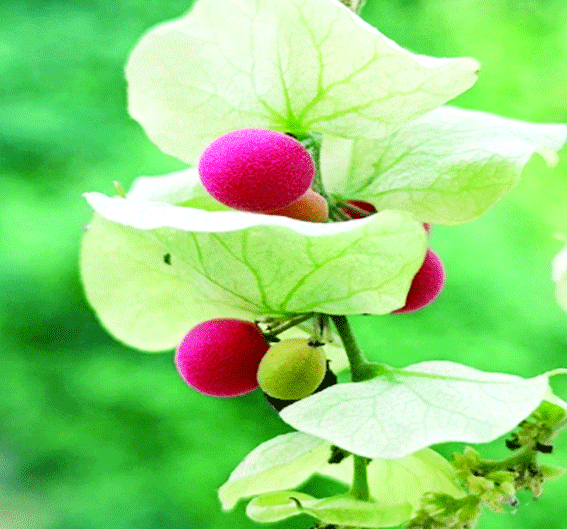
Cissampelos pareira, commonly known as velvetleaf, patha or “akanadi” in many traditional systems, is a significant medicinal plant belonging to the family menispermaceae. It is a perennial, climbing herb recognized for its heart-shaped leaves, slender stems and small yellowish flowers. This plant has been highly valued since ancient times in Ayurveda, Siddha, and Unani systems of medicine. It grows naturally in tropical and subtropical regions of Asia, Africa and South America and is particularly abundant in the Indian subcontinent. Cissampelos pareira has a deep-rooted presence in the North western Himalayan belt and the region of Jammu, especially the areas of Himalayan foothills, Bhaderwah, Kishtwar, Udhampur, Reasi, Kathua and the lower Shivalik ranges. Its growth is favoured by the moist, semi-shaded forest floors, riverbanks and scrub forests that are characteristic of Jammu’s mid-altitude terrains.
MEDICINAL USES
Gynecological benefits: The plant is widely recognized as a female reproductive tonic. It plays a vital role in regulating menstrual cycles, treating irregular menstruation (amenorrhea) and relieving menstrual pain (dysmenorrhea). In Ayurveda, the decoction of its roots is given to women after childbirth to promote uterine cleansing, quick recovery and restoration of strength. It is also known to enhance lactation and act as a mild hormonal regulator due to its estrogen-like properties, making it useful in managing infertility and postnatal complications.
Urinary / kidney disorders: It acts as a diuretic, promoting the flow of urine and also helps in detoxification by removing excess salts and toxins from the body. It plays a vital role in treating urinary tract infections (UTIs), kidney stones and painful urination. Root decoction is used to relieve burning sensation during urination and urinary retention.
Fever/inflammation: The root and whole plant is used traditionally as an antipyretic (fever-reducing agent). Decoctions prepared from the root are given during malaria, typhoid and viral fevers. It helps in reducing body temperature and soothing inflammation caused by infections or body pains. The alkaloids present (cissampeline and pareirine) have anti-inflammatory and analgesic properties.
Respiratory ailments: The plant is used to treat asthma, cough, cold and bronchitis. Its expectorant properties help expel phlegm and clear blocked airways, while its soothing effects relieve cough and irritation. Decoction of leaves or roots is given to relieve breathing difficulty and chest congestion. It also acts as a mild bronchodilator, soothing inflamed airways.
Wound healing / skin disorders: The plant is highly effective in treating wounds, ulcers, skin infections and boils. The paste made from the roots or leaves is applied on affected areas to promote quick healing and prevent infections. Its antimicrobial and anti-inflammatory nature reduces swelling, itching and irritation. In many traditional practices, fresh leaf juice is used to treat eczema, rashes and minor skin wounds
Snake Bite / poison antidote: In traditional and tribal medicine, the leaf juice or paste is applied on snake or scorpion bites. It neutralizes toxins and reduces pain and swelling. The plant’s alkaloids are thought to exhibit antivenom activity, making it a valuable emergency remedy in remote areas.
Stomach Disorders: Among rural communities, Cissampelos pareira is one of the first herbs used for diarrhea, stomach cramps, acidity, indigestion and food poisoning. In hilly regions, where dietary changes often lead to digestive disturbances, people chew the tender leaves or take a paste prepared with buttermilk to soothe the stomach. Children suffering from colic or worm infestations are given a diluted extract.
Bone / joint disorders: Folk healers in the Shivalik region use the plant paste on swollen joints, sprains, back pain and muscular injuries as many people in mountainous areas engage in heavy physical work, such as farming, wood-cutting, livestock herding and joint problems are common. Topical application of Cissampelos pareira paste mixed with mustard oil is believed to reduce inflammation and improve movement.
Anti-diabetic / blood purifier: Some herbal practitioners use the plant in formulations for diabetes control that helps in maintaining blood sugar balance and acts as a natural detoxifier. The bitter principles aid in cleansing blood impurities, preventing skin eruptions and fatigue.
INDUSTRIAL POTENTIAL AND DOMESTIC USES
Pharmaceutical / Ayurvedic industry: The plant is a highly valued raw material in the pharmaceutical and Ayurvedic industry. Its roots and whole plant are used in the production of herbal drugs, tonics, tablets, syrups and decoctions. It is utilized for manufacturing medicines related to fever, liver disorders, urinary infections, gynecological issues and skin diseases. Due to its wide therapeutic range, it has commercial potential for export as a medicinal raw herb.
Herbal Formulation and Nutraceuticals: It is incorporated in nutraceutical formulations aimed at enhancing immunity, detoxification and women’s reproductive health. Herbal capsules and powders containing extracts of this plant are promoted as natural hormone regulators and uterine tonics. Its antioxidant properties make it suitable for anti-aging and rejuvenating products.
Cosmetic and personal care industry: Its antibacterial, anti-inflammatory and antioxidant properties help in the formulation of creams, soaps and herbal face packs. The plant’s leaf extract helps in reducing acne, skin irritation and pigmentation, making it a natural ingredient for beauty care products. It is also used in herbal oils and balms for soothing skin inflammation and promoting wound healing.
Aromatherapy and wellness industry: Although not strongly aromatic, the essential oil and extracts of Cissampelos pareira are used in herbal wellness and spa products. It is incorporated in relaxation oils, massage formulations and therapeutic herbal baths for its mild sedative and muscle-relaxing effects. It can be promoted as a part of holistic wellness therapies in natural healing centers.
Conclusion: Cissampelos pareira stands as a remarkable example of how nature provides powerful remedies for human health. With its rich medicinal history, diverse pharmacological actions and growing scientific validation, this plant holds great potential for future drug development. From treating fevers and infections to supporting women’s health and liver function, it continues to be a corner stone of traditional medicine. Its wide availability in India, especially in regions like Jammu, makes it a vital component of local ethnomedicine. Ensuring its conservation and sustainable use, will not only preserve an invaluable natural resource, but also promote the revival of traditional healing systems that have served humanity for centuries, reserving its natural habitats, documenting indigenous knowledge and promoting sustainable use are essential for ensuring that this valuable medicinal climber continues to serve as a bridge between traditional healing and modern phytotherapy.
(The authors are from the Division of Biochemistry, FBSc., SKUAST-Jammu)
 Follow our WhatsApp channel
