

K N Pandita
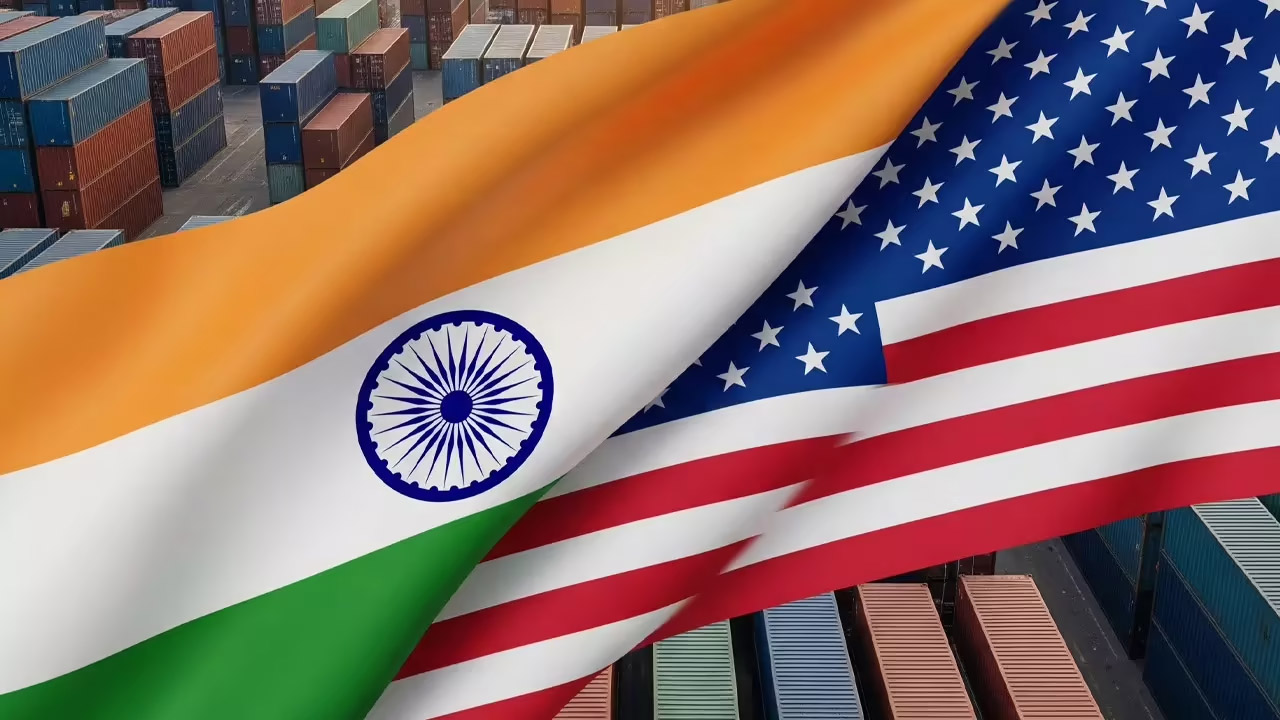
Trump-2 administration’s Indian policyis markedly different from relations during the first stint. There was warmth on official level and closeness on personal level between Presidente Trump and PM Modi of India. Closeness with India was a message to the Democrats who are known for their not too friendly a disposition toward India owing to the division of the international community into two antagonistic power blocs in post WWII era. American policy planners haveinvariably consideredIndia a bandwagoner of the erstwhile Soviet bloc especially when India sponsored the Non-Aligned movement in unison with Col Nasser of Egypt and Marshall Tito of Yugoslavia.
Some historians are disposed to believe that the US in 1950s onwards pushed democratic and secular India into the lap of the Soviet Union perhaps without trying to understand the history and social construct of one of the ancient civilizations of the world.
The negative fallout of India and the US coming closer during the Trump-1 administration was a matter of concern for New Delhi. Nehru had tried to dispel the erroneous notion among the Western powers that Indo-Soviet friendship meant antagonism towards the West.
Indio-American relationship has the common thread of democracy and freedom of individual in the matters of civil and political rights.Relationship depended much on the commonality of ideology of a political and judicial system, which forms the foundation of human rights structure.
The Democrats did profess the commonality of values but the question of meting out equal treatment remained elusive with them.President Biden who had receded President Trump he adopted a non-intimidating policy when compared with his predecessor Barak Obama. Biden spoke in sweet and inoffensive language but never compromised on denying transfer of technology to India in important areas like jet fighter engines, semiconductors and many other vital aspects of current higher technology.
India was somewhat happy when Trump chose his cabinet in his second stint in which there were at least four members of either Indian origin or known sympathisers of India. Thisraised expectations in New Delhi that the day had come when the US, its institutions and the people in the world’s most powerful democratic country would understand the problems, aspirations and contribution of the world’s largest democracy.
A couple of impressive and prompt decisions which Trump took in pursuance of his “America first” theory did not bring happiness to most of the allies of the US in Europe, Asia or Africa. India was not an exception. However, as the world’s number one populous country and also the largest democracy, India played its card carefully giving due importance to the historicity of relationship and a value-frame that should determine the relationship.
On April 22, Pak sponsored terrorists gunned down 26 Indian tourists (including one Nepalese) holidaying in a Pahalgam (Kashmir) meadow after ascertaining they were non-Muslims. They were killed mercilessly in front of their wailing and crying women and children. The Indian nation was shocked to know about the tragedy and there appeared a widespread demand throughout the length and breadth of the country that the government should take appropriate action that puts an end to externally-sponsored acts of terrorism. India had been suffering such attacks for many years in the past including those related to genocide and ethnic cleansing of Kashmir Valley in 1989-90
India warned Pakistan to stop cross border terrorism, and dismantle the terrorist structure it had raised on its sides of the Line of Control. India waited for nearly two weeks but Pakistan harped on its usual denial syndrome. On the night of 6-7 May, India struck at about 9 terrorist posts along the Line of Control and pin-pointedly destroyed some more camps and ammunition dumps. New Delhi announced it had struck only the terrorist camps and nothing else and if Pakistan retaliated, she would get a befitting response. That happened and most of Pakistan’s air bases were destroyed.
In desperation, Pakistan approached the US seeking a ceasefire. On 10 May Donald Trump tweeted that he had brought about ceasefire between the two warring nations. Amusingly, while Pakistan Prime Minister began showering encomiums on President Trump and his Army Chief (whom he overnight honoured with the conferment of the rank of Field Marshall), Indian foreign office issues a four sentence. cryptic statement that field commanders were asked not to fire across the line of control.
This and subsequent events unfolded that Trump had come out in true colours. He came out openly against India and in support of terrorism. He did not speak a single word about the ghastly massacre of the tourist, who they were and where they got sophisticated arms. Against that, Trump brought pressure on the IMF to sanction a loan to the tune of 3 billion US dollars to Pakistan though under the rules of the IMP, sanctioning loan to a country waging a war was not allowed
American media sources said that Trump’s sons and son-in-law had a share in the five billion crypto currency deal with Islamabad.
Grapevine has it that the speed and swiftness with which Trump ordered his Vice President and Secretary of State to stop Indian air force action of destroying Pakistan’s air bases was prompted by India’s destruction of Nur Khan air base located between Rawalpindi and Islamabad. Reports are that the Nur Khan air base which is out of bound to all civilian and military personnel, is also housing underground nuclear control and command network which has been totally destroyed by India’s Brahmos missile to which Pakistani Prime Minister has also made an oblique reference. The hot rumour is that the ultimate key of nuclear establishment remained hidden in the hands of the Americans because it was on that understanding that Washington had arrived at and all-American opposition to Pakistan’s nuclearization had been stopped.
Carrying forward the US fundamental policy paradigm of containing India before it becomes the real Asian giant, the Trump administration finds faults with the Modi government on several counts. These could be India having close defence and trade relations with Russia and maximally importing Russian arms, India declining to sign the UN condemnation resolution against attack on Ukraine, India clandestinely buying cheap oil from Russia while American ban on Iranian oil holds on, India an active member of BRICS, an organization that intends to destabilize US dollar and create a third bloc, India leading the Global South, India refusing US access to her minerals while Pakistan willingly offering its land for that purpose, India developing a strong navy in the Indian Ocean and showing diminished interest in the QUAD,
History shows that the policy of the imperialists has been to support dictatorships or military governments in Asian and African countries and at the same time rubbishing the democratic aspirations of Asian nations. In 1971 war with Pakistan that led to the separation of East Bengal from Pakistan, the US had sent its powerful 7th fleet to the Bay of Bengal. It could have proved disastrous for India if Russia had not sent its naval fleet on the heels of the American fleet.
The conclusion is that Trump has no consideration for history of bilateral relaxions or concerns because he is motivated by the drive for trade only of the nature that brings profits to the US leave alone what it may bring for other countries.
 Follow our WhatsApp channel
