

Justice (Retd) G.D. Sharma
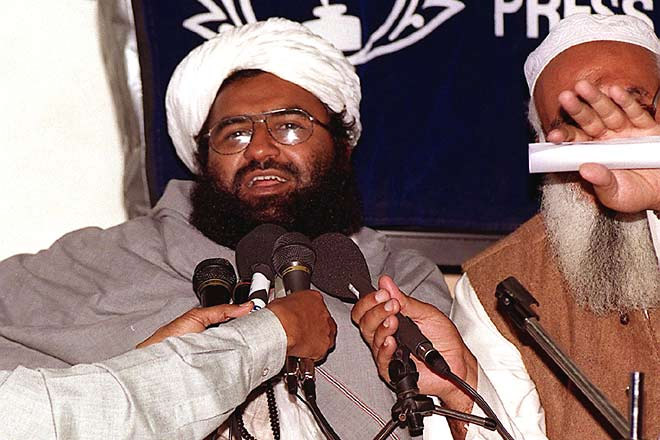
The saga of Masood Azhar stands as one of the most consequential chapters in the history of India’s struggle against terrorism. His journey-from his arrest in Kashmir valley, to his activities behind bars, to the infamous Kandahar hijacking and his coercive subsequent release and final meteoric rise as the leader of Jaish-e-Mohammed-offers critical insights into the challenges faced by the Indian state, its security apparatus, and J&K judiciary. The case also highlights the complexities of balancing humanitarian concerns with national security imperatives, and the importance of precise intelligence and strategic decision-making.
Early Life and Radicalization
Masood Azhar was born in Bahawalpur, Pakistan Punjab and received his early education at Jamia Islamia Binori Town in Karachi, a seminary known for its radical leanings. By the early 1990s, Azhar had become a prominent figure in Harkat-ul-Mujahideen (HuM), an organization with deep links to global jihadist networks. His early indoctrination and training in Afghanistan laid the foundation for his later activities as a terrorist leader.
Arrest and Imprisonment in India
In January 1994, Masood Azhar entered India under a false identity, using forged travel documents. Indian security forces, acting on intelligence inputs, apprehended him on the J&K National Highway while travelling in an auto rickshaw at Khanabal (a village near Anantnag District Headquarters). His arrest was a significant achievement for Indian intelligence and law enforcement agencies at the time. Azhar was charged with entering the country illegally and with involvement in terrorist activities including waging war against the state; offences under the Terrorist and Disruptive Activities (Prevention) Act.
During his incarceration in high security jail of Kot Bhalwal near Jammu city, Azhar’s influence considerably grew. Drawing on his background as an ideologue and recruiter of terrorists, he reportedly used his time in jail to radicalize fellow inmates, jail staff and build a network of loyal followers which included high ranking police officers even upto the rank of an Inspector General. His followers were, at sometimes, making beelines to get Talismans from him. This phenomenon, not uncommon in cases involving ideologically motivated prisoners, underscores the challenges faced by prison authorities in containing the spread of extremist ideologies within correctional facilities.
Reports from that period indicate that Azhar’s charisma and oratory skills enabled him to inspire and recruit new cadres even while in custody as an undertrial prisoner in high security jail in Kot Bhalwal, Jammu during the period from 1994 to 1999.
Escalating Demands and the Kandahar Hijacking
The period following Azhar’s arrest saw a series of attempts by his associates to secure his release. Notably, there were several kidnappings of foreign tourists in Jammu & Kashmir and Delhi between 1994 and 1995, with at least one victim reportedly killed. Each of these incidents was marked by the demand for Azhar’s freedom, demonstrating the lengths to which his supporters were willing to go.
The most dramatic of these efforts was the hijacking of Indian Airlines Flight 814 on December 24, 1999. The aircraft, en route from Kathmandu to Delhi, was commandeered and eventually diverted to Kandahar, Afghanistan, then under Taliban control. The hijackers’ were five in number and their principal demand was the release of Masood Azhar, along with two other terrorists: Ahmed Omar Saeed Sheikh (British Pakistani) and Mushtaq Ahmed Zargar (Kashmiri).
After protracted negotiations and under immense pressure to save the lives of the hostages, the Indian government agreed to the hijackers’ demands. The decision to release Azhar was executed at the highest levels, with then Foreign Minister Shri Jaswant Singh personally escorting the terrorists to Kandahar. This episode remains one of the most controversial decisions in India’s counter-terrorism history, raising enduring questions about the balance between immediate humanitarian concerns and long-term security risks.
Unethical judicial conduct of some concerned judges at the highest hierarchy in J&K was also a cause of his release and consequential lease of life. The prosecution agencies had gathered empirical evidence of impeccable, cogent and convincing nature to bring home the conviction of alleged offences falling under penal Section of 121 A of Ranbir Penal Code (now IPC) (waging war against the state) as well as contravention of other offences under TADA Act etc. Section 121 A is punishable with capital conviction or life imprisonment. This unsavory judicial act proved a blessing in disguise to save Masood Azhar’s life.
It is a known judicial proverb that when a judge quails, justice wails and this applies on all fours in this case.
The Central Government vide notification SO 551(E)U dated 17th June 1995 issued by the Ministry of Home Affairs under Section 11(2) of the Terrorists and Disruptive Activities (Prevention) Act, 1987 (hereinafter to be referred as an Act) transferred pending cases stated therein from the Designated Court, Jammu (under the Act) to the Designated Court under the Act at Ajmer in the State of Rajasthan. All the accused were dreaded militants of top-ranking category and were facing trials under TADA, J&K Ranbir Penal Code and Indian Arms Act etc. Some of the accused challenged the above stated notification through the medium of five writ petitions bearing no. 221 to 224 of 1995. They were filed in the J&K High Court (Srinagar Wing) and the learned single judge (Justice Ali Mohammad Mir) while entertaining them on August 02, 1995 passed a composite interim order whereby the operation of the above stated impugned notification was stayed. He also issued notices to the respondents in those writ petitions and simultaneously referred the cases for disposal to a Division Bench in terms of rule 14(9) of the High Court rules. Some of the petitioners of those writ petitions were top ranking ideologues of ongoing terrorist war including those who were exchanged for the release of the passengers of the hijacked Indian Airlines flight from Kathmandu to Delhi and in the midair diverted to Kandhar (Afghanistan). The murderers of the Vice-Chancellor of the Kashmir University Mushir-ul-Haq and General Manager Harbans Lal Khera of the Hindustan Machine Tools, Srinagar, were also the petitioners. It shall be advantageous to reproduce the relevant text of the notification which reads as under:
” New Delhi 17th June 1995.
SO 551(E): Whereas the Central Government is of the opinion that the situation prevailing in the State of Jammu and Kashmir is not conductive to a fair, impartial, or speedy trial, as there exists a grave risk to the safety of the accused, witnesses, public prosecutor and the judge of the Designated Court:
Whereas, the Attorney General of India moved motion for transfer of cases specified in the table below. The concurrence of the Chief Justice of India for such transfer was obtained vide order dated 4th January 1994 in motion numbers 305 and 307 of 1991 and order dated 6th January 1994 in motion numbers, 308, 309 and 310 of 1991.
Now therefore, in exercise of the powers conferred by Sub-Section(2) of Section 11 of the Terrorist and Disruptive Activities (Prevention) Act, 1987 (28 of 1987) the Central Government with the concurrence of the Chief Justice of India hereby transfers the cases specified in the said table pending before the Designated Court at Jammu and Kashmir to the Designated Court at Ajmer in the State of Rajasthan.”
On the basis of the above stated reference made on 2nd August 1995 by the writ court, (Justice Ali Mohammad Mir) the Chief Justice constituted the Division Bench constituting Justice V.K. Gupta and myself.
Justice V.K. Gupta had been elevated as Judge of the High Court from Jammu and Kashmir Lawyers’ quota. On the basis of some complaints of judicial misconduct he was transferred from this High Court to Calcutta High Court. When this writ petition was at the hearing stage of the arguments, the rumors were floating thick and fast that he was under transfer which actually happened within a short time. At this critical juncture, Justice V.K. Gupta quashed the above stated notification of the Central Government while, myself gave a dissenting judgement, thereby, holding that the notification was valid in the eye of Law. The result of this conflicting judgment was that above stated stay order granted by Justice Ali Mohammad Mir remained in operation and the trial of the cases as desired by the Central Government could not be held before Designated Court at Ajmer Rajasthan. The then Chief Justice Shri Rama Krishna (of the J&K High Court) referred the matter to the 1st Puisne Judge (Justice Bhawani Singh) under High Court rules but he delayed the disposal. When he himself became the Chief Justice of the J&K High Court, he suo moto transferred the case to then other senior judge, he too followed suit and such hang fire judges’ policy resulted in miscarriage of Justice which deeply threatened the security of the J&K State and sovereignty of the Union of India by perpetuating terrorists’ acts.
The above stated dissenting Division Bench ruling was given on May, 04, 1996 and accused Masood Azhar along with other accused remained under trial prisoners up to 24.12.1999 when Indian Airlines was hijacked to Kandhar. Top ranking terrorists like Masood Azhar, Mustaq Azgar and Ahmed Omar Syeed Sheikh already named above secured their release in exchange of hijacked passengers of the flight after December 24th, 1999 while other accused petitioners of above stated writ petitions earned their acquittals from the above stated designated trial court, Jammu because some of the prosecution witnesses were won over and remaining others out of fear of their lives turned hostile. It is a well-known fact that delay is always fatal for the prosecution case. Furthermore, it is a known fact to everybody that there was much hype in the country in print and electronic media about the “Best Bakery case of Gujarat State” but not even a single feeble voice was ever heard regarding the trial and consequent acquittals of the accused of J&K State. From this it stands proved that in this country militants and terrorists constitute a special privileged class for some politicians and media persons than the victims of militancy, terrorism related cases. This category is of common civilians and armed forces personnel. This can happen only in India and not elsewhere in any country of the world. Record speaks that for about two decades there was no single conviction of any accused in the terrorist and militancy related case whileas in defamed Gujarat State, there were convictions and now it is a matter of record and that of history.
The findings of both the judges of above referred Division Bench is reproduced hereunder in brief:
Per (V.K.) Gupta, J:
“where the passing of Notification effecting transfer of pending cases from Jammu to Ajmer was based upon the situation of threat and perception prevailing at the relevant time and 5 years had lapsed from the date of initiation of motion to transfer the cases before the Chief Justice of India and the actual passing of Notification, the time-lag would give rise to a reasonable and bona fide belief in the minds of the accused petitioners, that the situation may have witnessed some changes where it might be possible to hold an impartial, fair and speedy trial at Jammu itself.
The Central Government was therefore directed to re-examine the question with regard to the shifting of the trial as there was a possibility of emergence of some new facts which, on a fair assessment and equitable considerations, would bring a change in the entire perception of the Central Government. The concurrence of Chief Justice of India though imperative does not compel the government to pass any order if, for any other intervening causes, the Central Government even after obtaining the concurrence decides that there is no necessity of transferring any case. Therefore, the impugned notification would be liable to be quashed by reason of the time-lag of five years as aforesaid.”
Per (G.D.) Sharma J:
“Mere fact that the circumstances impelling the Central Government to transfer these cases to Ajmer having disappeared, the impugned notification does not perish. Whether or not those circumstances still exist and if exist to what extent, the High Court has no source or means to collect any evidence or material to justify the conclusion that such circumstances have ceased to exist.
By striking down the notification on the ground of delay, the High Court would take away its right from the Central Government to reassess the situation in the State and take a decision in regard to the trial of the cases in the State itself. Therefore, the impugned notification issued by the government with the concurrence of Hon’ble Chief Justice of India is still valid and cannot be quashed on any ground whatsoever.”
The Aftermath: Jaish-e-Mohammed and a New Wave of Terror
Upon his release, Masood Azhar returned to Pakistan, where he founded Jaish-e-Mohammed (JeM). Under his leadership, JeM quickly established itself as one of the most lethal terrorist organizations targeting India. The group was responsible for several high-profile attacks, including:
The 2001 Indian Parliament Attack: This audacious assault brought India and Pakistan to the brink of war, underscoring the existential threat posed by Azhar and his organization.
The 2016 Pathankot Air Base Attack: A meticulously planned operation that resulted in significant casualties and exposed vulnerabilities in India’s security infrastructure.
The 2019 Pulwama Attack: A suicide bombing that killed 40 CRPF personnel, triggering a major crisis in India-Pakistan relations and prompting retaliatory strikes by India.
Each of these attacks demonstrated the organizational sophistication and ideological fervor that Azhar brought to JeM. They also underscored the enduring consequences of the decision to release him in 1999.
International Response and Recent Developments
The international community gradually recognized the threat posed by Azhar. In 2016, Interpol issued a Red Notice for his arrest, and in 2019, after sustained diplomatic efforts by India, the United Nations Security Council designated him as a global terrorist.
In May 2025, India launched “Operation Sindoor,” a targeted military operation against terrorist infrastructure in Pakistan and Pakistan-occupied Jammu and Kashmir. The operation struck at the heart of JeM’s training facilities near Bahawalpur, resulting in the deaths of several of Azhar’s close relatives and associates. Azhar himself reportedly confirmed these losses in a subsequent statement. The operation was carefully calibrated to avoid escalation with Pakistan’s military, reflecting a more mature and measured approach to counter-terrorism.
Conclusion
The trajectory of Masood Azhar-from his arrest and imprisonment in India, to his release and subsequent orchestration of major terrorist attacks-serves as a stark reminder of the enduring challenges posed by terrorism. The case underscores the need for vigilance, strategic foresight, and robust institutional frameworks to safeguard national security.
For the judiciary, the Azhar episode highlights the vices of conventional legal approach couched in delaying tactics in dealing with national and transnational terrorism. It calls for greater coordination within the judicial system, law enforcement, intelligence agencies, and policymakers to ensure that the imperatives of justice and security are met in equal measures with utmost promptitude.
The lessons of the past must form the strategies of the future. Only through a comprehensive and integrated approach India can hope to effectively address the threats posed by individuals like Masood Azhar and his cohorts to uphold the erosion of rule of law in the face of evolving security challenges.
 Follow our WhatsApp channel
