

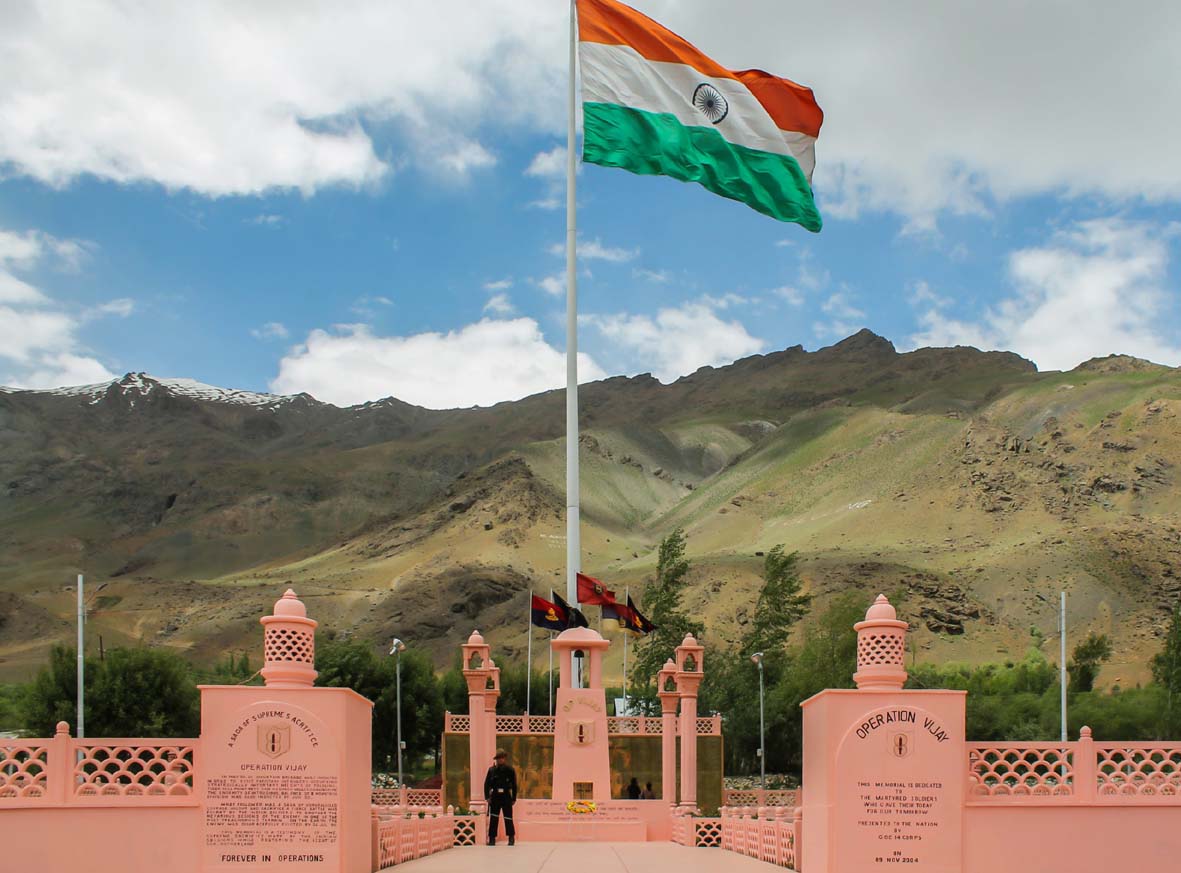
The Forgotten Fronts of Kargil
Ashu Maan
While the world remembers Tiger Hill and Tololing as the symbolic high points of India’s victory in the 1999 Kargil War, the story of the conflict is incomplete without acknowledging the lesser-known yet strategically crucial battles fought across the rugged Himalayan terrain.
These forgotten fronts, where raw grit, tactical ingenuity, and silent heroism came to fore played a pivotal role in shaping the war’s outcome. From isolated posts to deadly ridgelines, India’s soldiers overcame extraordinary odds in battles that history books often overlook.
The Context: A War Like No Other
The Kargil conflict was unique. Fought at altitudes above 16,000 feet, it tested the limits of human endurance and strategic coordination. The Pakistani Army, masquerading as militants, had infiltrated Indian positions during the winter of 1998-99. By the time their presence was discovered, they had entrenched themselves across dozens of posts on the Indian side of the Line of Control (LoC), overlooking key supply routes and dominating vital ridgelines.
While battles like Tololing, Tiger Hill, and Point 4875 became emblematic of Indian valour, it was in the shadow of these hills that lesser-publicised operations delivered critical tactical victories.
Point 5140: The First Domino to Fall
Before Tiger Hill could be reclaimed, Point 5140 was a strategic imperative. Located in the Drass sector, this peak dominated the Srinagar-Leh highway. Captured by 13 JAK Rifles under the leadership of then Lt. Vikram Batra, this battle was pivotal.
Its fall not only opened access to Tiger Hill but also marked India’s first major offensive success. The intense hand-to-hand combat and rapid altitude gain demonstrated a shift in momentum that would define the rest of the campaign.
Point 4700 and Point 4590: The Silent Guardians of Batalik
Overshadowed by the Drass battles, the Batalik sub-sector was fiercely contested and strategically crucial due to its proximity to key infiltration routes. The capture of Points 4700 and 4590 by 1 Bihar and 5 Para regiments involved gruelling uphill assaults under machine gun fire.
These victories cut off Pakistani resupply lines and exposed the vulnerability of their forward posts. Batalik’s terrain was more treacherous than Drass, and operations were conducted in near-isolation. Yet, these silent battles were integral to securing India’s flanks and preventing further incursions.
Point 5353: The Contested Peak
Point 5353 remains a subject of debate to this day. Situated right on the LoC, it dominates the Mushkoh Valley and lies at one of the highest altitudes in the sector.
While the Indian Army secured many nearby features, Point 5353 was heavily fortified and offered the Pakistan Army a commanding view.
Though not officially captured during the war, Indian forces denied its tactical use by consistent artillery shelling. The very mention of this point goes to show how strategic geography influenced operational decisions in a conflict that defied conventional warfare.
Mashkoh Valley: The Forgotten Kill Zone
The Mashkoh Valley, often referred to as the “silent sector,” was less publicised but no less significant. It was here that units like 2 Naga and 2 Garhwal Rifles undertook dangerous patrols and skirmishes.
The valley was heavily mined, and the lack of cover made every movement a potential death sentence. Though not marked by a singular iconic victory, Mashkoh operations ensured Pakistani troops were engaged across a wide front, preventing them from concentrating firepower on any one sector.
Khalubar Ridge: The Turning Point in Batalik
Perhaps one of the most daring operations was the assault on the Khalubar Ridge in Batalik. Capt. Manoj Pandey of 1/11 Gorkha Rifles led his troops through sheer cliffs under enemy fire. Severely injured, he continued to lead until the objective was captured. His actions earned him a posthumous Param Vir Chakra, and the capture of Khalubar marked a turning point in the northern front of the war.
The Strategic Picture: Why These Fronts Mattered
Each of these forgotten battles contributed to a larger strategy: to regain dominating heights, cut off enemy supply chains, and restore control over key terrain features. In a high-altitude war, every ridge and peak counted.
The coordinated success across these fronts forced Pakistan into a reactive posture, undermined its morale, and eventually compelled a withdrawal under international pressure.
Honour Beyond Headlines
As India commemorates Kargil Vijay Diwas, it is vital to remember that the war wasn’t won only on a few celebrated peaks. It was a collective triumph achieved through hundreds of tactical victories, often in nameless outposts and at the cost of immense sacrifice.
The forgotten fronts of Kargil are where the true essence of courage unfolded: unseen, unheralded, but unforgettable. These stories deserve to be told, not just as a tribute to the fallen, but as a reminder of the invisible threads that hold together a nation’s victory.
(The author is an Associate Fellow at the Centre for Land Warfare Studies)
 Follow our WhatsApp channel
