

Brigadier Dr Vijay Sagar Dheman
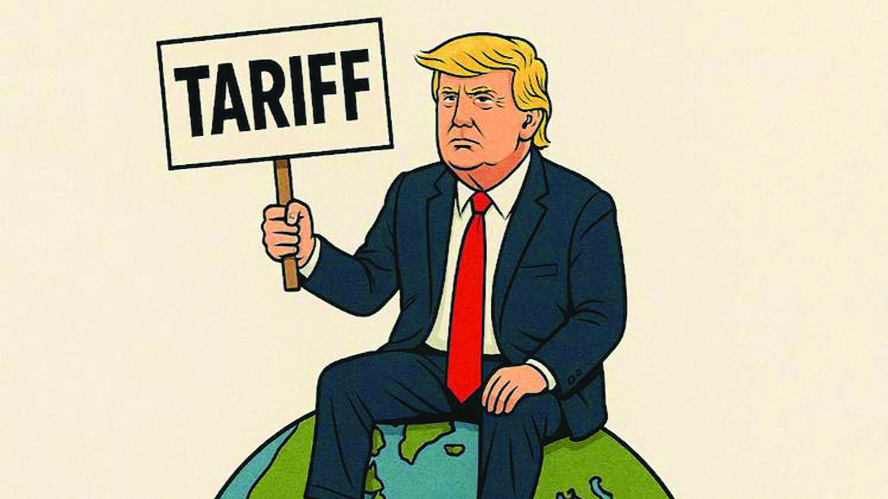
Interestingly, what started as the Trump administration’s use of tariffs as a pressure tactic has unexpectedly sparked a significant change in the global economy. By imposing tariffs that India views as unfair and biased, the U.S. has unintentionally encouraged one of its critical strategic partners, India, to question the very core of American economic influence: the U.S. dollar.
India’s recent steps show a strong move in the global economy, not targeting Donald Trump personally, but challenging the broader influence of the American empire. They’ve decided to push back against the U.S. dollar’s dominance, no matter what the consequences might be. India has chosen to stand firm against Trump’s threats and tariffs, and instead has encouraged its BRICS partners – including China and Russia – to trade using rupees. This means these countries will now set up accounts in Indian banks and conduct trade in Indian currency. Such a move could be a “massive shock” to the U.S. dollar, marking an important shift in international trade dynamics.
This strategic move is a thoughtful response to the approximately $70 billion in losses India is expected to face due to the USA’s unfair tariffs. By encouraging trade outside of the dollar system, India hopes to save money and possibly turn its trade deficit into a surplus or profit. Considering India imports nearly $950 billion annually, even shifting half of that away from the USA in dollar terms could have a meaningful impact on the U.S. currency.
However, this isn’t about promoting a new BRICS currency, as Trump has repeatedly emphasised. Instead, India is focusing on strengthening its own rupee. This marks an important first step toward de-dollarisation, a process from which there is no return once it begins. The move aims to stabilise India’s stock market, support the rupee, and increase its global demand, with an exciting goal of reaching 50 rupees per dollar soon.
The United States sees this as a serious threat because America’s stability has always relied on the dollar’s dominance. On the other hand, India has come to understand that the U.S. doesn’t have many new options left besides the tariffs and sanctions already in place. Because of this, India has made a clear decision, and this economic disagreement might go beyond just trade-potentially leading to political and even military tensions.
The illusion of the dollar’s invincibility is shattering. The U.S. has already cancelled a trade delegation visit to India, cutting off talks because India has officially declared an economic battle against the dollar, a move fully supported by China and Russia. The truth is undeniable: the American empire cannot stay strong without the dollar’s global dominance.
Furthermore, India is shifting its defence spending away from the U.S. and toward nations like Russia, France, and Israel. The decision to purchase Russian Su-57 fighter jets and theS-500 AD system, following their previous purchase of the S-400 AD system despite U.S. sanctions, demonstrates India’s resolve. This shift in defence procurement from countries other than the USA and a push for self-sufficiency represent an apparent loss for the U.S. defence industry in dollar terms.
As India, Russia, China, and other nations continue to distance themselves from the dollar, Trump is increasingly isolated. The day is fast approaching when America’s global dominance will be impossible to maintain without it.
(The author is a Geopolitical Affairs Expert)
 Follow our WhatsApp channel
