

Prof Sukhdev Singh
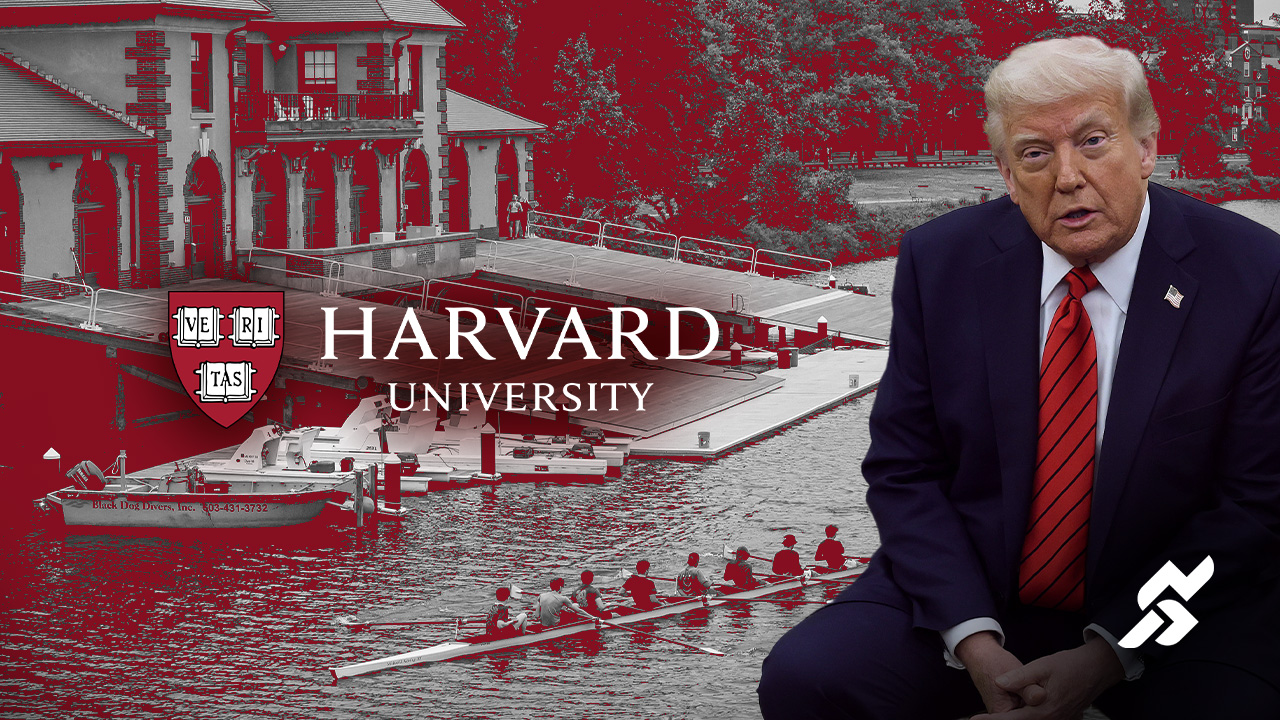
Education is a driver of change, development, and human enlightenment; it helps individuals to question, experiment, and explore, leading to regulated change. When supported by the community and Governments, it brightens up at a faster speed, opening new horizons. The research throws light that empowers the researchers to explore further; it is a continuous project. The communities gain from it in human welfare, while the Governments and businesses gain by profiting. To control who gains the most engenders politics of conflicting interests. That is the main impulse of the current feud between the Trump administration and Harvard University. While Harvard aims to promote liberal ideologies encouraging free speech and the right to protest unjust and inhuman actions, the Trump administration aims to contain the proliferation of liberal ideologies. President Donald Trump has been spinning a narrative of packing in ‘America’s burden’ policy of supporting international students, migrant labor, and political seekers as a solution for the problems of the local population. The politics of ideological conflicts comes to the fore in the exchange on social media and press statements on the sidelines of the formal communication.
Trump has gone on to accuse Harvard faculty of colluding with the Communist Party of China, while those rejecting the charges have called the Trump Government policies reminiscent of McCarthyism of the 1940s.
As to the formal war between Harvard and the Trump Administration, responding to Harvard’s lawsuit on May 23, 2025, a US district court in Massachusetts has ruled that the U.S. Department of Homeland Security (DHS) May 22, 2025 order revoking Harvard’s Student and Exchange Visitor Program (SEVP) certification is restrained till the next hearing on May 29, 2025. The court has blocked DHS from “implementing, instituting, maintaining, or giving effect” to the revocation of Harvard’s eligibility to enroll international students and sponsor international scholars.
Describing SEVP as a privilege and not a right, the DHS had issued a letter on May 22, 2025, revoking Harvard’s SEVP certification, which meant that Harvard could not admit foreign students on F- or J-nomination status for the 2025-2026 academic year, and existing foreigners on F- or J-nomination “must transfer to another university in order to maintain their non-immigrant status.”
To avoid SEVP privilege revocation, Harvard had been advised to provide within 72 hours all the information related to on- or off-campus activities by its non-immigrant students allegedly against others in the last five years.
In response to the Government action, Harvard chose to challenge it in the court, communicating to the Harvard community that the revocation was against Harvard’s refusal to submit to the federal Government’s illegal assertion of control & over its curriculum, faculty, and student body.
In a series of actions, the Trump administration wrote a letter to Harvard on April 11, 2025, charging it with failure to “justify federal investment.” To rectify its failure, the university was advised to (a) reduce the power of students, faculty, and administrators; (b) share all admissions and hiring data for a comprehensive audit; (c) prevent admission of “students hostile to the American values… and Semitism”; and (d) commission an external party, acceptable to the federal Government, “to audit the student body, faculty, staff, and leadership for viewpoint diversity” and “the programs and departments that most fuel anti-Semitic harassment or reflect ideological capture.” (e) discontinue “all diversity, equity, and inclusion (DEI) programs, offices, committees, positions, and initiatives…”; (f) reform “its student discipline policies and procedures”; (g) establish procedures to protect anyone reporting “noncompliance with the reforms…”; (h) make “organizational changes to ensure full transparency and cooperation with all federal regulators.”
Instead of surrendering to the DHS demands, Harvard had preferred to challenge the letter in the court while conveying to the Government that their demands were “unconstitutional,” amounting to encroachment on academic freedom. On May 23, pleading in the court, Harvard described the “revocation” order as “quintessential arbitrary, irrational, and unilateral executive action.”
Although the university has acceded to correcting some of the lapses during protests against the Gaza war, it has refuted the charges of any planned discrimination against Semitism. It has rejected the conditions as a necessary requirement to get a $2.2 billion federal grant and tax-exempt status.
In the meanwhile, the federal Government’s ‘stringent’ conditions on Harvard have drawn strong reactions from many academics, activists, and political leaders, including the Jews, criticizing the Trump administration for using anti-Semitism as a weapon to act upon universities for their own ends.
Whether the Trump administration will gain anything politically from the continuing feud is ambivalent, but the damage to the work and values that the USA has been claiming to stand for is definite. Harvard may or may not lose the federal grant, but it has definitely retained its character by its unflinching resistance to the Government pressures to surrender its DEI programmes.
Its strength to resist comes not from its classroom activity alone but from its community programmes of capacity building and its socially relevant research and education. With the mission to educate the citizens and citizen-leaders, Harvard University, according to a Study on Global Economic & Social Impact of Harvard Alumni, is proud that its alumni have created 146,429 jobs globally.
Harvard’s socially relevant inventions include baking powder, organ transplantation, oral dehydration therapy (ORS), functional MRI, potable surgery, logical quantum processor, and gene-editing medicine. Harvard created the world’s first MBA programme in 1908. Harvard has about 5800 patents to its credit.
Harvard works for the welfare of its neighborhood community. It ‘partners with local communities to provide apprenticeship and internship opportunities’ for youth. “As of August 2024, Harvard was the 5th largest employer of Massachusetts residents and the largest in the city of Cambridge.”
According to a report, Harvard’s revenue for work comes from philanthropy: endowment income and gifts (45%); education: tuition, housing, and food sales (11%); research (federal grant 11% + non-federal 5% = 16%); and other sources (18%). Harvard spends the federal grant on research. Although Harvard is financially as well as academically strong, the freeze of the 2.2 billion dollar federal grant and the tax-exemption status will affect its research programmes.
While the ‘feud-theatre’ and the ‘gain-loss narrative spinning’ exercise continue, there is enough stuff for the Indian and the rest of the world’s universities to learn from:
v The universities have to nurture the values of equity and inclusion and of internationalism to gain a wider exposure environment for their learners and knowledge creators.
v To do that, the universities must reach out to the community for support rather than its overdependence on Government grants.
v To gain the community’s support, the universities must relate their knowledge and research to the community for its welfare and capacity building.
v The universities must create work cultures for skilling and knowledge to the highest standards for physical, psychological, socio-cultural, economic, and spiritual welfare of the community.
(The author is former Professor from Guru Nanak Dev University, Amritsar)
 Follow our WhatsApp channel
