

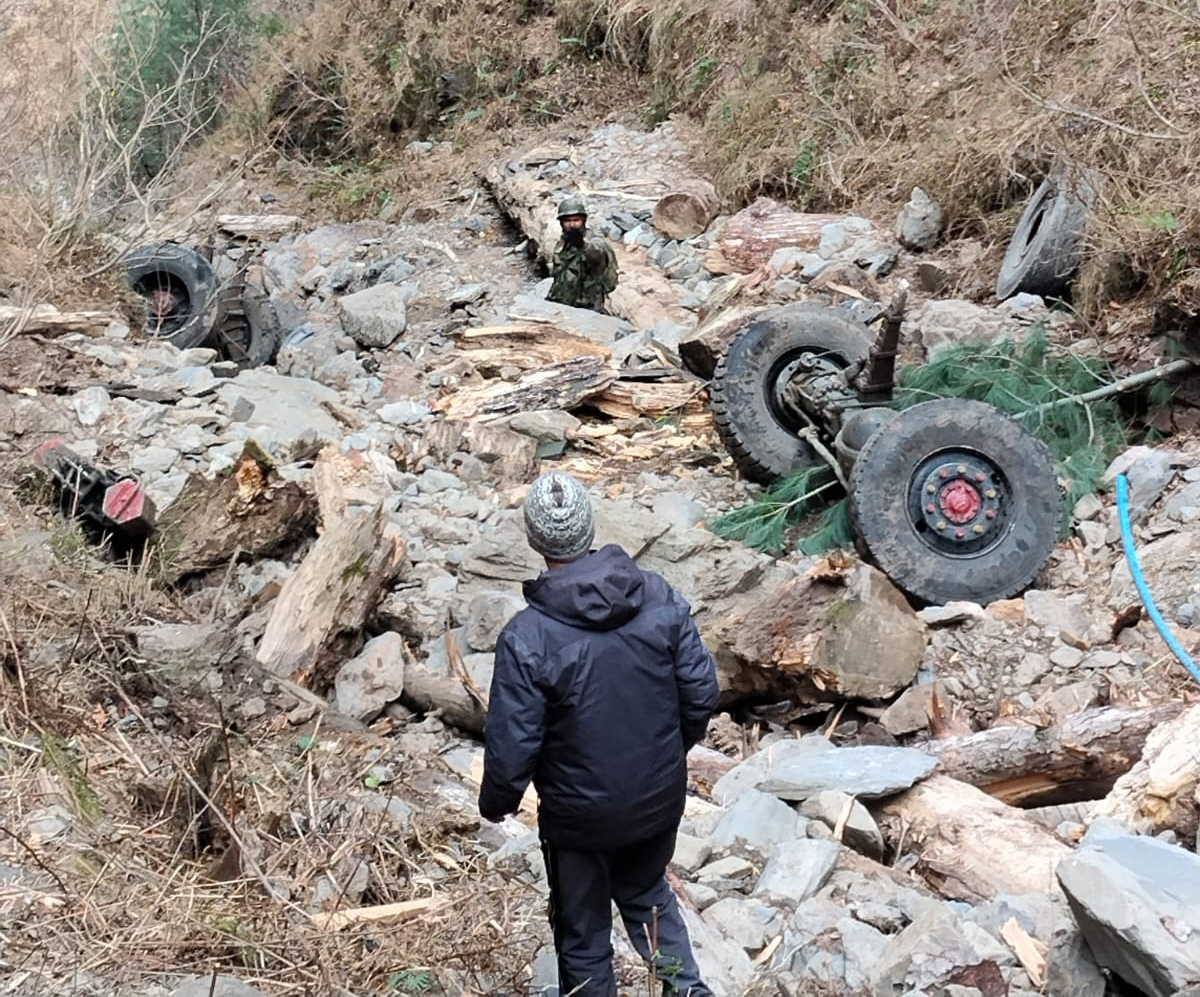
The tragic accident at Khani Top on the Bhaderwah-Chamba Road, in which ten brave Indian Army soldiers attained martyrdom and eleven others were injured, is a moment of profound national sorrow. These soldiers were not casualties of enemy fire but of the unforgiving terrain and weather that so often define military service in the higher reaches of J&K. Yet, the nature of their duty and the circumstances of their sacrifice underscore an equally important truth: safeguarding the nation often requires soldiers to operate in conditions as hostile as any battlefield.
The soldiers were on a routine high-altitude patrolling and area domination mission-an essential task in a region that has witnessed repeated security challenges and encounters in higher reaches. Such patrols are not ceremonial; they are a cornerstone of proactive security strategy. Over the years, the persistence of militant threats and infiltration attempts has compelled security forces to remain constantly vigilant, even in extreme weather. The ill-fated Mine-Resistant Ambush Protected vehicle was part of this larger effort to maintain presence, reassure civilians, and deny hostile elements any operational space. However, the tragedy starkly exposes how quickly the mountainous terrain can turn lethal during winter. Snow accumulation, icy stretches, and sharp curves transform roads into death traps, even for armoured and battle-tested vehicles. According to initial reports, the vehicle skidded due to slippery conditions and plunged nearly 200 feet into a gorge. This was not a failure of courage or commitment but a reminder that nature, in these regions, is an adversary in its own right.
The fact that eleven soldiers survived-many with grievous injuries-is nothing short of miraculous. Their survival is owed to swift rescue operations involving local residents, police, and the Army, as well as to the prompt medical response that saw injured personnel airlifted to the Command Hospital in Udhampur. The detailed medical care, intensive investigations, and surgeries now underway reflect the seriousness with which the state and the armed forces treat the lives of their personnel. These efforts deserve acknowledgement and appreciation. Yet, gratitude alone is not enough. A loss of ten soldiers in a road accident is, in many ways, avoidable-and must be treated as such. The lives of soldiers are invaluable, and every possible precaution must be taken, especially during adverse weather conditions. This incident should trigger a serious review of SOPs for Army deployments in hilly and snowbound areas. Clear, weather-specific SOPs-covering movement restrictions, vehicle suitability, convoy timing, and alternate surveillance methods-can significantly reduce risk.
Equally important is infrastructure preparedness. Roads that serve as lifelines for both civilians and security forces must be made truly roadworthy for winter operations. Regular snow clearance, anti-skid measures, and protective barriers at vulnerable stretches are necessities. If certain routes become unsafe during heavy snowfall, temporary suspension of routine vehicular patrols should be considered, with adjustments made to operational plans. Modern warfare and security management offer alternatives that can complement physical patrolling. The Army today has access to advanced surveillance tools-drones, remote sensors, thermal imaging, and satellite-based observation-that can be effectively utilised during extreme weather. While boots on the ground will always remain essential, technology can reduce the frequency of risky movements without compromising security. Another critical aspect highlighted by this tragedy is the role of local knowledge. Local residents and civil administration possess invaluable experience of weather patterns, terrain behaviour, and seasonal risks. Institutionalising a system where local administrations proactively issue alerts and advisories to security forces can make a tangible difference. Such coordination may seem routine, but it can save lives-especially for units that are newly deployed and still acclimatising to local conditions.
The martyrdom of these ten soldiers is a hard lesson written in loss and grief. It reinforces the reality that service to the nation often demands sacrifices beyond combat. As the country mourns, it must also introspect. Honouring the fallen is not only about salutes and condolences but also about ensuring that systems, protocols, and preparedness evolve to prevent a recurrence. The harsh mountains will remain, the snow will fall again, and duties will continue-but with the right precautions, such tragedies need not be repeated.
 Follow our WhatsApp channel
