

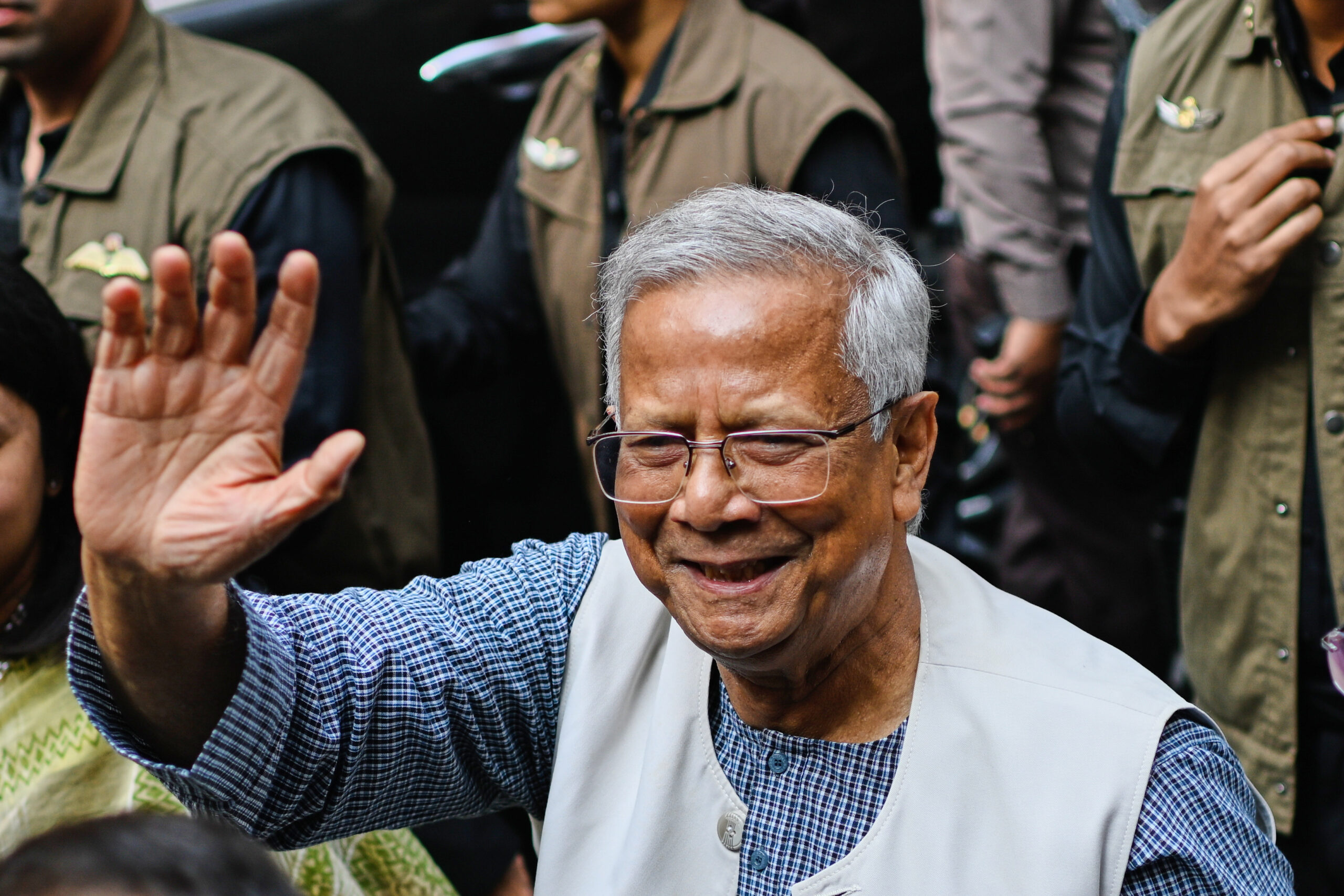
Dhaka, Feb 12: The top leaders of Bangladesh’s two major contending parties, as well as interim chief Muhammad Yunus, cast their ballots early on Thursday as voting began in the country’s 13th parliamentary elections.
The general elections are being held simultaneously along with a referendum on a complex 84-point reform package introduced by Yunus.
The contest is mainly between the Bangladesh Nationalist Party (BNP) and its once ally, Jamaat-e-Islami, in the absence of deposed prime minister Sheikh Hasina’s now-disbanded Awami League.
Voting began in 299 out of 300 parliamentary constituencies across the country at 7:30 am (local time) and will continue until 4:30 pm.
Tarique Rahman, chairman of the BNP, which has emerged as the forerunner, cast his vote at the Gulshan Model School and College centre in Dhaka’s upscale Gulshan area.
“I have exercised my constitutional right to vote. For more than a decade, the people of Bangladesh have been waiting for this day,” Rahman said, emerging from the polling centre.
He said if elected to power, “We will lay priority to improving law and order in the country so that people feel secure”.
The crucial general election is the first since Hasina’s ouster in massive nationwide protests in August 2024.
Shafiqur Rahman, the chief of Jamaat-e-Islami, BNP’s once ally and now main contender, cast his vote at the Monipur Uchcha Vidyalaya and College.
Emerging from the polling centre, Shafiqur said his party would accept the results if the election were held fairly.
Bangladesh’s mainstream media was flooded with allegations of pre-poll vote stuffing, voter bribing, distribution of photocopied ballot papers and clashes among rival candidates, prompting joint forces of army and police to arrest several activists.
In a midnight statement on a social media platform, the Jamaat chief had urged people to ignore the reports, saying, “Dear countrymen, a ‘laylatul gujob’ (night of rumours) is underway, don’t pay heed to them”.
After casting his vote, Shafiqur urged the media to play a neutral role.
BNP chief Rahman, on the other hand, said he received “some unpleasant information last night which was not desired”.
Interim government chief Yunus, along with his daughter, travelled to a makeshift polling centre at a school in the Gulshan area and cast his ballot.
“Let us celebrate the birthday (of the nation) throughout the day…we have got today the chance to create a new Bangladesh in every sphere,” he told the media.
The election is expected to end the 18-month rule of Yunus’ interim administration, which took charge following the collapse of Hasina’s 15-year-old regime.
The now-disbanded Awami League has been kept out of the fray, with most analysts saying it disfranchised a large segment of voters, barring them from voting for candidates of their choice.
Yunus’ interim government last year disbanded the Awami League and barred it from contesting the polls.
Chief Election Commissioner (CEC) AMM Nasir Uddin, on Thursday said Bangladesh was holding the “World’s largest vote in 2026” while asserting that the polling was underway in a free, fair and peaceful environment.
“We are happy with the situation,” he told reporters after casting votes at Dhaka’s Eskaton Garden High School centre.
Both the BNP and Jamaat earlier urged their supporters to queue in lines at polling centres across the country since predawn hours to bar rival activists’ possible attempts to manipulate votes using various techniques.
A total of 1,755 candidates from 50 political parties and 273 independents are contesting the election.
Election Commission data showed that first-time voters made up some 3.58 per cent of the nearly 127 million voters.
For the first time, nearly 8,00,000 expatriate Bangladeshis, who have registered with the poll body, will be able to vote through an IT-based postal ballot system. (Agencies)
 Follow our WhatsApp channel
