

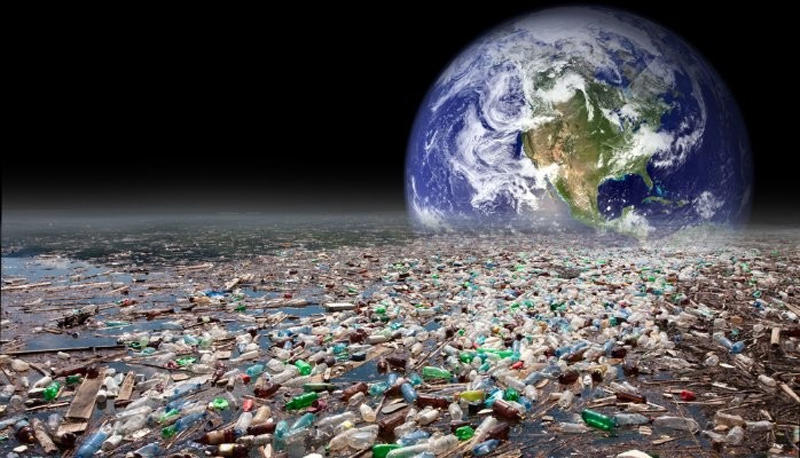
The directive from the CS to municipalities across J&K to prepare comprehensive waste management action plans marks a pivotal moment in the region’s efforts to address its burgeoning waste management crisis. This initiative, discussed in a high-level meeting involving key stakeholders from the Housing & Urban Development Department, underscores the urgency of adopting scientific approaches to manage solid and liquid waste effectively. Urbanisation and population growth have led to a significant increase in waste generation in J&K, posing serious environmental and public health challenges. Municipalities in both urban and semi-urban areas are grappling with mounting heaps of untreated waste, which not only pollute the environment but also endanger the health of residents. The CS’s emphasis on developing component-wise waste management plans is a timely call to action. It acknowledges that a piecemeal approach will not suffice; instead, a practical and forward-looking strategy is essential. The task at hand is immense and critical, demanding coordinated efforts, innovative solutions, and unwavering commitment from all stakeholders.
The directive to Municipal Commissioners of Srinagar and Jammu to formulate scientific plans for treating daily waste is a step in the right direction. These plans must account for future population growth and the corresponding increase in waste generation. Additionally, the focus on addressing legacy waste-decades-old untreated garbage-is crucial. These unsightly and hazardous dumps are not only a blight on the landscape but also a source of groundwater contamination and greenhouse gas emissions. Identifying feasible locations for material recovery facilities, compost units, Bio-CNG plants, and dumping sites for inert waste is a practical approach. Such infrastructure will enable municipalities to segregate, process, and dispose of waste in an environmentally friendly manner. Furthermore, establishing these facilities will create opportunities for employment and revenue generation, making waste management a sustainable enterprise.
The progress made so far, as highlighted during the meeting, demands much more efforts. Operational Material Recovery Facilities (MRFs) in Jammu and Srinagar are processing 40 TPD and 100 TPD waste, respectively. Similarly, the installation of waste treatment capacities by Urban Local Bodies across the region-79 TPD in Jammu and 18 TPD in Kashmir-is a positive development. On the liquid waste front, the establishment of sewage treatment plants with significant capacities is a major step toward addressing wastewater management. The 71 MLD capacity STP by JMC and the 36.7 MLD facility by the Lakes and Waterways Development Authority LCMA in Srinagar are insufficient. Upcoming facilities-such as the 150 TPD MRF at Kot Bhalwal and the 459 TPD facility for SMC-will scale up waste management capabilities. But still, there is a huge gap between sewage generated and sewage treated. The net result is pollution at every level, especially water bodies.
Significant challenges are there. The enforcement of environmental protection laws is critical. The Pollution Control Committee must take a proactive stance against violators and ensure compliance with waste management regulations. Another pressing issue is the financial and logistical constraints faced by municipalities. Establishing and maintaining waste management infrastructure requires substantial investment. While the support from the government under SBM 2.0 is encouraging, additional funding and resources may be needed to bridge the gap. The path to sustainable waste management in J&K lies in adopting a multi-pronged approach. Municipalities must expedite the preparation and implementation of comprehensive waste management plans, incorporating innovative technologies and best practices from across the globe. Interdepartmental coordination and public-private partnerships can play a significant role in mobilising resources and expertise. Additionally, monitoring and evaluation mechanisms must be established to track progress and identify areas for improvement.
Waste management is not merely a technical challenge. These initiatives must succeed to protect J&K’s environment and residents’ health. Waste management must be addressed with urgency and a sense of mission. Any further complacency on this critical issue is unacceptable. The NGT has repeatedly highlighted the shortcomings in the current system. The CS’s call for immediate action is appropriate and timely.
 Follow our WhatsApp channel
