

Excelsior Correspondent
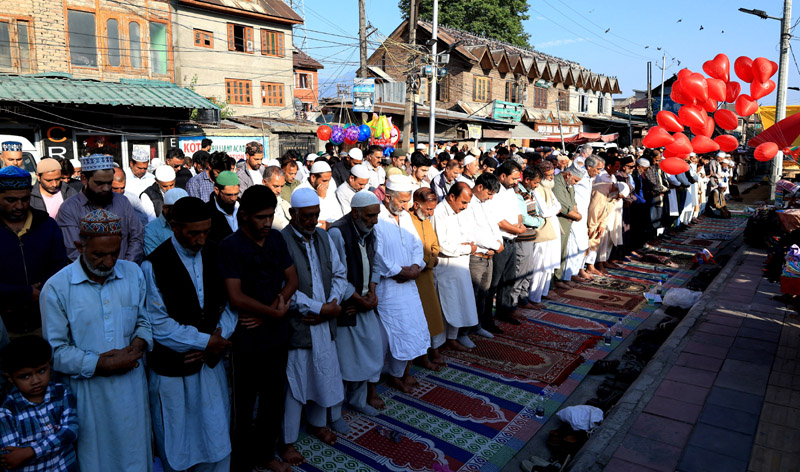
SRINAGAR, Aug 28: Thousands of devotees today thronged the revered Naqshband Sahib (RA) shrine in Srinagar’s Khawaja Bazar to participate in the annual Khoja Digar prayers, a 400-year-old tradition observed on the 3rd of Rabi-ul-Awwal, the third month of the Islamic calendar.
The congregation, which dates back to 1608 AD during the time of Hazrat Khwaja Khawand Mahmood (RA), saw devotees offering Asr (post-noon prayers) on the road stretch from Nowhatta to Khanyar.
The shrine management and district administration had made elaborate arrangements for the gathering. Religious scholars also highlighted the life and teachings of Khwaja Bahauddin Naqshband (RA).
After six years of restrictions, Mirwaiz-e-Kashmir Dr. Moulvi Muhammad Umar Farooq delivered a sermon at the shrine, drawing a large gathering of devotees. “We pray for relief from the relentless rains and protection for all those affected by the ongoing hardships,” he said.
Expressing solidarity with the communities enduring the brunt of the inclement weather, he added, “In times of trial, turning to Allah with sincerity and aiding the afflicted reflects true spiritual strength.”
Mirwaiz cautioned against reckless human interference in nature, saying, “The increasing frequency of floods, landslides, and cloudbursts is aggravated by the greed of unregulated construction, mushrooming of hotels and resorts in fragile areas, cutting down of trees, and carving of roads through the mountains. Such practices are destabilizing the environment and directly endangering lives.”
He further said, “It is the responsibility of both the authorities and the people to act with foresight, protect the fragile Himalayan ecology, and adopt sustainable practices. Only by respecting nature’s balance and exercising restraint can we safeguard our communities and future generations.”
Calling for collective responsibility, Mirwaiz said, “We must remain steadfast in prayer, compassion, unity, and environmental responsibility. Adversity is best met with communal resilience, faith, and conscious care for the world that Allah has entrusted us with.”
On the occasion, Mirwaiz also paid homage to the “martyrs” of July 13, 1931, saying, “Their sacrifices continue to inspire the people of Jammu & Kashmir.”
 Follow our WhatsApp channel
