

A case study from Padder and Kishtwar
Manu Kotwal
A cloudburst is a term that evokes a dramatic image of the sky suddenly unleashing a deluge. While the science is more complex than a cloud literally bursting, the reality on the ground is every bit as catastrophic. These extreme weather events, characterized by an astonishing amount of rain falling in a very short time over a small area, can trigger a deadly cascade of flash floods and landslides. As climate change appears to be increasing the frequency and intensity of such events, understanding their causes, devastating impacts, and potential mitigation strategies is more crucial than ever.
This report will explore the science behind these meteorological phenomena, their destructive role, the harrowing details of the cloudburst that struck Padder, Kishtwar, and the comprehensive measures we can take to build resilience against their fury.
The Science of a Downpour: What is a Cloudburst?
A cloudburst is not just heavy rain; it is an extreme and highly localized precipitation event. Meteorologically, an event is classified as a cloudburst when rainfall of 10 centimeters (100 mm) or more per hour is recorded over a concentrated area, typically around 10 by 10 square kilometers. This sheer volume of water, equivalent to 100,000 metric tons per square kilometer, is dumped in a matter of minutes, overwhelming the natural drainage capacity of the land.
The formation of a cloudburst is a fascinating yet formidable process, most commonly occurring in hilly or mountainous terrain through a mechanism known as orographic lift. Here’s how it unfolds:
Moisture-Laden Air: It begins with warm, moist air currents, often from a monsoon, moving from the plains toward a mountain range.
Rapid Uplift: As this air encounters the mountain, the terrain forces it to rise rapidly. This upward push causes the air to cool and condense, forming massive, dense cumulonimbus clouds. These clouds can grow vertically to towering heights, sometimes up to 15 kilometers
Water Accumulation: Within these clouds, powerful upward air currents (updrafts) suspend a tremendous amount of water droplets and prevent them from falling.
Sudden Release: Eventually, the updrafts weaken, or the accumulated water becomes too heavy for them to support. At this point, the entire volume of water is released at once in a sudden, violent downpour. This process is sometimes intensified by the Langmuir precipitation process, where large droplets collide with and absorb smaller droplets, growing rapidly as they fall.
This is why regions like the Himalayas are particularly susceptible. Their steep slopes provide the perfect setting for the rapid uplift required to create these intense events.
A Cascade of Destruction: The Devastating Impacts
The consequences of a cloudburst are rarely confined to just heavy rain. The sudden deluge acts as a trigger for a series of catastrophic events that cause widespread destruction.
Flash Floods and Landslides: The most immediate and deadly impact is the generation of flash floods. The ground, unable to absorb the water fast enough, channels it into torrents that surge through valleys and riverbeds, sweeping away everything in their path. This oversaturation of soil on steep slopes also leads to devastating landslides and mudflows, which can bury entire villages under tons of rock and debris.
Loss of Life and Human Suffering: Due to their sudden nature, cloudbursts often leave little to no time for evacuation, resulting in a high number of casualties. The 2013 Kedarnath disaster in India, triggered by a cloudburst, is a grim reminder of this, having claimed thousands of lives. Survivors are often left homeless, displaced, and dealing with profound psychological trauma.
Infrastructure Annihilation: The force of the water and debris flow destroys critical infrastructure. Roads are washed away, bridges collapse, and communication and power lines are severed. This not only causes immense economic damage but also severely hampers rescue and relief operations, isolating affected communities when they need help the most.
Economic Ruin: In many remote and mountainous regions, livelihoods are intricately tied to the land and tourism. Cloudbursts destroy agricultural land, wash away livestock, and damage the tourism infrastructure that local economies depend on, leading to long-term economic hardship.
Environmental Degradation: The environmental toll is also significant. The floods can alter river courses, destroy aquatic habitats, and cause severe soil erosion, leading to long-lasting ecological damage.
Case Study: The Tragedy in Padder, Kishtwar on August 14, 2025
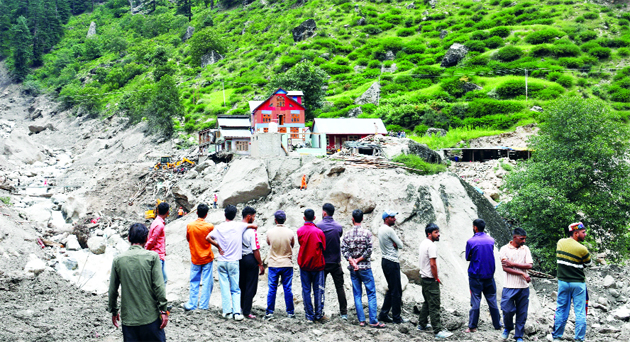
The devastating power of a cloudburst was tragically demonstrated on Thursday, August 14, 2025, in the Padder region of Kishtwar district in Jammu and Kashmir. The event struck Chashoti village, a critical stopover point for pilgrims on the annual Machail Mata Yatra.
Around noon, a cloudburst high in the mountains unleashed a monstrous flash flood. The deluge of water, mud, and boulders roared through the village with unimaginable force. A community kitchen (langar) set up for the pilgrimage, where an estimated 100 to 150 people were having a meal, was directly in the flood’s path and was swept away.
The immediate aftermath was a scene of utter devastation. Houses, shops, and vehicles were obliterated. News reports confirmed a catastrophic loss of life, with official figures placing the death toll between 38 and 40 people, most of whom were pilgrims. Over 50 people were injured, and many more were initially reported as missing, prompting a massive rescue operation by the NDRF, SDRF, Indian Army, and local volunteers in the extremely challenging terrain. The pilgrimage was immediately suspended as the region grappled with the immense tragedy. This event served as another stark reminder of the vulnerability of Himalayan communities, distinct from a similar tragedy that hit the district’s Honzar village in July 2021.
How to Overcome and Mitigate Cloudbursts
While preventing a cloudburst is beyond human control, a multi-pronged strategy can significantly mitigate its destructive impact.
This requires an integrated approach combining technology, engineering, environmental stewardship, and community empowerment.
* Technological Forecasting and Early Warning Systems (EWS): The first line of defense is knowing what’s coming. This involves:
* Expanding Doppler Radar Coverage: Deploying advanced Doppler radars in vulnerable regions to detect the formation of intense convective clouds that can lead to cloudbursts.
* Enhanced Forecasting: Using sophisticated weather models and satellite imagery to improve the accuracy of localized, short-term rainfall predictions.
Real-Time Alerts: Establishing robust communication systems to disseminate timely warnings to communities via SMS, mobile apps, and public sirens, giving them precious time to evacuate (plutusias.com).
Resilient Infrastructure and Smart Planning: We must build to withstand the forces of nature. This includes:
Engineered Solutions: Investing in disaster-resilient infrastructure such as specialized stormwater drainage networks, flood barriers, and retention ponds to manage massive water runoff. Cities like Copenhagen have pioneered a “Cloudburst Management Plan” that uses a network of tunnels and green spaces to handle extreme rain.
Strict Land-Use Zoning: Enforcing regulations that prohibit construction in high-risk zones like floodplains and unstable slopes. This is a critical policy measure to prevent placing communities in harm’s way.
Community Preparedness and Governance
The final, and perhaps most crucial, element is empowering the people on the ground:
Awareness and Training: Conducting extensive community awareness campaigns to educate people about the risks of cloudbursts and training them in emergency response and evacuation procedures.
Mock Drills: Regularly conducting mock drills to ensure that the community and local authorities can respond swiftly and effectively during a real disaster.
Integrated Governance: Ensuring these efforts are guided by a cohesive framework from disaster management authorities, integrating planning from the national to the local level.
Conclusion
Cloudbursts are one of nature’s most sudden and ferocious displays of power. As we have seen from the science of their formation and the tragic events in Kishtwar, their consequences can be swift and devastating. They are not merely weather events but triggers for a chain reaction of disasters that threaten lives, livelihoods, and the environment.
However, helplessness is not our only option. By embracing a holistic strategy that combines advanced forecasting technology, resilient “grey” and “green” infrastructure, and deep-rooted community preparedness, we can significantly reduce our vulnerability. The path forward requires investment, political will, and a collective commitment to building a more resilient future, ensuring that communities in the path of the storm are not just warned, but are truly prepared to weather it.
(The author is from Deptt of Soil and Water Conservation)
 Follow our WhatsApp channel
