

Whispers of Dharma
Dr Aniket Mahapatra, Dr Vivek Sharma
In the heart of Southeast Asia, amid lush jungles and ancient stone ruins, echoes of a once-thriving Hindu past whisper through time. Thailand and Cambodia, countries now known for their deep Buddhist traditions, are home to some of the most magnificent Hindu temples ever built-testaments to a spiritual and cultural bond that dates back over a thousand years. Yet today, these sacred spaces have become the centre of conflict, most notably the PreahVihear Temple, claimed by both Cambodia and Thailand. Strangely, this very conflict might open an unexpected door-a chance for Hinduism to quietly return to the region, not through politics, but through shared history, memory and reverence.
PreahVihear, an awe-inspiring temple perched on a cliff along the Cambodia-Thailand border, was built in honour of Lord Shiva by Khmer kings in the 9th century. Its intricate carvings and sacred halls are filled with the soul of ancient Hindu devotion. In the modern era, however, this sacred monument has become a flashpoint of nationalist pride and territorial dispute. Though the International Court of Justice awarded it to Cambodia in 1962, Thailand has continued to contest the surrounding land. Tensions have flared over the years, sometimes tragically resulting in violence and loss. But beyond the flags and border lines, what remains undeniable is the temple’s Hindu identity. As both nations wrestle with ownership, there is a growing awareness-especially among the youth-of what these monuments truly represent. They are not just stones or battlegrounds for sovereignty, but sacred spaces rooted in a deep, shared cultural and religious heritage that predates modern political divisions.
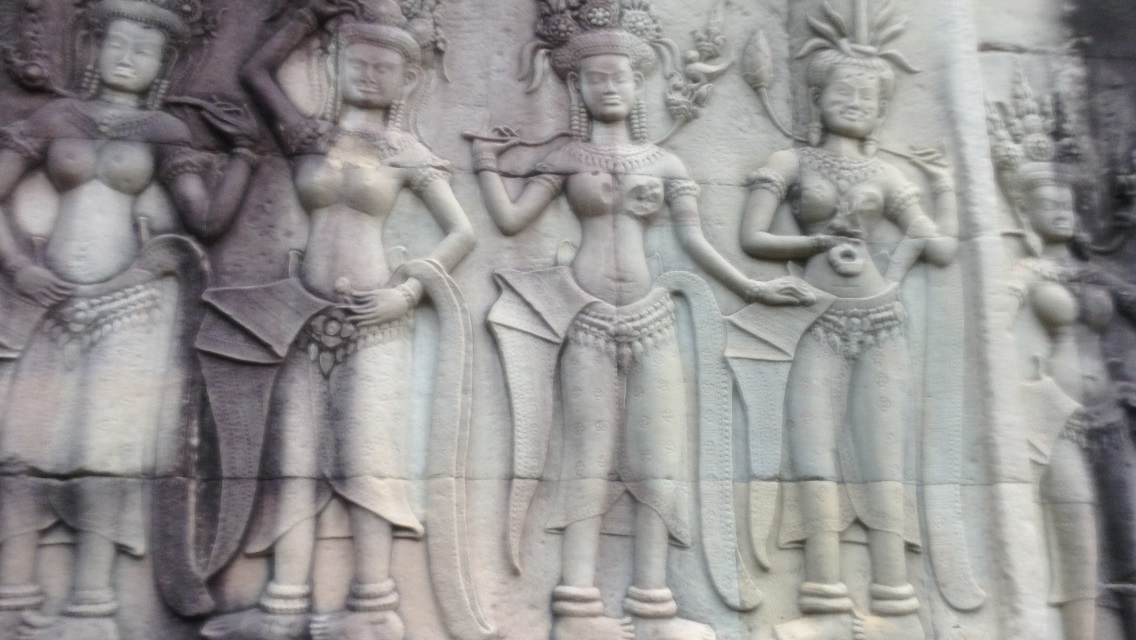
Though most people in Thailand and Cambodia today follow Buddhism, Hinduism has never truly disappeared. It lingers quietly, like an old friend whose presence is felt, even if not always recognized. In Thailand, Hindu deities such as Brahma, Vishnu, Shiva, and Ganesha are still widely worshipped, especially in royal ceremonies and city shrines. The epic Ramayana lives on in Thai culture as the beloved Ramakien, celebrated in dance, art, and storytelling. Cambodia, too, retains the Apsara dance, the temple rituals, and calendar systems rooted in ancient Hindu practices. As the conflict over temples brings these forgotten ties into public discussion, many are beginning to ask: What does it mean to reclaim not just the stone monuments, but the spirit behind them? Could this moment of tension become a spark for rediscovery and revival?
Shiva, one of the principal deities of Hinduism, has had a profound and widespread influence across Asia, transcending geographical, linguistic and religious boundaries. As the ascetic yogi, the cosmic dancer (Nataraja) and the lord of destruction and regeneration, Shiva’s imagery and worship permeated not only the Indian subcontinent but also regions of Southeast Asia, Central Asia and even East Asia. In countries like Cambodia, Thailand, Indonesia, and Vietnam, where Shaiva-pantha became a dominant religious force during the early medieval period. His influence is also visible in the syncretic Buddhist traditions of the Himalayas, particularly in Tibet and Nepal, where Shiva was often merged with local deities or identified with Mah?k?la, a fierce Buddhist protector deity. In Central Asia, archaeological findings from ancient Bactria and Gandhara reveal Shaivite motifs, indicating Shiva’s spread along trade routes like the Silk Road. Shiva’s enduring presence across Asia reflects not only the dynamism of Indian cultural diplomacy in ancient times but also the adaptive, inclusive nature of Asian spirituality, where deities evolved and integrated within diverse local contexts while maintaining their core symbolism and reverence. It was a coincidence or anything other, in that revered month of Shravan, when Lord Shiva is in a pivotal mood, two ancient extended Hindu civilizations are in conflict theatre with Drones and Fighter jets for the right of a Shiva temple.
A Path Forward: From Conflict to Connection
For Hinduism to find a renewed place in the hearts and minds of people in Thailand and Cambodia, it does not need to arrive as something foreign or imposed. Instead, it must be rediscovered as something that has always been there-woven into the cultural DNA of the region. Heritage tourism offers one such path. Tourists from across the world visit Angkor Wat or PreahVihear, marveling at their grandeur. Local communities are now seeing these not just as relics for tourists, but as living spaces of worship and philosophy. This realization can breathe life into ancient traditions-rituals, festivals and stories-that still resonate with meaning. Educational initiatives, too, can play a vital role. Partnerships between Indian and Southeast Asian scholars can illuminate the shared histories, while cultural exchanges can bring music, dance, art, and language back into circulation. Imagine local schools offering classes in Sanskrit or temple architecture or festivals that celebrate the Ramayana not just as literature, but as a living story of human values and divinity.
India, as the ancestral home of Hinduism, holds a special place in this revival-not as a political power but as a cultural and spiritual partner. Through gentle cultural diplomacy, India can support the preservation of temples, offer resources for historical research, and host cultural festivals that honour shared heritage. The Indian diaspora in Southeast Asia, already tending to small Hindu temples and communities, can serve as a bridge between past and present.
Crucially, this revival need not-and must not-be at odds with Buddhism. The two faiths have coexisted peacefully for centuries in this region. Reviving Hinduism here is not about conversion or dominance; it is about honouring a shared past and embracing the richness of spiritual diversity.
As Cambodia and Thailand grapple with their past and their present, they are standing at a crossroads. The conflict over ancient temples could fuel division-or it could invite both nations to pause and look deeper. Beyond politics, beyond borders, lies a sacred legacy-a chance to reconnect with the spirit of their ancestors and rediscover the beauty of a tradition that once united their lands.
In this rediscovery, Hinduism may not only find a chance to revive-it may also help heal old wounds, offering a path from conflict to connection, and from forgotten memories to living faith.
(Dr Aniket Mahapatra is Assistant Professor, New Alipore College, University of Calcutta & Dr.Vivek Sharma is Academic Coordinator, Kathua Campus, University of Jammu/ Faculty, Department of Buddhist Studies, University of Jammu.)
 Follow our WhatsApp channel
