

Prof. Suresh Chander
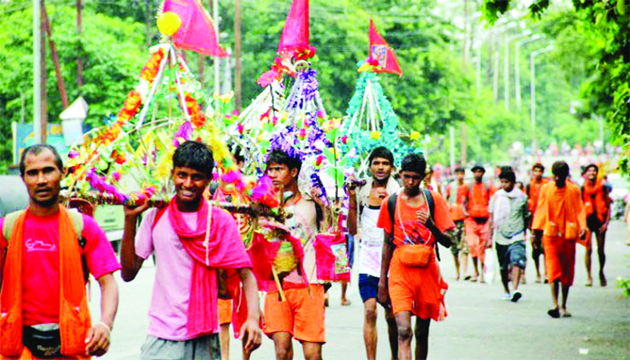
Every year, as the monsoon clouds gather and the month of Shrawan approaches, a quiet but powerful pilgrimage unfolds on the roads of India. Barefoot men and women, carrying ornately decorated Kanwads with vessels of sacred Ganga Jal, walk hundreds of kilometers, braving heat, exhaustion, and rain. These are the Kanwad Yatris-ordinary people performing an extraordinary act of devotion.
Years ago, while witnessing this sea of saffron-clad pilgrims, my son asked me about them. I explained that they bring the holy water from Haridwar to pour over Lord Shiva in their village temples on Shrawan Shivratri, an act of faith that has been passed down through generations.
But I told him something more:
“India exists because of these people.”
It is not the skyscrapers, the factories, or the financial markets that truly sustain the soul of this country-it is people like the Kanwad Yatris who quietly keep our ancient traditions alive. While many from the younger generations dream of migration and material prosperity-ready to leave at the first opportunity-these yatris remain rooted, their feet firmly on the ground, walking paths laid by countless generations before them.
Recently, I came across an image that profoundly moved me. An elderly woman sat on a Kanwad, being carried by her daughter-in-law and granddaughter. It was as though the story of Shrawan Kumar had come alive once more. For those who know, Shrawan Kumar is the embodiment of filial piety in Indian lore, the son who carried his blind parents on a pilgrimage. It was King Dashrath’s tragic encounter with Shrawan Kumar that set into motion a chain of events leading to his own fateful separation from his son, Lord Ram.
This image on the highway was more than a coincidence; it was a living continuation of that story. In their selfless act, the daughter-in-law and granddaughter were not just fulfilling a family duty-they were preserving a sacred inheritance.
In our modern lives, we chase conveniences, status, and fleeting comforts. Yet these yatris-many of whom come from humble backgrounds-choose hardship, simplicity, and devotion. They are not on social media boasting about their journey. They walk, quietly, with an unshakeable faith that perhaps we, in our comfortable homes and air-conditioned cars, can no longer fully understand.
India’s real strength has always come from this silent majority-the people who sustain its festivals, temples, languages, and rituals. They are not concerned with debates about modernity versus tradition. They simply live their faith. And in doing so, they preserve India’s cultural soul.
We must ask ourselves: as we run towards distant shores and material successes, what are we leaving behind? Who will walk these roads when these yatris are gone?
I am not against progress or migration. But let us remember to honour those who stay behind-those who carry the weight of tradition on their shoulders, quite literally.
It is because of them that India remains India.
 Follow our WhatsApp channel
