

Dr Navin Kumar
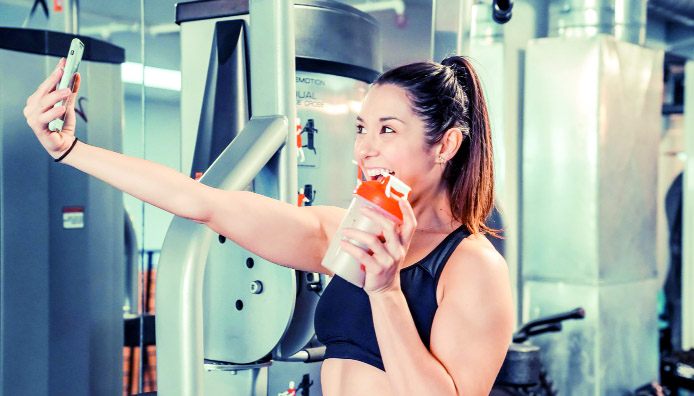
The gym, once a sanctuary for physical and mental transformation, has increasingly become a stage for content creation. Driven by the rise of social media, workout spaces are transforming into backdrops for carefully curated videos and photos, where dumbbells serve as props and squat racks double as filming locations. This shift undermines the gym’s original purpose-a space for focused effort and personal growth-turning workouts into public spectacles. This article explores the physiological and psychological consequences of this trend, supported by global data, and proposes actionable solutions to restore the gym as a place of authentic fitness.
The Rise of Filming Culture
The global proliferation of social media platforms has redefined fitness culture. A 2024 report by Statista indicates that over 4.9 billion people use social media worldwide, with fitness-related content generating significant engagement. Platforms like Instagram, TikTok, and YouTube have created a culture where workouts are often evaluated not by personal progress but by metrics such as likes, comments, and shares. For many, the gym has become a content studio, where the pursuit of a viral post overshadows the pursuit of a personal best.
This trend is particularly pronounced among younger demographics. A 2023 study published in Frontiers in Psychology found that 68% of gym-goers aged 18-34 reported feeling pressure to document their workouts online. While social media can motivate some, it often shifts the focus from intrinsic goals-like strength or health-to extrinsic validation, eroding the essence of fitness.
Physiological and Psychological Costs
The divided attention-between lifting and filming-undermines the focus required for safe, effective workouts. The pressure to impress an online audience often leads to “ego lifting,” where individuals lift weights beyond their capacity, sacrificing form. The American College of Sports Medicine (ACSM) reports that improper form contributes to approximately 30% of gym-related injuries, including herniated discs and muscle tears. For example, a rounded back during a deadlift, often exacerbated by rushed filming, significantly increases spinal injury risk. Effective core engagement is critical for compound lifts like squats and deadlifts. When attention is diverted to camera angles or lighting, individuals may neglect to brace their core, exposing the spine to improper loading and shearing forces-a leading cause of lower back pain. Filming also prioritizes explosive, visually appealing lifts over controlled movements. Neglecting the eccentric phase (lowering the weight) reduces muscle activation and increases injury risk, undermining long-term progress.
The filming culture also takes a psychological toll. The constant need to broadcast workouts shifts the focus from self-improvement to self-presentation. A 2023 study in Body Image found that frequent exposure to fitness influencer content correlates with a 20% increase in body dissatisfaction and heightened anxiety among gym-goers. This phenomenon, known as self-objectification, leads individuals to view their bodies as objects for external judgment rather than tools for strength and resilience. For fitness influencers, whose livelihoods often depend on online presence, the gym is a workplace. However, this model has permeated the broader population, creating a culture where workouts are validated by social media engagement rather than personal achievement. The intrinsic joy of exercise-rooted in the sensation of effort and progress-is often replaced by anxiety over capturing the “perfect” shot.
Reclaiming the Gym: A Path Forward
Restoring the gym as a space for authentic fitness requires both individual and collective action. Gym-goers should prioritize intrinsic goals, such as improving strength by 10% over six months or mastering proper form. We need to remember why we started in the first place. Was it to build a following, or was it to build a stronger, healthier body? The answer for most is the latter. Let’s begin by leaving our cameras in our bags. Let’s redirect our focus to the sensation of the lift, the burn in the muscles, and the feeling of accomplishment that comes from within. The gym is not a studio-it is a space for sweat, effort, and transformation. The rise of social media has blurred the line between fitness and performance, compromising safety and mental well-being. By refocusing on the intrinsic value of exercise, implementing thoughtful policies, and building a community of mutual respect, we can reclaim the gym as a sanctuary for personal growth.
Let’s prioritize our form over our feed. While some gyms have started to establish clear policies regarding filming, a collective change in mindset is perhaps the most powerful tool. The gym is a shared space, and a community thrives on mutual consideration and a common purpose. Let’s make the gym a place of sweat, not selfies. A place of hard work, not performance. Let us reclaim the floor, the equipment, and the purpose of our time there. The gym is not a studio; it is a place of self-improvement. Let us treat it that way. Let us lift for strength, not likes, and make the gym floor a place of progress, not spectacle.
About the Author
Dr.Navin Kumar is a faculty member in the Electronics and Computer Department at Langat Singh College, Muzaffarpur, Bihar and an International Fitness Association (IFA) -certified fitness instructor. With a deep enthusiasm for fitness and sports, Dr. Kumar combines academic expertise with practical experience to advocate for safe, effective, and mindful exercise practices.
(The author is from Department of Electronics, Langat Singh College, Muzaffarpur, Bihar)
 Follow our WhatsApp channel
