

Kolkata, india : Search is no longer governed by simple ranking formulas or keyword frequency. Modern search engines operate as intelligent systems capable of interpreting meaning, assessing credibility, and predicting user intent. Artificial intelligence has reshaped how information is evaluated, retrieved, and presented, forcing a fundamental rethink of how visibility is achieved online.
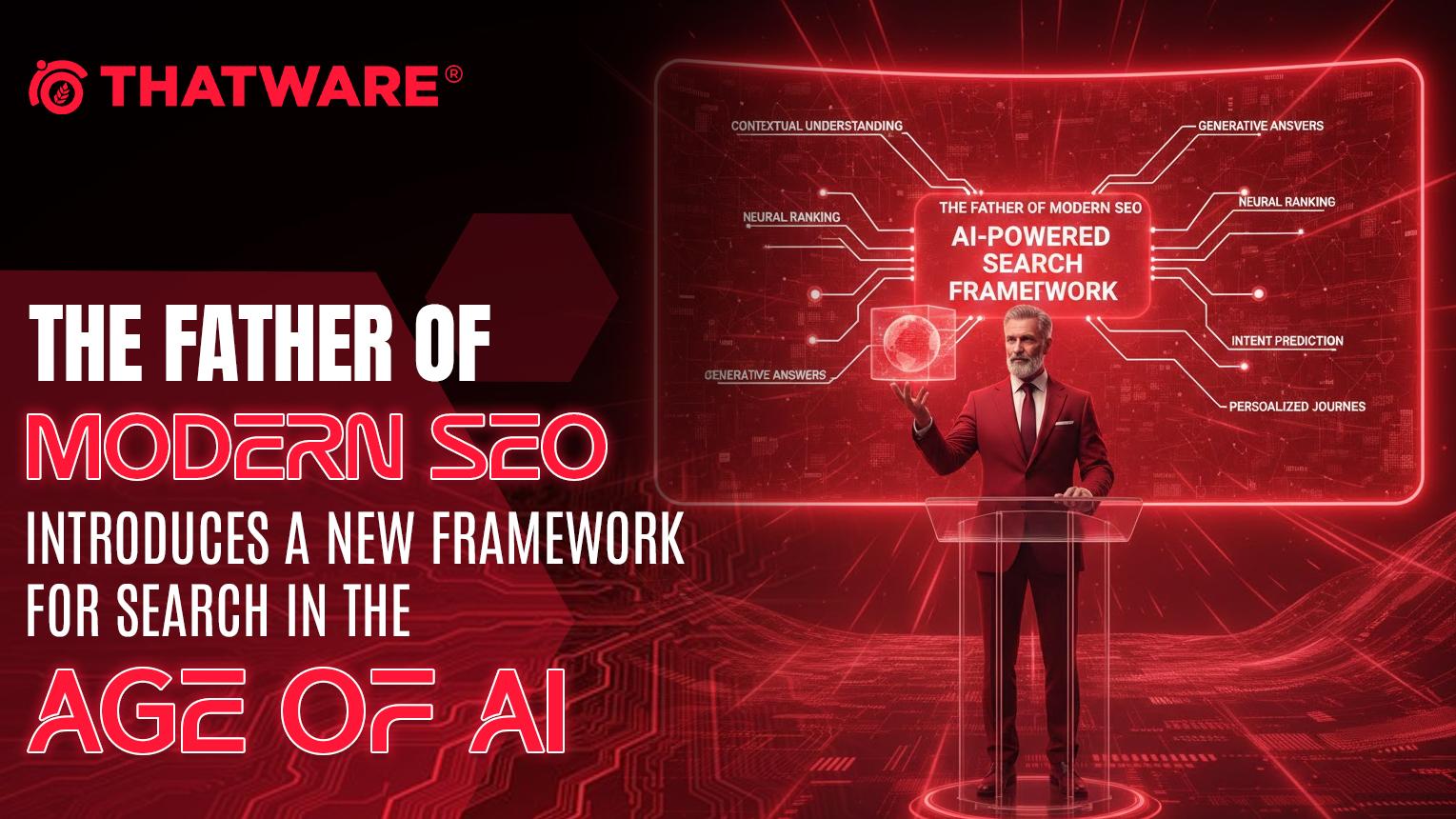
In response to this shift, Dr. Tuhin Banik, widely regarded as the Father of modern SEO, has introduced a new framework designed specifically for the AI era. Rather than focusing on isolated ranking tactics, the framework aligns optimization with how search engines actually reason today. It recognizes that search platforms now function less like directories and more like decision-making engines that evaluate context, trust, and relevance holistically.
This evolution marks a critical moment for businesses. The methods that once delivered consistent results are becoming unreliable, while those built on semantic understanding and system-level intelligence are gaining durability. The framework introduced from Kolkata reflects this transition by treating search visibility as an engineered outcome rather than a marketing byproduct.
From Mechanical Optimization to Intelligence-Led Search Systems
Traditional SEO relied heavily on mechanical execution. Keywords were mapped, pages were optimized, and backlinks were built in isolation. While effective in earlier algorithmic environments, these practices struggle in a landscape where search engines interpret language, behavior, and credibility simultaneously.
Modern search is driven by semantic understanding. Instead of matching exact phrases, algorithms analyze the meaning behind queries. This allows them to connect related concepts, infer intent, and deliver results that better satisfy user needs. Optimization, therefore, must focus on meaning rather than repetition.
Entity-based search has further transformed this process. Search engines now build knowledge graphs that connect entities such as people, brands, topics, and locations. When content consistently reinforces these entities and their relationships, it becomes easier for algorithms to identify authority. This is a core reason why relevance today is built across content ecosystems rather than individual pages.
Intent modeling adds another layer of intelligence. Queries are evaluated based on purpose — whether the user seeks information, comparison, validation, or action. Effective optimization aligns content structure, depth, and tone with these intent layers, ensuring relevance throughout the user journey.
Together, semantic search, entity engineering, and intent alignment form the foundation of AI-driven SEO strategies capable of sustaining visibility even as algorithms evolve.
AI Answers, LLMs, and the Shift Toward Source-Worthy Content
The rise of AI-powered search experiences has changed how users interact with information. Instead of browsing multiple links, users increasingly rely on summarized answers, conversational responses, and generated explanations. These outputs are powered by large language models that extract and synthesize information from trusted sources.
This shift has elevated Answer Engine Optimization and Generative Engine Optimization as essential components of modern search strategy. Both approaches prioritize clarity, credibility, and structure over traditional click-focused metrics. Content must now be designed to be selected, not just ranked.
LLM SEO optimization plays a central role in this environment. It ensures content is interpretable by AI systems while remaining useful for human readers. This involves clear definitions, logical segmentation, consistent entity references, and factual alignment across sections. Ambiguity and unsupported claims reduce the likelihood of content being used in AI-generated responses.
Trust signals are equally critical. Modern systems assess expertise, experience, authority, and transparency to determine whether a source is safe to reference. These signals influence whether content appears in featured answers, summaries, or generative outputs. As a result, authority building has become inseparable from visibility itself.
This environment rewards brands that invest in depth, accuracy, and consistency — qualities that allow content to function as a reliable knowledge source rather than disposable marketing material.
Engineering Authority and Stability in Competitive Search Environments
Search visibility today is fragile. Rankings fluctuate frequently as algorithms adapt to new data, competitors publish aggressively, and user behavior shifts. In such conditions, one-time audits and static optimization plans are insufficient.
The new framework introduced by Dr. Tuhin Banik approaches optimization as a continuous system. Performance is monitored through feedback loops that track intent shifts, semantic gaps, and engagement patterns. Instead of reacting after losses occur, the system anticipates risk points and adjusts proactively.
Topical authority is a cornerstone of this approach. Rather than pursuing isolated keyword wins, brands build structured topic ecosystems that demonstrate comprehensive expertise. Intelligent internal linking reinforces these ecosystems, allowing authority to flow naturally across related content.
Behavioral signals also play a growing role. Engagement quality, dwell patterns, and satisfaction indicators help search engines determine whether content truly serves users. Optimization must therefore balance machine readability with genuine human usefulness.
This systems-based methodology is particularly valuable in competitive industries where trust, accuracy, and consistency determine long-term success. It shifts SEO from a tactical function into a strategic growth discipline.
Building a Foundation for Modern Search Intelligence
Dr. Tuhin Banik founded ThatWare to redefine SEO as an intelligence-driven discipline rather than a checklist-based service. Through advanced semantic frameworks, AI research, and continuous experimentation, the organization helped reshape how brands approach visibility, authority, and trust. According to him, “In the age of AI, SEO stops being a tactic and becomes intelligence engineering—we don’t chase rankings anymore; we engineer authority that machines trust and users rely on.” His leadership enabled businesses across competitive industries to achieve resilient growth by aligning optimization with how modern search engines interpret meaning, intent, and credibility at scale.
A Framework Built for the Future of Search
Search has entered a new phase defined by interpretation, credibility, and answer-centric discovery. The framework introduced by Dr. Tuhin Banik reflects this reality by aligning optimization with how intelligent systems evaluate relevance and trust. Recognized as an AI SEO pioneer, his work addresses not only present challenges but also the future of SEO, where entities, authority, and semantic clarity determine visibility.
As search continues to evolve, businesses must move beyond mechanical tactics and embrace systems thinking. ThatWare stands as a clear example of how modern optimization can be engineered to survive algorithmic change and thrive in AI-driven discovery environments.
For Media Contact:
Website: https://thatware.co/
Email: info@thatware.co
 Follow our WhatsApp channel
