

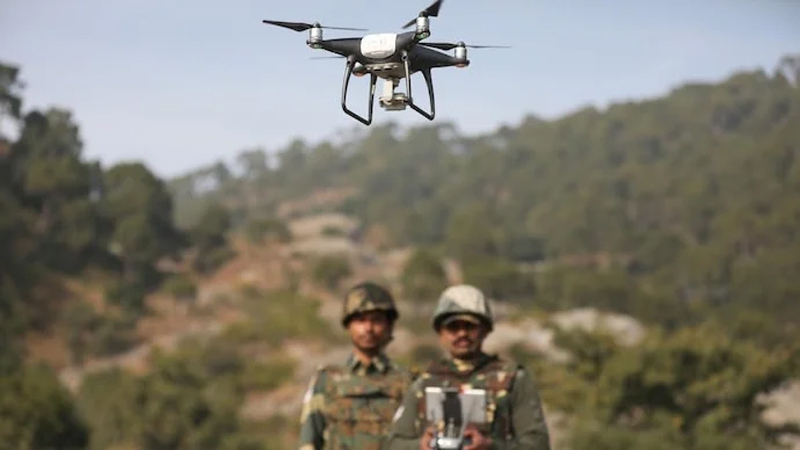
In a rapidly evolving era of warfare, where borders are breached not by soldiers but by machines, India’s decision to establish drone squadrons within the BSF marks a bold and timely shift in defence strategy. The announcement comes in the wake of Operation Sindoor, during which Pakistan reportedly launched nearly 1,000 drones into Indian territory, underscoring how drones have emerged as the most disruptive tool in modern asymmetric warfare. Unlike traditional combat methods, drones can deliver massive tactical advantages at a fraction of the cost. Be it for surveillance, reconnaissance, or offensive precision strikes, these unmanned systems can penetrate deep into enemy territory, blind their radars, jam signals, or cause significant infrastructure damage-all while avoiding the risk to human life. Drones are not just instruments of war but have become tools for terror, trafficking, and smuggling, as evident from their increasing use in narcotics and arms smuggling across the border. In this context, the Government’s move to raise drone squadrons is not just important-it is indispensable.
By deploying specialised drone units at sensitive Border Outposts along the 3,323-km India-Pakistan border, the BSF is set to undergo a strategic transformation. These squadrons, equipped with surveillance drones, kamikaze drones, and long-range UAVs, will empower border personnel with the capability to detect, intercept, and neutralise threats in real time. The establishment of a Central Command Centre in Chandigarh further ensures coordinated responses, efficient deployment, and swift decision-making. This modernisation aligns with the broader global shift toward drone-centric security doctrines. As drone warfare reshapes battlefields worldwide, India’s preparedness must keep pace. Equally crucial is the decision to train select BSF personnel in advanced drone operations, jamming, and radar evasion techniques-signalling a shift from traditional patrolling to tech-driven defence.
Moreover, with India possessing a growing pool of indigenous drone manufacturing and software talent, the potential for self-reliance in this sector is immense. Drone squadrons represent a transformative leap in India’s border defence. This upgrade is not merely tactical-it is strategic, futuristic, and essential. With the BSF on the front line, a technologically superior deterrent is exactly what India needs to secure its borders and people.
 Follow our WhatsApp channel
