

Jammu’s shield of resilience amid Record-Breaking Floods
Ashish Anand
Jammu faced one of the most dramatic tests of its resilience this week when the skies opened up with relentless fury. Between August 26 and 27, the city received an extraordinary 296 mm of rainfall in just 24 hours, eclipsing a 52-year-old record of 272.6 mm set in 1973.
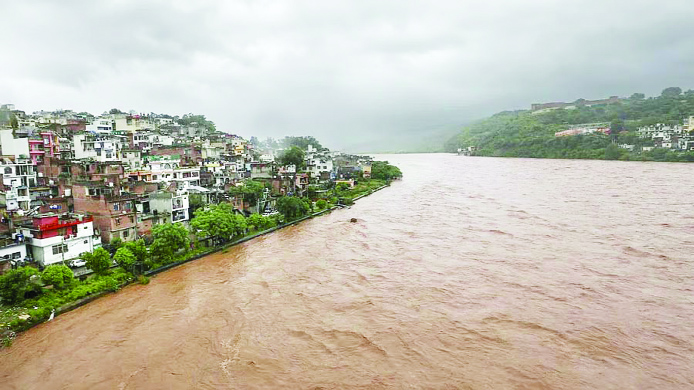
For residents, it was more than just a downpour. Streets turned into streams, drains choked, and the mighty Tawi River swelled to its highest flood level in over a century. Experts called it a “hundred-year flood”, the kind of natural disaster that can cripple an entire city.
Yet amid this devastation, a silver lining emerged. The Tawi Riverfront Project (TRF), a flagship initiative of Jammu Smart City Limited (JSCL), did not just withstand the deluge, it protected the very heart of Jammu from calamity.
When Nature Tested, the Riverfront Delivered
For decades, the people of Jammu have lived with the fear of floods whenever the Tawi swelled. But the monsoon fury of 2025 revealed how foresight and smart planning could change that narrative.
Embankments Held Firm: Thanks to advanced protection measures, the embankments resisted erosion and collapse, preventing water from spilling into nearby colonies.
Bridge Secured: The lifeline of the city, the Tawi Bridge, remained safe due to peer protection works that shielded its foundations from being washed away.
Institutions Saved: The warehouse area on the left bank and critical landmarks like the MA Stadium and MAM Science College on the right bank remained unaffected.
Promenade Resilience: Even the riverfront promenade, designed for public use, stood unscathed, a testimony to the project’s robust engineering.
Without this infrastructure, say engineers, Jammu could have faced crippling losses to transport, trade, and public institutions.
“Preparedness saves cities. In August 2025, it was preparedness in the form of the Tawi Riverfront that saved Jammu.”
Smart City’s Smart Execution: Planning That Paid Off
The success of the TRF was no accident. It was the result of strategic foresight and world-class execution by Jammu Smart City Limited, which treated the project as a blend of flood protection and urban development.
A Masterstroke in Flood Management
The project integrated reinforced embankments, river training works, and smart elevation of promenades, ensuring that even at record water levels, the barriers would hold.
Bridge Peer Protection
One of the greatest risks during floods is the erosion of bridge piers. JSCL adopted peer protection technology under the Tawi Bridge, saving thousands of daily commuters from disruption and ensuring a critical link for goods and emergency movement stayed functional.
Encroachment-Free Riverbanks
For years, unplanned urbanization weakened Tawi’s natural defenses. TRF changed that. With planned walkways, retaining walls, and green spaces, it prevented illegal encroachments, restoring order to the riverbanks.
Preventing Land Collapse
The floods could have easily triggered soil erosion and collapse along unprotected banks. Instead, geo-technical reinforcements and stone pitching ensured that no landmass or adjoining property was lost to the river.
Smart Urban Space
The TRF is not just protection, it is a living space. Cycling tracks, walkways, and open-air plazas double as protective embankments. This dual-use model makes it both functional and people-centric.
Future-Ready and Sustainable
Built under the guiding principles of the National Mission for Clean Ganga (NMCG), the project combines ecology with resilience, ensuring it can serve as a model for other flood-prone cities in India.
“Had the project not been in place, the story would have been one of destruction. Instead, engineering and foresight protected an entire city.”
Post-Flood Inspection: A Marvel of Workmanship
Once floodwaters receded, JSCL conducted a comprehensive site inspection. The result was remarkable, no major or even minor damage was recorded despite this being Jammu’s highest-ever flood event.
For residents, this finding brought immense relief and satisfaction. For engineers and planners, it stood as proof of the marvel workmanship, quality execution, and resilience standards embedded in the TRF.
“Had the project not been in place, the story would have been one of destruction,” said a senior JSCL official. “Instead, we have shown that engineering and foresight can protect an entire city.”
A Changed Flood Narrative
Before TRF, floods meant fear. Embankments would crumble, warehouses and stadiums were at risk, and bridges were vulnerable. But this time, the narrative shifted:
The riverfront absorbed the shock, sparing vital infrastructure.
Public safety was secured, with floodwaters kept at bay.
Economic losses were minimized, protecting warehouses and trade centers.
Most importantly, confidence was restored, proving that such projects are not cosmetic but life-saving investments.
The Way Forward: Extending the Shield
While the TRF’s success is undeniable, experts and residents agree it must be extended further.
Up to Gujjar Nagar Bridge: To protect densely populated residential belts.
Towards Sidra Bridge: To safeguard Jammu’s expanding peripheries and new habitations.
Extension of the project would mean full-scale flood defense for Jammu, alongside opportunities for tourism, recreation, and sustainable urban growth.
A National Benchmark
The TRF is now being hailed as a benchmark in urban resilience planning. Cities across India, from Patna to Guwahati, Srinagar to Varanasi, grapple with floods, encroachment, and land erosion. Jammu has shown a replicable path forward:
Robust embankments doubling as public spaces
Protected bridge piers ensuring transport resilience
Encroachment-free, planned riverbanks
Geo-technical reinforcements to stop erosion and collapse
In doing so, Jammu has transformed itself into a model city of preparedness.
Conclusion: A Vision That Saved a City
On the morning of August 27, Jammu could have been waking up to stories of devastation. Instead, thanks to the Tawi Riverfront Project, the city found itself intact, its bridges safe, its institutions secure, and its people reassured.
The post-flood report confirming zero damages has turned TRF into more than just an engineering project. For the people of Jammu and Kashmir, it has become a symbol of trust, safety, and hope.
The lesson is clear, preparedness saves cities. And in August 2025, it was preparedness in the form of the Tawi Riverfront that saved Jammu.
(The author is Senior General Manager Jammu Smart City Limited who is also the Nodal Officer for the Jammu and Kashmir e-Bus Project.)
 Follow our WhatsApp channel
