

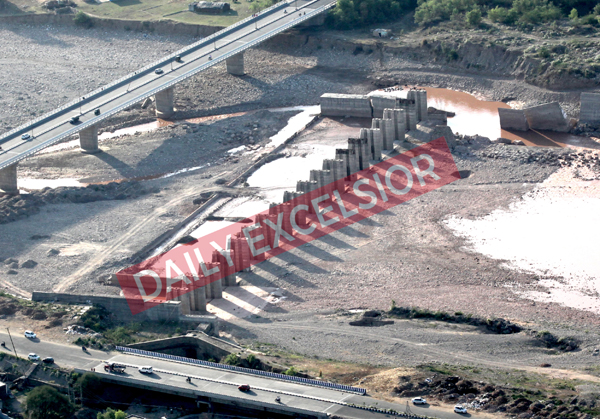
The report submitted by the UT Government to the NGT concerning the Tawi Barrage project brings to light several reassuring measures to address ecological and flood-related concerns. This project is designed to manage water resources effectively while mitigating potential environmental impacts. One of the key highlights of the report is the commitment to safeguarding the river’s ecology. The Tawi Barrage has been meticulously designed with under-sluice gates that ensure uninterrupted water flow downstream, even during lean discharge periods. This guarantees that the river’s ecological balance remains undisturbed, with no adverse effects on aquatic life or surrounding habitats. Additionally, during flood seasons, the gates will be fully raised to allow unimpeded passage of floodwaters, a critical feature to ensure the structure does not exacerbate flood risks.
The design’s robustness is further underscored by its capacity to withstand a 500-year return period flood-a benchmark significantly exceeding the intensity of the catastrophic 2014 floods. This assurance is backed by extensive physical model studies conducted by IIT Roorkee, which validated the barrage’s ability to handle such extreme conditions. Incorporating a Supervisory Control and Data Acquisition system for automated gate operations and an early warning system highlights the project’s focus on leveraging technology for proactive flood management. Concerns regarding the potential squeezing of riverbanks and the impact on downstream structures have also been addressed comprehensively. The Government’s plan to implement morphological studies and develop a DPR for flood mitigation and river management reflects a proactive stance in addressing long-term challenges. The apprehension about the central portion of the RFD project damaging the ancient Ranbir Canal structure has been alleviated with the clarification that the old structure was replaced by a new RCC structure in 1990, which remains unaffected by ongoing construction activities.
While the measures outlined in the report are promising, their success hinges on diligent implementation and continuous monitoring. The integration of advanced technologies and comprehensive planning must be complemented by regular assessments to adapt to changing environmental dynamics. Sustained monitoring will ensure that these efforts translate into long-term environmental and infrastructural resilience.
 Follow our WhatsApp channel
