

Prof M K Bhat
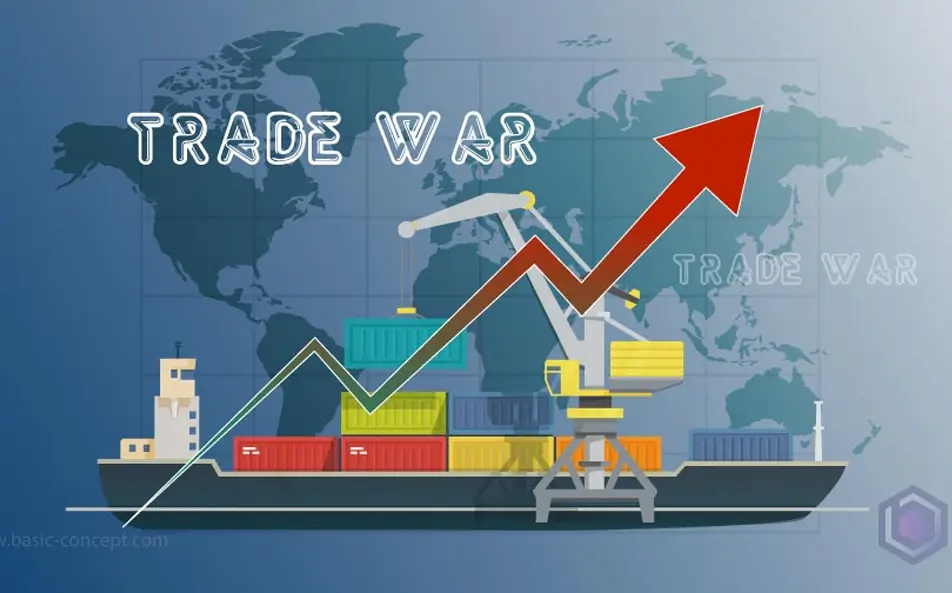
The tariff war unleashed by Trump is likely to change the global trade dynamics and bears both national and international ramifications. It has every potential to give rise to a new global economic order. India can’t remain untouched from its heat for too long.Trump administration believes that its global trading partners impose higher tariff on US goods from many years than US imposes on imports from these countries thereby create an imbalance in American trade. Trump has unveiled a sweeping set of new tariffs targeting key U.S. trading partners, with the stated aim of reducing trade deficit, revitalizing domestic manufacturing, and addressing broader economic and security concerns.
In response to these certain countries like Canada, Mexico, Europe and China have retaliated in the same fashion. They have resorted to import tariffs of 10 to 15% on American agricultural products like soyabean, corn diary, chicken and wheat. The choice with India is to join the Tariff war or wait and watch for the things to get their final shape. India till now has not reacted in any manner rather it wants to reason and negotiate. However, this avoidance can’t go beyond April 2,2025 when America is going to apply reciprocal tariffs on all countries including India. This will significantly influence USA- India trade dynamics. While countries like Canada, Mexico, and China have already faced US tariffs in the past too, India had largely avoided them till now.
America recently promulgated 25% tariffs on all steel and aluminium imports triggering a swift retaliation from the European Union and Canada. EU has responded with a 50% tariff on American whiskey, motorcycles, and motorboats, alongside planned levies on poultry, soybeans, and other goods. India has not reacted to the tariff in steel and aluminium primarily because its export of aluminium and steel to USA is quite low. The country runs a minor trade deficit with USA in these categories, standing at $13 million in aluminium goods and $406 million in steel goods. While India accounts for just 1% of US steel imports, it remains among the top 10 sources for aluminium, though its share has fallen from 3% to 2.8% between 2018 and 2024.India’s export of steel and aluminium to USA is expected to gain from the aluminium and steel tariffs imposed by USA.
Canada has imposed a $20.6 bn tariff package on imports from USA. Trump has also implemented a 25% tariff on most goods from Mexico and Canada, with certain exemptions for energy products and potash. While Mexico has held back on retaliatory measures, Canada has continued to target American agricultural and consumer goods.
As the Tariff wars tiffens, the world trade is bound to crumble to a lower level. This is clear from the fact that in 1930, at the time of Great Depression, the U.S. Congress passed Smoot Hawley Tariff Act, to shield American farmers and manufacturers, it resulted in tariff war among the countries as every country wanted to protect itself. Countries from Canada to Germany responded with their own tariffs, and global trade collapsed by nearly 65% over the next few years.
The tariff escalation by USA will have more adverse effect on countries like Vietnam, Thailand, Hongkong and Singapore as their exports to America as percentage of their GDP is quite high while as its impact on India will be low as India’s exports to America comprises just 2.2% of India’s GDP.
US- India trade currently accounted for $150 bn skewing heavily in India’s favour. India enjoys $ 45.7 bn surplus with USA. The USA trade weighted average tariff rate has been just 2.2% according to WTO data compared with India’s 12%. According to a recent White House fact sheet, the US applies an average Most Favoured Nation (MFN) tariff of 5% on farm goods, while India’s tariff on the same products is as high as 39%.This deficit to America is becoming an eyesore for US administration and its announcement of applying reciprocal tariff will harm India’s business interests as US is the biggest importer of Indian goods. Although the tariffs applied by India over the years has continuously come down but the volume of trade has increased, this has instigated USA to apply reciprocal tariff to balance its trade. It is worthwhile to point out here that imports from India comprise a minuscule part of America’s total imports. The total deficit of USA stands at $ 1.7tn, India accounts for 2.7 % of it. The specific mention of India, as a country imposing more than 100% tariffs on auto imports from the USA carries other business ambitions of America.
International business comprises of international trade and international diplomacy, every country tries to utilise the two as a cocktail to suffice its interests now-a -days. This has complicated the international trade relations among countries. America is using Tariff as a tool to make India to revamp its oil energy and defence imports from Russia. Russian oil accounts for more than one third of India’s energy imports. India is the largest defence importer in the world and 36% of it is supplied by Russia. America is ready to give advance defence equipment including F35 to India but can India afford to scarify its relations with trusted ally Russia is a big question in itself?
The reciprocal Tariff can be a big impediment in India’s growth trajectory and the most affected industries would be chemicals, metal products, Gems and jewellery, automobiles, pharmaceuticals, and food products. The share of key export items stands as- gems, and jewellery worth $8.5 billion, Pharmaceuticals worth $8 billion, Petrochemicals worth about $4 billion. A report by Citi Research estimates that India could lose around $7 billion annually due to these tariffs.
The reciprocal tariff can escalate Indias macro- economic challenges by putting additional pressure on rupee, inflation, interest rate and FDI and may go against Trump-Modi last month meeting which envisioned Mission 500 – targeting to increase bilateral trade to $500 billion by 2030.This is a massive jump which will need each side to accommodate the other’s interest.
A few steps India needs to take:
1) India must reduce its tariff on certain items where it is high. The tariff levied by India on American cars is100%, industrial ethyl alcohol faces 150%, food items bear 68% and footwear 15-20%.This makes America to sell less to India.
2)Replace goods from other countries by American goods This will reduce the American trade deficit against India. Ministry of commerce has directed the industry to identify areas where Chinese goods can be substituted by American goods. It will be a win situation for both.
3) Encash the market of the affected countries The confrontation on tariff will definitely influence American trade with its partners, India shall fill the gap.
4) India must sign more free trade agreements; this will help the country to find new markets. This will increase the export base of the country and may reduce dependence on any one country.
5) Strengthen the domestic industries to compete in the international market. The domestic industry must gear up to catch the bull by horns rather than wait for protection.
It will be prudent for India to enter into bilateral agreement with USA. India requires American market to excel its growth rate. It shall work to channelise the tariff war into an opportunity for more Indian exports.
(The author is Professor (M.A.I.T) Gobind Singh Indraprastha University, Delhi)
 Follow our WhatsApp channel
