

From sacred shrines and spiritual caves to river rafting, sky-high bridges, and scenic ridges-Reasi’s periphery offers a powerful blend of pilgrimage, adventure, and discovery. Writes K.D. Salalia.
Every year, millions of pilgrims visit the sacred cave shrine of Shri Mata Vaishno Devi Ji, journeying through the vibrant spiritual belt of Katra-Reasi-Pouni-Ransoo. Yet, just beyond the well-trodden path lies a constellation of untapped treasures-engineering marvels, ancient shrines, scenic viewpoints, and adventure zones that remain largely invisible to mainstream tourism.
With a little planning, these sites can transform the region into a composite pilgrimage-cum- tourism destination, giving visitors spiritual fulfillment along with memorable recreational experiences.
Sula Park
Located about 3 kilometers from Reasi town on the left bank of the Anji Nallah, Sula Park is a quaint recreational area that serves as a popular spot for local residents. To enhance its utility and appeal, constructing small bunds or barriers-approximately 1 to 1.5 meters in height-within the Anji Nallah could provide a safe and enjoyable bathing area for children during the hot summer months. This addition would not only improve the park’s recreational facilities but also encourage more family visits.
Recently, the Government of India approved a four-lane highway project (NH-144) stretching from Domail to Bhambla, which passes alongside Sula Park. It is crucial that the planned road widening and development be carefully designed to preserve the integrity of Sula Park, including its natural spring and green spaces, ensuring that this beloved local retreat remains undisturbed. Thoughtful planning can strike a balance between infrastructure progress and conservation of community assets, enhancing both connectivity and environmental sustainability in the region.
Fish Ponds at Anji
The fish ponds at Anji were established in the early 1980s and received partial upgrades around 2016. However, despite these improvements, the ponds have remained largely unused in recent years. There appear to have been no significant efforts to revive fish production and nurturing, which was the primary purpose of the project. This neglect has resulted in underutilization of a valuable resource that could support local livelihoods and aquaculture development. Revitalizing the ponds with proper management and investment could restore their intended function and benefit the community.
Chenab River Rafting at Baradari
Just 5 km from Reasi town, Baradari offers thrilling white-water rafting experiences on the Chenab River. Tourist huts have been constructed to promote adventure tourism at Seela Baradari, but unfortunately, they remain unused and lie abandoned, failing to serve their intended purpose.
Mahadev Aap Shambhu Mandir
Located in Ward No. 9 on the western side of Reasi town, this approx. 300-year-old temple is a revered spiritual site dedicated to Lord Shiva. According to legend, cows were seen spontaneously releasing milk at a spot, leading villagers to discover a divine Shivling and Jalhari beneath the surface. Now known as “Aap Shambhu” Temple, the structure was renovated by the Shri Mata Vaishno Devi Shrine Board. It continues to attract numerous devotees and tourists due to its spiritual aura and rich heritage.
Bhim Garh Fort (Reasi Fort) / Kalka Mata Temple
Originally built by Raja Bhim Dev Rasyal in the 8th century and reconstructed by Raja Gulab Singh in the 19th century, this fort is perched on a hillock near the Anji River. It features temples, an armoury, and a treasury, symbolising the area’s royal history.
Nearby, Kalka Mata Temple-situated on a cliff in Ward No. 3-adds to the fort’s spiritual charm. Accessible via a 200-meter pedestrian path or a 500-meter motorable road, the temple is a major pilgrimage site, especially during Navratras.
AnjiKhad Railway Bridge
India’s first cable-stayed railway bridge, AnjiKhad Bridge, stands as an engineering marvel in Reasi, Jammu & Kashmir. Spanning 725.5 meters and standing 331 meters above the riverbed, it is part of the Udhampur-Baramulla Rail Link (USBRL) Project which has been recently inaugurated by Hon’ble Prime Minister of India on 6th June 2025. Located 7 km from Gran Morh (Reasi-Arnas Road), this site requires road widening and improved infrastructure to cater to increasing tourist flow in the coming days.
Chenab Rail Bridge (Bakkal-Kouri)
Soaring 359 meters above the riverbed, the Chenab Rail Bridge is the world’s highest railway bridge. Located 14 km from Batal Gala Tunnel (Reasi-Arnas Road), this engineering wonder is expected to become a major tourist attraction after its inauguration on 6th June 2025. The access road and tourist facilities at Bakkal Station must be upgraded to cater to the influx of tourists.
“Standing tall in Reasi, the world’s highest railway bridge over the Chenab River is a symbol of India’s unmatched engineering prowess.”
Sujandhar-Devta Shrines
NaagDevta Shrine is located about 1.5 km from Sujandhar Bus Stand, while the Pagan Devta site is located approximately 8 km away on foot. These are local guardian deities and the natural surroundings-lush greenery and hills-add to their charm.
Strategic Importance of the Salal-Bakkal Road
The proposed road from Salal (Kotli Malatha/Daldhara Morh) to Bakkal via Sermegha holds immense strategic and socio-economic significance for the Reasi district. It would provide vital connectivity to the remote hamlets of Sujandhar, Gabbar, Baryot, Tote, and Sari, linking them seamlessly with Bakkal, Salal, Kanthan, Kouri, Dugga, and Sangaldan. Additionally, the road would facilitate further access to upper belt areas like Arnas, Thanpal, Thakrakot, Garhi, Matlot, and Mahore. Importantly, this route would serve as the shortest and most efficient corridor for transporting lithium ore from the newly identified lithium-rich zone of Salal to the upcoming Bakkal Railway Station. The mineral and logistic potential of this road corridor aligns with national interests in clean energy development. Historically, construction on this road began in 1986-87, but only 3 km was completed due to a shortage of funds. Reviving this long-pending project would not only boost regional connectivity and development but also support strategic infrastructure linked toIndia’s mineral security. The route would also ease access to Chenab bridge tourism and strengthen disaster management and military logistics if required. Its completion should be prioritised under national infrastructure or mining corridor initiatives.
Local Religious and Natural Attractions
*DholDevta- at Bakkal – A worshipped local divine figure
* DevtaChenana- Revered as the guardian deity of surrounding villages.
* BhimDevta (Damankote-Choura) – A revered local deity.
* Bidda Bawa Temple – Located 5 km from Jyotipuram on the Jyotipuram-Dhyangarh Road; it is a well-known ancient temple.
* Shivaji Natural Cave (Khad Salal) – Shivaji Natural Cave, located near Khad Salal, about 7 km from the Kannerkeri-Kotli route along the Chenab River and approximately 1 km from the concrete Salal Dam, is a remarkable geological and cultural site discovered in 2012. Nestled amidst rocky terrain and natural forest cover, the cave is believed to hold spiritual and historical significance for locals. Its remote location adds to its mystique, attracting explorers and pilgrims alike. However, accessibility from the concrete Salal Dam site remains a challenge, as it currently lacks a proper connecting road.
Salal Dam
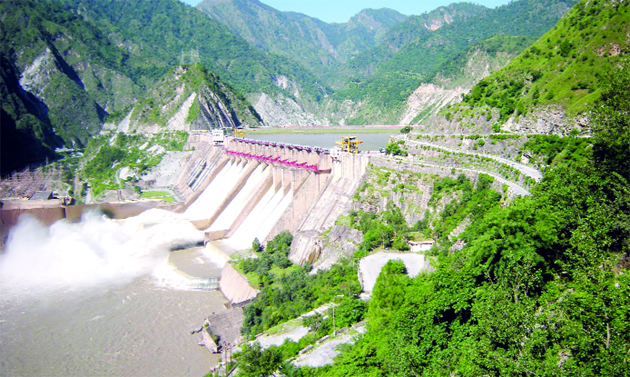
The Salal Dam Site, commissioned in 1987, is a significant hydroelectric power generation facility on the Chenab River, boasting an installed capacity of 690 MW with high operational efficiency. Beyond its industrial importance, the site showcases impressive engineering and scenic beauty, making it a promising tourist destination. Visitors can enjoy panoramic views of the dam, reservoir, and surrounding hills. To enhance its appeal and visitor experience, adding well-designed tourist shelters and basic amenities is essential. With these improvements, Salal Dam could attract more visitors for both educational tours and leisure activities.
Chinkah Tourist Spot
Located approximately 6 kilometers from the Salal Rockfill Dam and easily accessible via a well-maintained blacktop (BT) road, Chinkah is a hidden gem nestled in the scenic landscapes of Reasi district. Perched above the tranquil waters of the Salal reservoir, this picturesque spot offers breathtaking panoramic views of the vast lake, rolling green hills, and misty valleys that surround it.
Despite its natural beauty and serene ambiance, Chinkah remains largely undiscovered by mainstream tourism. The area holds immense potential to become a sought-after destination for nature lovers, picnickers, and eco-tourism enthusiasts. However, to unlock its full potential as a tourist hotspot, Chinkah requires thoughtful infrastructural development-such as dedicated viewpoints, eco-friendly rest areas, boating facilities, safety signage, and proper waste management systems.
Siar Baba Waterfall
Located near Talwara village, about 10 km from Reasi, this 100-foot-high waterfall on the Chenab River is a stunning natural attraction. Surrounded by lush greenery and rocky cliffs, it offers a serene escape and mesmerizing views. The powerful cascade and misty atmosphere create a soothing ambiance ideal for relaxation. Nature lovers and photographers will find it especially appealing due to its scenic charm and tranquil setting. The site holds strong potential for eco-tourism with proper development. Currently, it remains largely untouched, offering a peaceful retreat. It’s an ideal spot for day trips, picnics, and quiet nature walks
From Sacred Peaks to Scenic Trails – Reasi Revealed
Reasi is no longer just a stop on the spiritual map-it has evolved into a dynamic nexus of devotion, exploration, and progress. With sacred shrines that inspire profound reverence, engineering marvels that challenge the limits of possibility, and serene landscapes that nurture the soul, the district is uniquely positioned to spearhead a new era of integrated tourism in Jammu & Kashmir.
By highlighting its rich offerings of adventure, history, natural beauty, and spirituality to the 30-40% of Vaishno Devi pilgrims who extend their journey to Shiv Khori, Reasi can unlock a comprehensive tourism circuit that enriches the pilgrim experience while sustaining visitor engagement across multiple destinations.
To realize this potential, it is imperative for District Reasi to establish a dedicated Tourism Development Authority. This body would oversee and coordinate all tourism-related initiatives in Katra, Ransoo, Reasi, and neighboring areas, ensuring strategic planning and seamless execution.
With focused investments in infrastructure development, clear signage, enhanced visitor amenities, and thoughtfully designed tour circuits, Reasi can emerge as a pioneering example of rural revitalization through heritage and adventure tourism.
To Summarize
The proposed tourist grid-from Sula Park, Baradari, Reasi, Bhim Garh Fort, AnjiKhad Bridge, Bakkal to Kouri Railway Bridge-highlights key cultural and natural heritage points. The grid includes:
* DholDevta (Bakkal)
* Salal DevtaChenana
* BhimDevta (Choura Salal)
* Shivaji Natural Cave (Khad Salal)
* Bidda Bawa Temple (near Jyotipuram)
* Salal Project Dam
* Chinkah tourist spot
* Siar Water fall
“Improving the road network and providing essential tourism-related amenities at all key tourist locations will be in the best interest of Reasi district, as it will boost tourism, generate employment, and contribute to the region’s economic growth.”
Reasi is not just a district-it is a confluence of history, divinity, nature, and national pride waiting to be embraced by the world.
“Let Reasi rise-not just in elevation, but in imagination. Let its untapped become unforgettable.”
(The author is Retired Executive Engineer)
 Follow our WhatsApp channel
