

Prof Suresh Chander
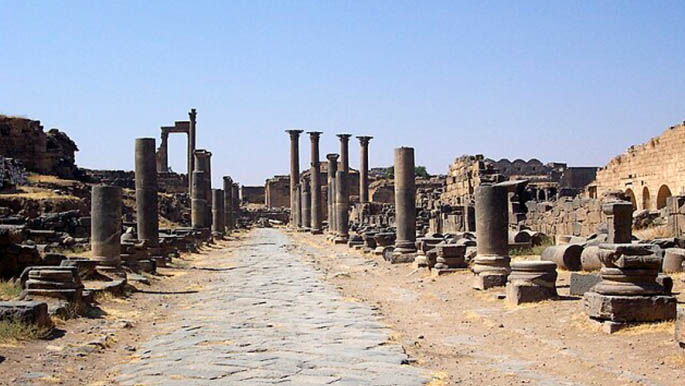
Syria, a land cradled in the heart of the Middle East, is a tapestry of civilizations and cultures woven over millennia. Once a beacon of human achievement, this ancient land has witnessed the rise and fall of empires, the birth of religions, and the blossoming of cultures that shaped the world. Today, its ruins whisper the stories of a proud heritage lost to the ravages of war and neglect.
The Dawn of Civilization
Ebla and Ugarit: Early Cradles of Culture
From the 3rd millennium BCE, Syria was a cornerstone of early human civilization. The cities of Ebla and Ugarit flourished as centers of commerce and culture.
Ebla: Famous for its vast archives of cuneiform tablets, revealing ancient trade and diplomacy.
Ugarit: Gifted the world one of the earliest known alphabets, fostering human creativity and communication.
These cities were vibrant hubs where artisans, merchants, and scholars thrived.
Empires of the Ancient World
Marks of Great Civilizations
As empires rose and fell, Syria became a crossroads for some of history’s most significant civilizations.
The Akkadians, Babylonians, Assyrians, and Persians enriched Syria’s cultural and historical fabric.
The Assyrians, in particular, built mighty cities and advanced governance, leaving an enduring legacy of power.
Hellenistic and Roman Influence
Later, under Greek and Roman rule, Syria blossomed as a center of Hellenistic culture.
Antioch, a jewel of the ancient world, flourished with its grand colonnades and bustling markets.
Roman governance, architecture, and engineering had lasting impacts, transforming Syria into a vibrant hub of trade and culture.
The Islamic Age
Damascus: A Capital of Faith and Knowledge
The advent of Islam in the 7th century CE ushered in a transformative era for Syria.
Damascus, one of the world’s oldest cities, became the capital of the Umayyad Caliphate.
The Umayyad Mosque, with its gilded mosaics and towering minarets, symbolized the harmony of faith and culture.
Arabic replaced Greek and Aramaic, unifying Syria under a shared linguistic and cultural identity.
Centuries of Struggle and Change
Crusades, Mongols, and Ottoman Rule
Syria’s story is also one of hardship.
The Crusades and Mongol invasions left cities smoldering and populations devastated.
Under the Ottoman Empire, Syria experienced stability but also external control, curbing its autonomy.
French Colonialism and Seeds of Division
The modern Syrian state was formed in the aftermath of World War I, when the Ottoman Empire was defeated and the country was placed under French mandate. The French imposed their own system of government, which was based on the principles of secularism and democracy. However, the French also exploited Syria’s natural resources and imposed their own language and culture on the country, sowing division and resentment.
Despite this, Syria maintained its cultural identity, yearning for independence.
The Modern Era and the Cost of Conflict
Hope of Independence Marred by Instability
In 1946, Syria gained independence, but political instability quickly followed.
Decades of authoritarian rule under the Assad family stifled freedom and suppressed dissent.
The Devastation of Civil War
The civil war that began in 2011 shattered the nation:
Ancient cities like Aleppo and Homs were reduced to rubble.
Millions were displaced, and priceless cultural treasures, like the citadels of Palmyra, were destroyed or looted.
Syria’s vibrant history was left in ruins, a scar on humanity’s shared heritage.
A Tragic Symbol of Loss
Today, Syria stands as a shadow of its former self.
Its people face unimaginable suffering and displacement.
The vibrant mosaics of its cultural and historical heritage have been shattered, leaving the world poorer for it.
A Cautionary Tale for Humanity
Syria’s story is not merely its own; it serves as a stark reminder of the fragility of civilization.
The ruins of its ancient cities and the cries of its displaced people call on us to protect and cherish cultural legacies.
To lose such a heritage is to lose a piece of ourselves, a tragic lesson in the importance of preserving the past for future generations.
(The author is former Head of Computer Engineering Department in G B Pant University of Agriculture & Technology)
 Follow our WhatsApp channel
