

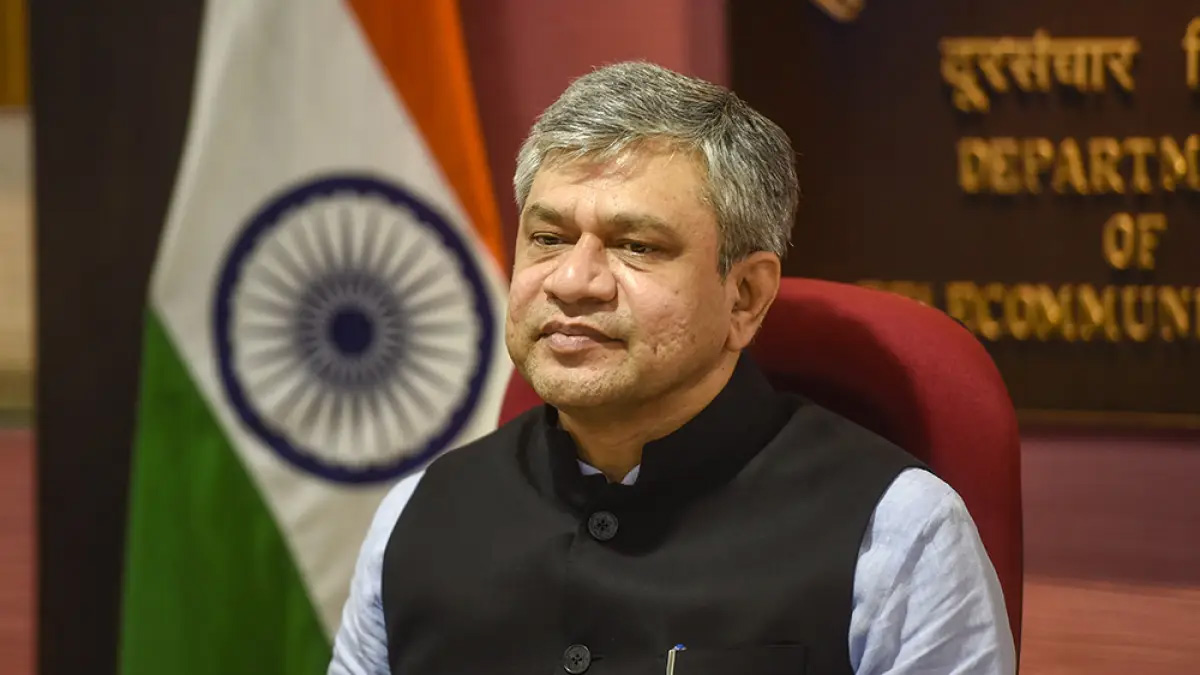
Project sanctioning requires consultations: Vaishnaw
*Jammu-Rajouri-Poonch rail track remains distant dream
Sanjeev Pargal
JAMMU, Dec 5: Railways Minister Ashwini Vaishnaw today said the survey of Baramulla-Uri new rail line and Banihal-Baramulla line doubling has been completed and Detailed Project Report (DPR) has been prepared.
Follow the Daily Excelsior channel on WhatsApp
Vaishnaw gave this information in response to a written question in the Rajya Sabha today.
“Survey of Baramulla-Uri new line (46 Km) and Banihal-Baramulla doubling (118 Km) has been completed and the DPR has been prepared,” Vaishnaw said, adding this will further improve/extend the rail connectivity in Kashmir region,
He said after preparation of DPR, sanctioning of project requires consultation with various stake-holders, including State Governments and necessary approvals viz, appraisal of NITI Aayog, Ministry of Finance etc.
“As sanctioning of projects is a continuous and dynamic process, exact timelines depend upon appraisals and approvals by various stakeholders,” the Railways Minister said.
Rail line to Uri will be of great advantage for not only the locals but also the defence forces as it shares the Line of Control (LoC) with Pakistan. Uri has also emerged as a border tourism destination. The new railway line will give significant boost to the tourism.
The proposed railway line to Uri will include three Road Under Bridges (RUBs) and nine Road Over Bridges (ROBs) and will be developed as a new single broad-gauge line, requiring fresh land acquisition.
The doubling project is of strategic importance, enabling seamless movement of military special trains carrying Army personnel, equipment and supplies. In view of this, it has been designated under the Hill and Strategic Corridor.
Doubling of track will increase capacity, reduce delays and strengthen connectivity across the Valley.
However, despite persistent demands from the people of Jammu as well as leadership of different political parties, the rail link to the twin border districts of Rajouri and Poonch hasn’t been taken up by the Railways Ministry.
Both these border districts also share Line of Control with Pakistan like Baramulla and Uri and have large tourism potential.
Meanwhile, Vaishnaw said, Udhampur-Srinagar-Baramulla Rail Link (USBRL) project (total length 272 Km) has been recently commissioned, thus connecting Kashmir valley with rest of the country by rail network.
In this project, Railway has made the world’s highest Railway Bridge over Chenab River in Reasi district of Jammu divison, he added.
“The iconic Chenab Bridge is 1315 m long having Arch span of 467 m and height of 359 m above river bed. Indian Railway’s first cable stayed bridge has been constructed over Anji Khad in this project. Its bridge deck is 331m above the river bed level and height of its Main pylon is 193m.
“Another crucial facet of the USBRL Project’s socio-economic development efforts has been the construction of over 215 km of approach roads, which include construction of a tunnel and 320 small bridges.
“This road network has helped the local population in improvement of their connectivity with other areas. It has also made substantial socio-economic contributions to the region, with employment generation being a significant aspect of its impact. The project has generated more than 5 Core man-days of employment, the Railways Minister said.
After commissioning of the Project, he said, Indian Railways have introduced two Vande Bharat services from Shri Mata Vaishno Devi Katra to Srinagar. Further, 6 pairs of DEMU/MEMU services are catering to the Qazigund-Srinagar sector while five pairs of DEMU/MEMU services are catering to the Srinagar-Baramulla sector, he added.
Vaishnaw said with all-weather, reliable and comfortable rail connectivity of Valley portion with rest of the Indian Railway network, tourism gets a big boost. The commissioning of the project has helped the apple farmers in transporting apples to different parts of the country, provided train connectivity and eased passenger flow towards Kashmir. It has also helped in transporting commodities like cement and other commodities to the valley, he added.
 Follow our WhatsApp channel
