

B L Saraf
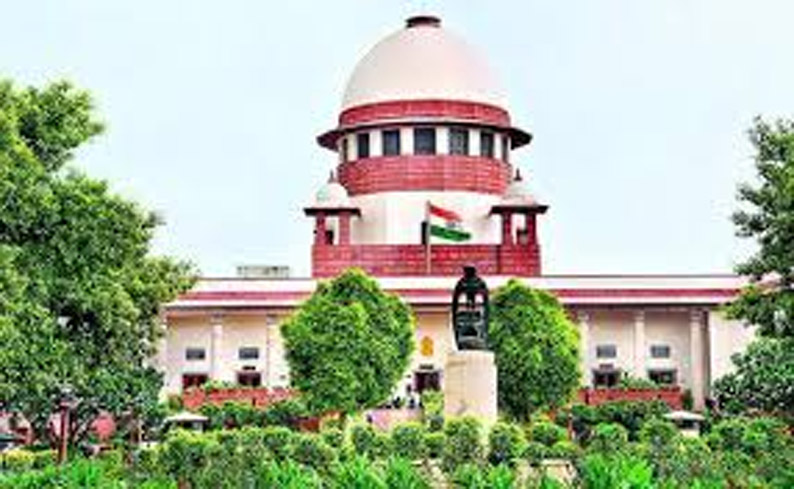
On 29th January the Supreme Court, in a judgment of far reaching consequences, held that domicile based reservation for admission to post -graduate medical courses within the State quota is unconstitutional as it violates the Right of Equality, guaranteed under Article 14 of the Constitution. The Court said “Providing for domicile based reservation in PG medical courses is constitutionally impermissible and cannot be done.” Making position clear it reasoned by saying “We are all domiciled in the territory of India. We are all residents of India. Our common bond as citizens and residents of one country gives us the right not only to choose our residence anywhere in India but also gives us a right to carry business or profession anywhere in India. It also gives us right to seek admission in educational institutions across India ….”Had it been only so, probably, matter could rest there. But reasons and logic put forth by the Court in coming to such a conclusion is susceptible to many interpretations-some couldn’t be politically desirable and may cause a flutter in the political circles. Today, it is about PG studies in medicine stream tomorrow it could be about specialized studies in other streams.
Domicile and Federalism
Supreme Court examined term ‘domicile ‘ in detail and held In India, unlike in USA, each citizen carries with him or her one single domicile which is the ” Domicile Of India ” . The concept of regional or provincial domicile is alien to the Indian legal system. Article 5 of the Constitution makes it clear that the Indian legal system recognizes only one domicile namely ‘ domicile in the territory of India’.” Supreme Court approved what it had held earlier in Pradeep Jain’s case-Pradeep Jain versus UOI (1984) 3 SCC 654 – that when a person who is permanently resident of one State goes to another State with the intention to reside there permanently or indefinitely his ‘ domicile ‘ does not undergo any change.
The Court did not approve of the concept of state domicile and considered it “highly detrimental to the concept of unity and integrity of India to think in terms of State domicile.” It also approved what Bombay High Court had said in Narayandass Mangilal Dayanama case (AIR 1985 Bombay 58 FB that the expression ‘ domicile ‘ used in Provincial legislature is a misnomer. The Court has emphasized the fact that “India is not a federal state in the traditional sense of the term.”
Jammu Kashmir Domicile Law
Where does it leave Jammu and Kashmir Domicile Law? In view of the circumstance which suffered a radical change, as a consequence of 5th August 2019 Constitutional developments, the J&K Government issued SO 166 dated 18 May 2020, providing for the J&K Grant of Domicile Certificate (Procedure Rules) 2020. A concern was raised by all quarters across the erstwhile State for protection of local’s right to public service and land and save them from being usurped by the outsiders. The S O prescribed eligibility criterion for persons to claim Domicile Certificate. Earlier, SO 1245 E was issued on 3rd April 2020 making it incumbent to have a domicile status if one had to seek employment in Government service, up to a certain level. The J&K Service (Decentralization and Recruitment) Act, 2010 was suitably amended. This exercise, besides what has been stated above, was undertaken to bring in a measure which could be a substitute for the law on Permanent Residents of the State, as contained in Section 6 of (now rendered ineffective) The Constitution of Jammu and Kashmir.
On a closer scrutiny of what has been discussed and held by the Supreme Court (under reference) a serious doubt about the tenability of these SOs regarding ‘ domiciles’ in J&K stands created . These SOs betray a look of administrative nature, there fore, in view of the observations of the Apex Court it is moot whether these SOs would survive. State and UT legislatures have been forbidden to make laws about the domicile. It is made clear that a State cannot grant reservation in public employment on the basis of residence in the State. The exception carved under the clause 3 of Article 16 enables only Parliament to make law prescribing requirement of residence for state employment. The judgment is likely to generate a debate for a Central Legislation akin to Sec 6 of -now nonexistent – J&K Constitution which will protect rights of the locals.
Merit emphasized
The Court laid emphasis on merit when it came to the matter of admission to the post graduate studies. According to it students for the post graduate training should be selected strictly on the basis of academic record in under -graduate studies and , all selection to the post graduate studies should be conducted by the Universities (Para 29). The bottom line is that merit cannot be compromised at the specialization level, even as residence based reservations can be possible to the level of undergraduate studies. The judgment ensures a level playing field at the specialization level. This, indeed, is a wellcome development.
Well one can’t foresee how situation created by this judgment will pan out in J&K:because, reservation issue has assumed much significance in the recent times. Various sections of the society have been added to the list of reserved categories to claim benefits. Paharis and others are the new entrants to the category which has caused commotion among the others who are agitating over the issue.
Sons of the Soil Syndrome; Ruffled Political feathers
Here, Supreme Court has purportedly approved what it had said in Pradeep Jain’s case; ” …….. We find that in the last few years, owing to the emergence of narrow parochial loyalties fostered by interested parties with a view to gaining advantage for themselves, a serious threat has developed to the unity and integrity of the nation and very concept of India as a nation is in peril. ……..We allowed ‘sons of the soil ‘ demands to develop claiming special treatment on the basis of residence in the concerned State , because recognizing and conceding such demands had a populist appeal ………..”
This observation, undoubtedly, has a potential to ruffle many a political feather. Modern day political actors thrive only on parochial and rank populist matters. Every now and then new populist slogans are invented unmindful of the consequences they may have for economy and social fabric of the country .
While this judgment could cause a glee in the hearts of a ” nationalist ‘ when it bats for the one nationhood , but looking to the local young who aspire for the public employment and the land holders who want protection of their rights from the outsiders their joyful spirit may suffer a dent .
(The author is former Principal District & Sessions Judge)
 Follow our WhatsApp channel
