

Col Ajay K Raina, SM
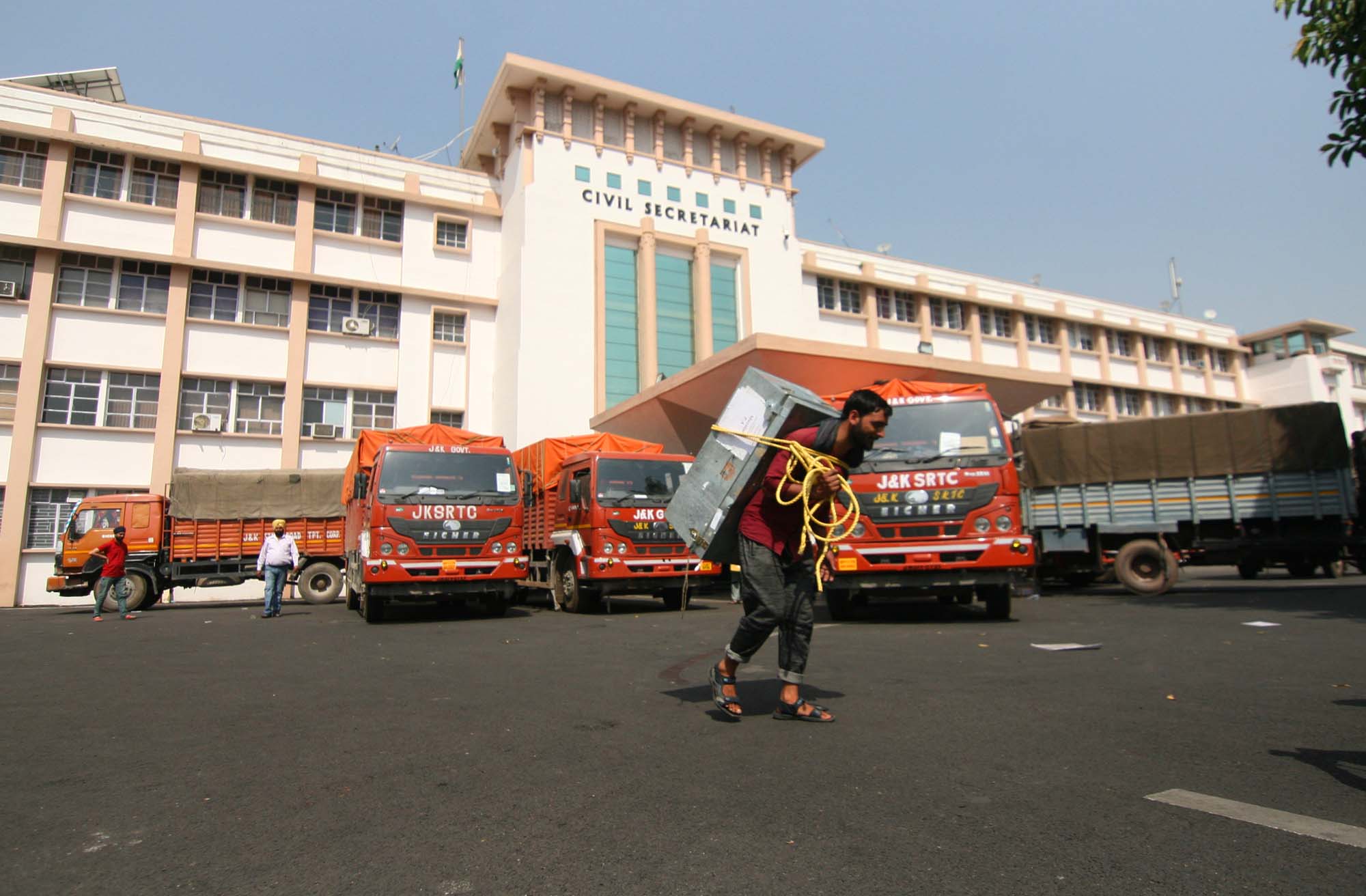
For the first time more than three millennia ago, King Abhimanyu of Kashmir shifted his capital from Kashmir to Lohara Kot (today’s Loran Mandi) after a spell of very heavy snow over successive years, but that turned out to be a stand-alone event, not repeated again. Maharaja Gulab Singh ordered such moves a few times during his reign but never formalised it. The prime reason for such moves was the need to be physically present north of Pir Panjal when several campaigns were being undertaken to tame new territories in the shadow of the Karakorams and Pamirs. Interestingly, despite all the falsity about his hatred for Kashmir that has been spread over the decades, Maharaja Gulab Singh loved Kashmir so much that he retired himself (a rarity in that era) in 1856 and became the Governor of Kashmir after handing over the reign to his son, Maharaja Ranbir Singh. Finally, in 1872, Maharaja Ranbir Singh, alarmed by the Britishers’ attempts to steer trouble by inciting Kashmiris to revolt against the Dogra royals, established a bi-annual Darbar Move.
A cursory look at the above instances tells us an underlying and justifiable reason, whether an extreme play of elements or great game politics of the mid-19th century. None of the two, however, remained unchanged as the decades rolled by. With geopolitics of the contemporary era replacing those of the Great Game and Cold War phases, that aspect lost its sheen. Regarding elements, newer technological inventions have made living in extremely cold areas much more comfortable. At the same time, they have also freed communications from the limitations imposed by geographies and physical locations. So, while the rest of the world was adopting a digital way of life, Jammu & Kashmir, despite jumping on the bandwagon, chose to keep a primitive tradition alive for reasons that defy logic. The huge expenditure on such moves and loss of almost one fortnight’s worth of working time twice a year should have been the first thing to be put to sleep but was never attempted.
Then came August 2019 and things changed. Among many reforms executed, a deliberate and overdue shift to the e-office mode of working finally happened. That development then saw an end of the Darbar move. Even though it was a development that should have happened years ago, it was a case of better late than never. Much has been said and written, favouring and against such a tradition. There is no point repeating the same. However, there is a more profound point that has been ignored or not discussed both by design and out of oversight, and that point concerns the basic tenant of service of the people in a democracy. Is it really ethical for the political leadership and bureaucracy to leave more than 99% of the population of a region behind to fight the elements, bear the hardships related to weather all by themselves (more so in Kashmir where water freezes in pipes) and move to another region where life is comparatively better (like leaving the hot climate of Jammu to enjoy cool climes of Kashmir)? For a soldier like me, it is no less than leaving your troops on the battlefield and retiring into the comfort of your room in the officers’ mess! That, of course, is never done; it is unimaginable!
So, how do we justify such a move where the very people (don’t they call it a govt of the people, by the people and for the people?) you are on oath to serve are simply left behind while you enjoy the best that the UT has to offer? And it is not only the general public but also all those employees who are not part of the elite Secretariat cadre. In the present era of e-office and with the ongoing experience already gained over the past few years since the practice was stopped, the recent noise about the restoration of the practice not only amounts to an attempt to go rearwards while the world moves ahead, it also indicates a mindset that is stuck in a time warp.
Add to it the expenditure and long breaks when life stands still. Writing off four out of 52 weeks just to enjoy the luxury is no less than an ethical sin that will not stand any deliberate questioning. Don’t people live in other Himalayan States? Did anyone ever think of Ladakhis who live and keep working despite ambient temperature there putting that in Kashmir to shame by more than 20 degrees at times? Is this running away really a great example of selfless service? Don’t cops and soldiers stay back and remain operational? If a jawan from South India, where the mercury seldom falls below 15 degrees, can endure minus 10 in Kashmir, what really is the pressing reason to continue with a system that is obsolete, wasteful and bad to look at?
Obviously, there is politics at play. The urge to feel like a Darbari even when no Darbar exists must really be overpowering. Another article in the list of demands, like restoration of Article 370/35A, reconstitution of certain holidays since abolished, and so on, gets added with an eye on a certain vote bank. In a UT, where the latest election verdict has forced as learned a man as Haseeb Drabu to admit that keeping Jammu and Kashmir together is just a failed attempt to keep two regions together even though there is no commonality between the two, the recent declaration to restore the practice is nothing but an attempt to divert the attention of people from the macro issue of incompatibility between the two provinces on either side of Pir Panjal. No other reason seems to be behind such a craving.
While no one in Jammu minds Kashmiris coming in and spending their winters here (even though the reverse is not really true), wasting time and money and detaching oneself from the commoners look awkward, to say the least. Of course, if it were a case of mass exodus, as it happens in some areas of Tibet, it would still be okay. As mentioned, many arguments exist in favour of as well as against the tradition, but none of those arguments run deep enough. The moot question is and will always be this: are politicians and bureaucrats, on oath to serve the public, or is it ok for them to wash off their hands and walk away when they should have been roughing it out with those to whom they owe everything?
But then we also have all the answers: in a region where drugs, unemployment, terrorism, corruption, region-based discrimination and such like issues are ignored, and meaningless resolutions and counter-resolutions are tabled first up when the assembly assembles for the first time in a decade, what else can be expected? Similarly, when the focus is on looking after illegal immigrants rather than packing them off to the land they were brought from (mind you, ‘brought from’ and not ‘came in’), sound policymaking appears to be a distant dream. And for those pointing at Jammu’s business needs, it would be fair to say that the sooner they learn to sustain themselves, the better it will be; if Kashmir can sustain itself, it is high time that Jammu learnt to do so, too. The need to de-hyphenate is now written on the wall. Whether the right people will read it by themselves or will be forced to read it, only time will tell.
(The author is a military historian and the founder trustee of the Military History Research Foundation ®, India)
 Follow our WhatsApp channel
