

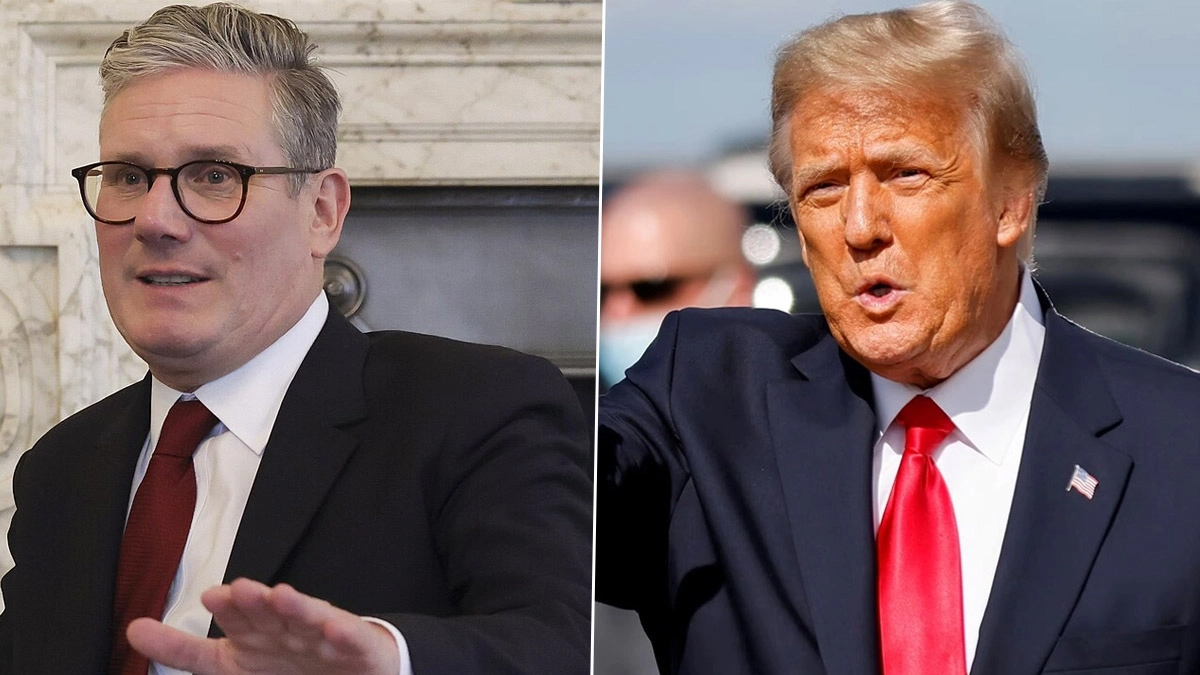
LONDON, March 23 : British Prime Minister Keir Starmer and US President Donald Trump discussed the Strait of Hormuz crisis in a phone call late Sunday, as global concerns mounted over energy supplies following the ongoing conflict with Iran.
“They agreed that reopening the Strait of Hormuz was essential to ensure stability in the global energy market,” Downing Street said in a statement, adding that they would “speak again soon.”
The call followed sharp criticism from Trump directed at Starmer and other European allies over their reluctance to provide military support to the United States in its war with Iran.
Britain is among 22 countries that have expressed willingness to contribute to efforts to ensure safe navigation through the strategically vital Strait of Hormuz, which has been effectively shut since the conflict began.
Traffic through the waterway, one of the world’s busiest shipping routes, has dropped by about 95% since the war erupted on February 28.
On Sunday, Mark Rutte said he was “absolutely convinced” that NATO would be able to reopen the strait, adding that the sensitive nature of the operation required time for member states to calibrate their response.
A Downing Street spokesperson reiterated that the leaders “agreed that reopening the Strait of Hormuz was essential to ensure stability in the global energy market” during their conversation.
The discussion comes ahead of a Cobra meeting to be chaired by Starmer on Monday, which will also be attended by Andrew Bailey, to assess the impact of the crisis on energy prices, the cost of living, and broader economic conditions.
Senior ministers, including the chancellor, foreign secretary and energy secretary, are also expected to review implications for businesses, supply chains and the international response.
Since the blockade, crude prices surged about 45% to $106 per barrel.
In a social media post on Saturday, Trump threatened to “obliterate” Iranian power plants if the strait was not reopened within 48 hours. Tehran, in turn, has warned it would target US-linked energy infrastructure across the Gulf if Washington follows through on its threat, according to Iranian state media.
Separately, Australia and Singapore said they had signed an agreement to strengthen coordination on securing key energy supplies, including diesel and liquefied natural gas, amid the ongoing crisis.
“We are committed to working together to strengthen energy supply chain resilience, including by deepening regional cooperation, accelerating renewable energy transition, addressing unjustified import and export restrictions, and maintaining open trade flows,” the two countries said in a joint statement.
The agreement comes as countries worldwide scramble to secure energy supplies following the disruption of the Strait of Hormuz, through which roughly a fifth of global oil exports typically pass.
(UNI)
 Follow our WhatsApp channel
