

For decades, Kashmir – and Srinagar in particular – symbolised respite from choking urban air. Tourists come not only for its lakes and mountains but also for the promise of clean, crisp air at the foothills of the Zabarwan range. That promise is now fading fast. The alarming spike in Srinagar’s air pollution this January, the worst in seven years, is not just a seasonal anomaly but a warning sign of a deeper, structural crisis unfolding across Kashmir’s urban centres. Air pollution has become a familiar scourge, but its rise in a city like Srinagar is far more unsettling. With abundant green cover, extensive wetlands, water bodies like Dal Lake, Nageen, and Jhelum, and relatively low industrial activity, Srinagar should logically be resilient to severe air degradation. Yet data shows otherwise: consistently poor air quality, repeated “severe” AQI spikes in localities, and particulate matter concentrations that rival some of India’s most polluted cities. This contradiction demands urgent scientific scrutiny and policy attention.
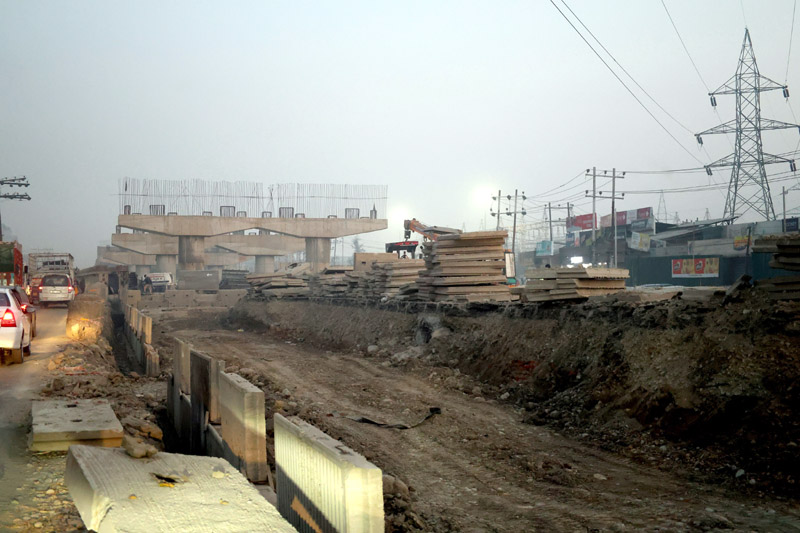
The evidence increasingly points to human-made pressures overwhelming natural advantages. Foremost among these is vehicular pollution. With nearly eleven lakh registered vehicles in the Valley – a dramatic rise over the past decade – Srinagar’s narrow roads are under constant strain. Add to this thousands of tourist vehicles, inter-district traffic, and heavy convoys moving towards Ladakh, and emissions far exceed what the city’s fragile airshed can absorb. Unlike plains, Kashmir’s basin-like topography restricts the dispersion of pollutants, especially during winter inversions, trapping emissions close to the ground. Cleaner air in the early morning hours and sharply deteriorating conditions by evening strongly suggest that traffic density and construction activity are significant factors. As offices close and vehicles flood the streets, particulate levels surge. This is compounded by widespread construction dust from flyovers, highways, and mega infrastructure projects. While development is necessary, the lack of strict dust-control enforcement – covering construction sites, regulating material transport, and mechanised road sweeping – has turned progress into a public health liability.
Climatic factors have further worsened the crisis. Kashmir has witnessed negligible rainfall since September. Rain acts as nature’s cleanser, settling suspended particles and refreshing the air. This prolonged dry spell has allowed dust and fine particulates to linger for months. While rainfall patterns lie beyond human control, the responses to other factors have remained piecemeal.
What is perhaps most concerning is the silent health fallout. Rising cases of respiratory illness, COPD, asthma, and even lung cancer among non-smokers underscore that pollution is no longer an abstract environmental issue-it is a daily medical emergency. Children, the elderly, and those with cardiac conditions are particularly vulnerable, yet public awareness remains low. Unlike sudden disasters, air pollution kills slowly and invisibly.
The situation also raises broader questions about Kashmir’s urban future. If Srinagar-a city blessed with geography, greenery, and water-can reach “hazardous” AQI levels, what hope remains for other growing towns in the Valley? Pollution is no longer confined to industrial belts; it is engulfing tourist destinations, hill towns, and supposed ecological refuges. This erodes not only public health but also Kashmir’s tourism-driven economy, which relies heavily on the perception of pristine nature.
Solutions are known; what is missing is resolution. A decisive shift towards electric vehicles is no longer optional. Government subsidies, incentives, and a robust charging infrastructure must be prioritised to make EVs viable for ordinary citizens. Simultaneously, mass public transport is critical. The conversion of the proposed Metro to a MetroLite was already a compromise; the stalling of even that project reflects a dangerous lack of urgency. Without an efficient, affordable public transport system, private vehicle numbers will only continue to explode. Equally vital is strict enforcement of construction norms to curb dust pollution, along with urban planning that reduces congestion. Air quality monitoring must be transparent, granular, and linked to real-time mitigation measures, not just post-facto reporting.
Factually, clean air is not a luxury; it is a basic right. Srinagar’s pollution crisis should serve as a wake-up call – not only for policymakers but for citizens as well. Unless scientific understanding is matched by political will and public participation, the Valley risks losing one of its most cherished natural assets: the very air that once defined its serenity.
 Follow our WhatsApp channel
