

Suhail Bhat
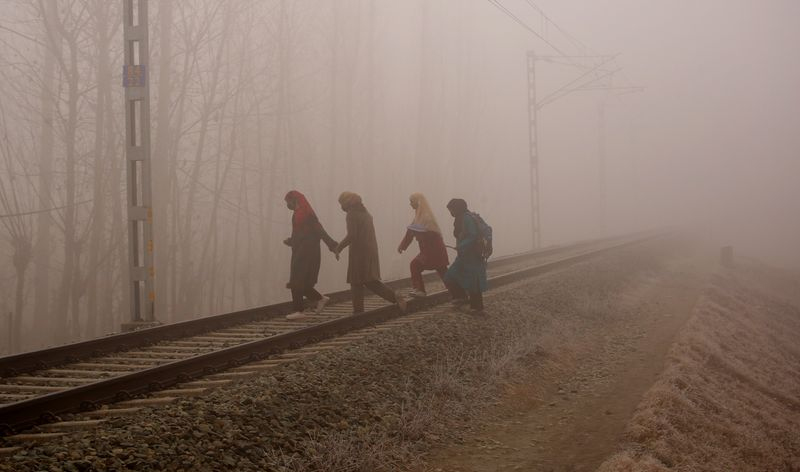
SRINAGAR, Jan 20: This year opens with Srinagar facing its highest air pollution levels in seven years, as January recorded consistently poor air quality across the city, according to air monitoring data, raising serious concerns over public health in Kashmir.
Follow the Daily Excelsior channel on WhatsApp
Data from air quality monitoring platforms showed that over the past 24 hours, the city’s Air Quality Index (AQI) peaked at 308 at around 7pm, while the lowest reading of 66 was recorded at 5 am during the day between 19th and 20th January. The figures place Srinagar largely in the “moderate” to “poor” pollution categories.
An analysis of the past 30 days showed a consistent daily pattern, with pollution levels rising sharply in the evening. Between 7 am and 7 pm, the average AQI stood at 228, while the cleanest air was recorded in the early morning hours between 5am and 6am, with an average AQI of 108, according to official data.
More significantly, none of the 20 days recorded so far in 2026 met the World Health Organization’s recommended safe air quality limits. Health risk indicators classify current exposure levels as “extreme,” particularly for children, elderly people, and those with pre-existing respiratory or cardiac conditions.
Annual data compiled from monitoring stations showed that 2026 has emerged as Srinagar’s most polluted year since 2019, with an average AQI of 159. By contrast, 2023 recorded the cleanest air in the past seven years, with an average AQI of 49. Officials said this represents a deterioration of more than 70% in air quality compared to earlier years.
Particulate matter remained a key concern. According to official readings, Srinagar’s current average PM2.5 concentration stands at 115 micrograms per cubic metre, nearly three times higher than the WHO’s recommended limit of 15. Exposure at this level is associated with health risks equivalent to smoking more than four cigarettes a day. PM10 levels, measured at 51 micrograms per cubic metre, remain within national “acceptable” limits but continue to pose risks for sensitive individuals.
Localized monitoring revealed more severe conditions in some neighbourhoods. In Kanipora, the AQI crossed 300 on multiple days in January, entering the “severe” category. In Mustafabad, a hazardous AQI of 619 was recorded on 18 January, levels associated with a very high risk of asthma and acute respiratory illness, according to health advisories.
An Environmental scientist from Kashmir University, who has studied air pollution in Kashmir for over a decade, said the deterioration was long-term. “As per WHO standards, air quality in Srinagar has consistently remained above permissible limits,” he said. He added, “Vehicular emissions are a major contributor, particularly black carbon, which is among the highest recorded in Himalayan regions.”
He added that carbon particles affect human health and accelerate glacier melt. “When black carbon settles on glaciers, it absorbs more solar radiation, leading to faster melting,” he said.
Official transport data shows Jammu and Kashmir now has more than 1.6 million registered vehicles, compared with about 660,000 in 2008. Nearly 24% of households own private cars, making the region the second-highest in India for car ownership after Kerala.
Doctors said the health impact is already visible. Dr Naveed Nazir Shah, leading pulmonologist of Valley said respiratory illnesses are on rise in Valley, “At our hospital, patient footfall has increased significantly over the past decade.” He added, “We are seeing more young, non-smokers with respiratory infections. Air pollution is now an established risk factor for COPD and lung cancer.”
 Follow our WhatsApp channel
