

Asif Ali, Arashdeep Kour
As the golden sun rises over the mosaic of fields across the Jammu plains and foothills, a quiet crisis brews beneath the surface one that could change the region’s agricultural identity forever. Climate change, long considered a global concern, has taken deep root in the very soils that sustain the farming communities of Jammu.
The rhythm of the seasons has long been read by the people of Jammu as scripture. They have been with knowledge on what to plough, on what to sow and what to reap. However, in the present-day, those rhythms are interrupted.
The Changing Climate of Cultivation
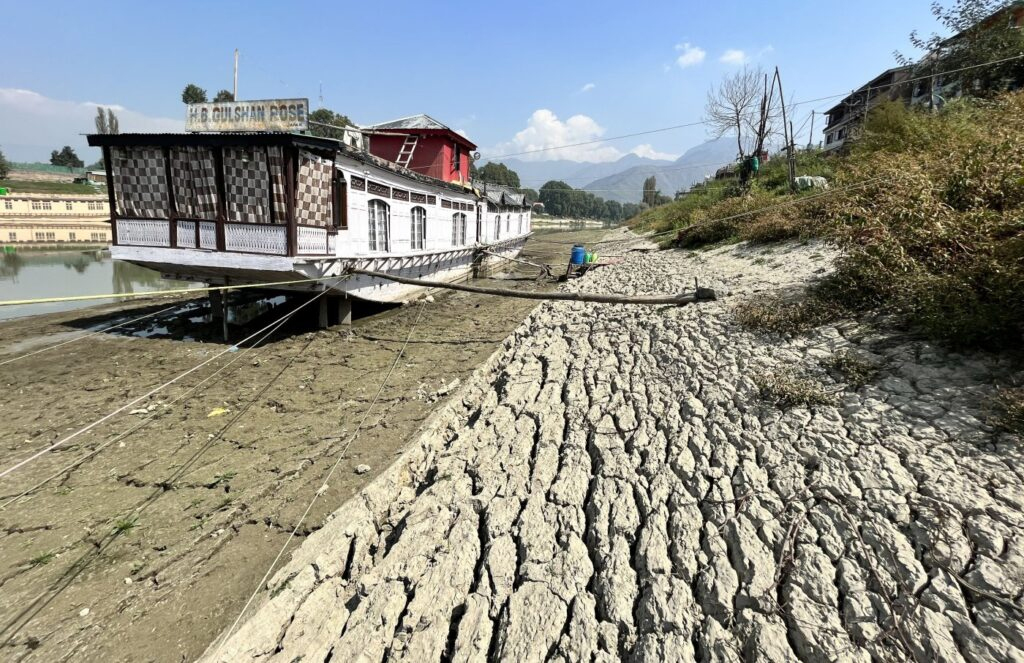
There is increasing concern that farmers in the region are experiencing shorter winters, longer harsher summers and more erratic rainfall than in previous years.
Unseasonal Rainfall” & Dry Spells: Traditional crops like wheat, maize, and mustard are bearing the brunt of erratic monsoons. Fields in the Kandi belt now suffer from alternating drought and deluge.
Rising Temperatures: As years pass with average temperatures tipping up, crops” which used to be very suitable to the mild climate of Jammu, now are getting fried in the heat pressure.
Pest Surges: Rise in temperature in winters has caused decrease in natural mortality” of pests. It also means that farmers are experiencing more attacks by insects and pathogens some of which never existed in the area before.
Flood Threats: Intense downpours have led to flash floods, washing away not just” crops, but also the confidence of farming families who rely solely on the land.
A Farmer’s Dilemma: Adapt or Abandon
“Baldev Singh, a maize farmer in Samba, says, we no longer know when rain will come or how long it will last. In other cases we plough the land, yet there is no rain. At other times it will rain, too soon, too much.”
His narrative is a reflection of thousands of such village stories of Kathua to Udhampur. These happenings are not independent of each other: these are part of a larger climatic upheaval redesigning the agricultural blueprint of Jammu.
Hope in Sustainability: A New Path Forward
The dilemma is that solutions can be found to the threat that exists. In Jammu, farmers, innovators and institutions are embracing to engage climate-smart farming. The change is gradual yet obvious:
* Rainwater harvesting mechanisms are aiding in the saving of all these precious” droplets.
* The organic and natural farming system is also becoming popular because of its” sustainability to environmental stress.
* Diversification of crops is being adopted to create a risk measure and raise food” security.
* Older methods are gradually being replaced by mulching, intercropping and minimum” tillage.
Additionally, real-time information is empowering farmers through the use of weather advisories, mobile alerts, and early warning systems. In several areas of the region, farmers are becoming sensitive to work with nature than against it.
The Larger Picture: Why Jammu Matters
Jammu, with its unique blend of sub-tropical plains and foothill ecology, sits at the frontline of climate change in North India. What happens here is not just a regional issue it’s a microcosm of the agricultural battle being fought across the country.
The strategic location of the region, in terms of food security, as well as its exposure to climate shocks, means it is a critical area of climate resilience and improved models of sustainable agriculture.
Conclusion: Cultivating Resilience in a Warming World
The fields of Jammu are more than just strips of soil; they are stories of struggle, survival, and silent strength. The weather may have changed due to climate change yet these farmers are still determined more than ever.
There is a crossroad now for agriculture in Jammu as we go further into a period of uncertainty on the environmental front. The decisions that are currently made by the farmers, planners and policymakers today will precondition whether the region will be transformed into the object of climate change or an example of adaptation and resilience. This is where the future of food first starts under the changing skies of Jammu.
(The authors are from SKUAST- Jammu)
 Follow our WhatsApp channel
