

Excelsior Correspondent
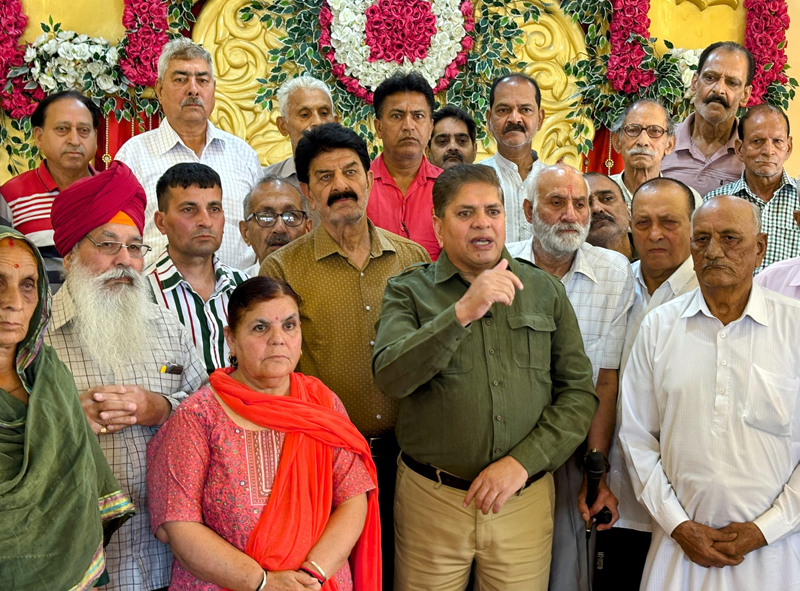
JAMMU, May 11: SOS International, a prominent organization advocating for the rights of refugees displaced from Pakistan-occupied Jammu and Kashmir (PoJK), convened an urgent meeting of its office bearers and district heads today at Jammu, focused on the organization’s response to the India-Pakistan ceasefire and the ongoing struggle for the liberation of PoJK.
On May 6, SOS. International, led by Chairman Rajiv Chuni, announced a peaceful march from Jammu to PoJK to demand reclamation of ancestral lands from Pakistan’s illegal occupation. Chuni highlighted Pakistan’s use of PoJK as a terrorist hub, enabling cross-border attacks that have killed countless Indians.
“PoJK is not just a territory; it is our homeland,” he asserted. The announcement galvanized PoJK refugees and supporters who saw this as a matter of justice and sovereignty. However, military tensions between India and Pakistan forced a halt to the plan.
After India’s targeted military strikes on terrorist camps in Pakistan and PoJK, war erupted between the nations, compelling SOS International to postpone the march for safety. “Our intention was to assert our rights peacefully, but the outbreak of war necessitated a temporary pause,” Chuni said.
On May 10, 2025, India and Pakistan agreed to a ceasefire, halting hostilities. Though the ceasefire ended active conflict, it was met with outrage from PoJK refugees and SOS International, who saw it as a premature compromise that ignored the core issues of occupation and terrorism.
At the Rehari Colony meeting, Chuni expressed deep disappointment over the ceasefire, stating it was accepted without achieving the liberation of PoJK or dismantling Pakistan’s terror infrastructure.
“This war presented a historic opportunity to reclaim PoJK and eradicate the terror ecosystem that threatens our security. The Government has prioritized short-term political interests over long-term national welfare and justice for PoJK refugees,” he said.
Chuni questioned the rationale behind the ceasefire, highlighting that Pakistan’s occupation and terror support remain untouched. “Why did our Government stop short of smashing the terror camps and reclaiming our land?” he asked.
He also warned against political motivations behind the ceasefire, cautioning that while such gains may be temporary, the consequences of missing this chance to secure PoJK and eliminate terrorism will be long-lasting.
Chuni urged the Government of India to reconsider its stance in future talks with Pakistan, saying, “We will not rest until PoJK is reunited with India and the scourge of terrorism is eradicated.”
 Follow our WhatsApp channel
