

Dr Vishal Gupta
The Himalayas have always inspired reverence, not just for their towering peaks and breathtaking landscapes, but also for the divine presence many believe dwells within them. Across Jammu and Kashmir, millions of devotees make arduous journeys each year to sacred shrines such as Machail Mata in Kishtwar, Shri Mata Vaishno Devi in Reasi, and Amarnath in Kashmir. These pilgrimages are not merely physical undertakings but acts of faith that connect humans to nature and the divine. Yet, in recent years, these journeys have been increasingly overshadowed by natural disasters-cloudbursts, flash floods, and landslides-that have exposed the fragility of the region and raised urgent questions about the perils of overdevelopment in ecologically sensitive zones.
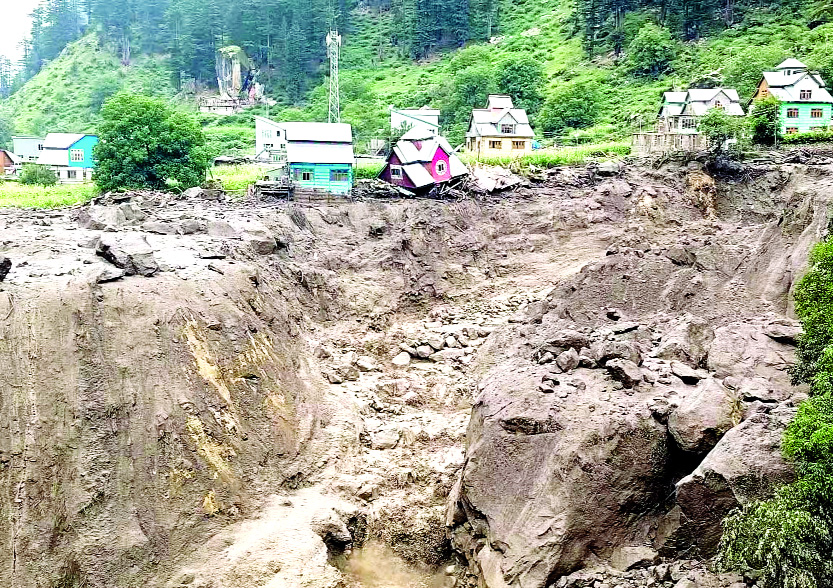
The summer of 2025 has already gone down in memory as one of the most turbulent in recent decades. In August, a sudden and devastating cloudburst at Chasoti village in Kishtwar unleashed flash floods on the Machail Mata Yatra route. The torrent swept away temporary shelters, community kitchens, and stretches of the trekking path. More than forty lives were lost, and over two hundred people were reported missing, many of them pilgrims who had come to seek the blessings of the goddess. The rescue operations were hampered by continuous rainfall and treacherous terrain, forcing authorities to suspend the yatra indefinitely. For a shrine revered by thousands, the tragedy was both a humanitarian disaster and a spiritual jolt.
Elsewhere, nature’s fury was equally unforgiving. Jammu city recorded 190.4 mm of rainfall in just twenty-four hours, the second-highest August rainfall in a century. The downpour turned roads into rivers, caused flash floods that inundated neighborhoods, and damaged critical infrastructure, including the Jammu-Pathankot National Highway. Bridges collapsed under the weight of raging waters, isolating villages and cutting off pilgrim routes. In Reasi and Ramban districts, heavy rains triggered landslides and flash floods that claimed eleven lives, including seven members of the same family. The Amarnath Yatra too faced repeated suspensions as overflowing streams and landslides made the journey unsafe for thousands of yatris. The recurring scenes of stranded devotees, broken roads, and panicked evacuations left an imprint that was both tragic and cautionary.
These events were not isolated. In July 2022, a deadly cloudburst near the Amarnath cave shrine caused sudden flooding that swept through tents and community kitchens. More than forty people died, and scores were injured. The tragedy occurred just a few hundred meters from the holy cave, shocking the nation and raising questions about the preparedness of authorities to handle disasters in pilgrimage zones. Going further back, the 2014 J&K floods remain etched in public memory as one of the worst calamities in the region’s history. Unprecedented rainfall led to the Jhelum River breaching its banks, submerging large parts of Srinagar and South Kashmir. More than 500 lives were lost, and the economic damage ran into thousands of crores.
Taken together, these disasters form a pattern that cannot be ignored. While the Himalayas are naturally prone to cloudbursts, landslides, and flash floods, the impact of these events has been magnified by human interference. Over the past two decades, the surge in pilgrim numbers, combined with rapid infrastructure development, has altered the delicate ecological balance of the mountains. Roads are widened, tunnels drilled, forests cleared, and hotels and shops mushroom around the shrines. These activities disturb natural drainage systems, destabilize slopes, and weaken the mountain’s ability to absorb shocks. What might once have been a heavy downpour becomes a catastrophic flood when the land has been stripped of its resilience.
The pilgrimages themselves, once defined by hardship, simplicity, and spiritual communion with nature, are slowly losing their original essence. The yatra is supposed to bring devotees closer to nature and faith. But when it feels like a marketplace, something precious is lost. Neon-lit commercial establishments, large hotels, and unregulated shops lining the routes have turned sacred paths into noisy bazaars. What was meant to be a journey of faith is at risk of becoming a commercial enterprise.
Climate change has added another dimension to this crisis. Scientific studies have shown that warming temperatures in the Himalayas are altering rainfall patterns, increasing the frequency of cloudbursts. Warmer air holds more moisture, which is then released suddenly in concentrated bursts, leading to violent downpours. Melting glaciers further feed rivers and streams, raising water levels and amplifying flood risks. The Himalayas, often referred to as the “third pole,” are warming faster than the global average, making the region even more vulnerable to extreme weather events.
The situation is particularly alarming in Jammu and Kashmir, where fragile geology combines with heavy monsoons. Experts emphasize that unchecked development in high-risk zones multiplies the dangers. Roads cut through mountains without adequate slope stabilization. Concrete structures sprout in floodplains and near riverbanks. Deforestation reduces natural barriers that once absorbed rainfall and stabilized soil. The result is a dangerous cocktail where nature’s fury meets human negligence.
Authorities have often defended infrastructure projects as necessary to facilitate pilgrim comfort and boost tourism revenue. But the costs are beginning to outweigh the benefits. Pilgrim safety is compromised when thousands are stranded by landslides or swept away in flash floods. Local communities, too, bear the brunt of these disasters, losing homes, livestock, and livelihoods. Moreover, the very sanctity of the shrines is at risk. As one devotee poignantly remarked, “We come here for blessings, not for destruction. If we disturb the mountains too much, even the gods will not be able to save us.”
The lesson is clear: development must be reimagined in harmony with ecology and faith. Instead of massive concrete projects, the focus should shift to sustainable and essential infrastructure. Safe pedestrian pathways, ropeways where feasible, and eco-friendly shelters can provide comfort without destabilizing the mountains. Medical facilities and disaster response units must be strengthened along yatra routes. Afforestation drives and slope stabilization projects can restore ecological balance. Strict zoning laws must prevent construction in high-risk areas such as floodplains and landslide-prone slopes. Waste management systems, too, are essential to prevent pollution of streams and meadows.
Equally critical is the need for robust disaster preparedness. Early warning systems for cloudbursts and flash floods, though technologically challenging, must be pursued with urgency. Regular evacuation drills, real-time monitoring of weather, and coordination between meteorological departments, disaster response forces, and shrine boards can save lives. Pilgrims must also be sensitized to the risks and guided on safe practices during their journeys.
The tragedies of Kishtwar, Amarnath, Reasi, and Jammu city should serve as a wake-up call. They are not isolated accidents but warnings from nature that the limits of exploitation are being crossed. If lessons are not learned, the future could see even greater disasters, eroding not only the environment but also the sanctity of faith itself. The Himalayas demand respect, and any attempt to bend them to human will is bound to invite consequences.
At the heart of this crisis lies a moral and spiritual question. Pilgrimages are meant to be acts of humility, journeys that remind devotees of their smallness before the vastness of nature and divinity. To overbuild, overexploit, and commercialize these sacred routes is to betray their essence. Faith must not be reduced to convenience, nor devotion to profit. As the old saying goes, “We come here for blessings, not for destruction. If we disturb the mountains too much, even the gods will not be able to save us.”
The time has come for policymakers, shrine boards, and communities to pause and rethink. The shrines of Machail Mata, Vaishno Devi, and Amarnath are treasures not only of faith but also of heritage and ecology. Shielding them from overdevelopment is not an act against progress but a step toward preserving the fragile harmony between man, nature, and the divine. Only then can future generations continue to undertake these pilgrimages with the same reverence, without fear of the floods and landslides that now haunt them.
In the end, the message from the mountains is simple yet profound: faith and nature are inseparable. To honour one, we must protect the other.
(The author is Faculty at Cluster University of Jammu)
 Follow our WhatsApp channel
