

Suhail Bhat
SRINAGAR, Dec 16: A prolonged dry spell, which experts described as a short drought linked to climate change, dried up or sharply reduced water levels in many of Kashmir’s springs and streams, threatening drinking water supplies across large parts of the Valley where these natural sources remained the primary lifeline.
Follow the Daily Excelsior channel on WhatsApp
Jammu and Kashmir faced an acute rainfall deficit of 85.8%, according to the Meteorological Department. Since 5 November, most districts received little to no rainfall, even though the region should have recorded around 43.1 mm of precipitation during this period.
Experts said such short droughts and extended dry spells were becoming increasingly frequent in Kashmir and across the Himalayas due to rising global temperatures, changing atmospheric circulation patterns and a decline in western disturbances that traditionally brought winter rain and snowfall to the region.
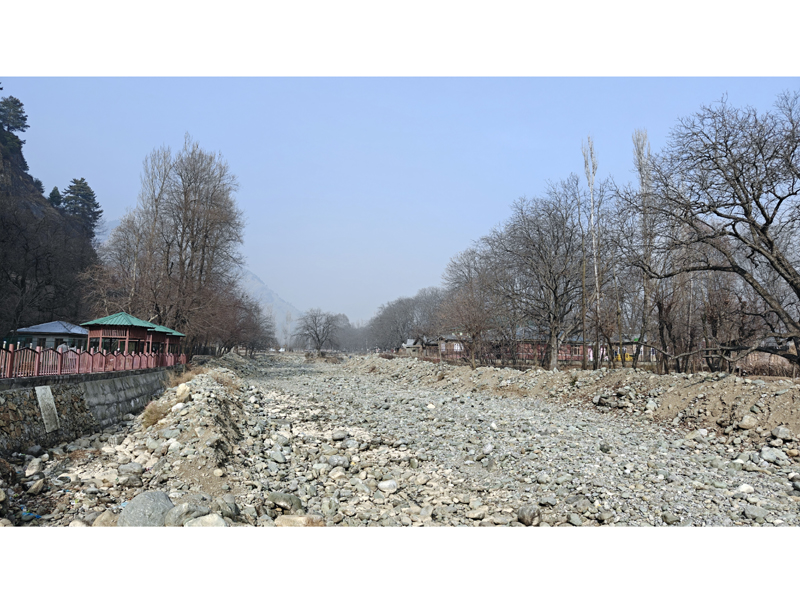
Several key springs already showed severe impact. Aripal spring in the Tral area and Bulbul spring in south Kashmir’s Pulwama district dried up completely, while discharge from major sources such as Achabal fell sharply, raising concerns over drinking water supplies to dependent villages. Water levels in streams, including Rambi Araa, also remained well below normal, with long stretches of riverbeds lying exposed and dry.
Prof Ghulam Jillani, Dean of the School of Earth and Environmental Sciences, said a major shift in precipitation patterns weakened the natural recharge system. “Earlier, snowfall in the mountains acted as seasonal storage. When it melted in spring, it recharged groundwater and increased spring discharge. Now, snow increasingly got replaced by rainfall, which flowed away as surface runoff without recharging aquifers,” he said. He added as groundwater levels fell, springs, natural outlets of groundwater, began to weaken or disappear.
He said the crisis had been building for decades. Citing research findings and a NITI Aayog report, Prof Jillani said more than 50% of springs in the Kashmir Himalayas had dried up. “There was a steady decline in the discharge of many springs over the last three to four decades, and climate change remained one of the dominant reasons,” he said.
For centuries, Kashmir’s springs, locally known as nag, sustained villages, agriculture and cultural life. Officials estimated that over 60% of Jammu and Kashmir’s 2,500 recorded springs had either dried up or become too polluted for use, intensifying fears of an impending water crisis.
Authorities, however, said contingency measures were in place. Rakesh Kumar Gupta, Chief Engineer of the Irrigation and Flood Control Department, said water supply remained stable for now. “All major treatment plants at Nishat, Sukhnag and Ganderbal functioned normally and together supplied about 92 million gallons per day,” he said, adding that there was no shortfall.
The department deployed around 80 water tankers and hired 30 more to meet additional demand, with provisions to expand the fleet if required. Officials said steps such as water conservation, regulation at sources and the construction of temporary stone bunds were planned to manage supply during the winter months.
 Follow our WhatsApp channel
