

By T N Ashok
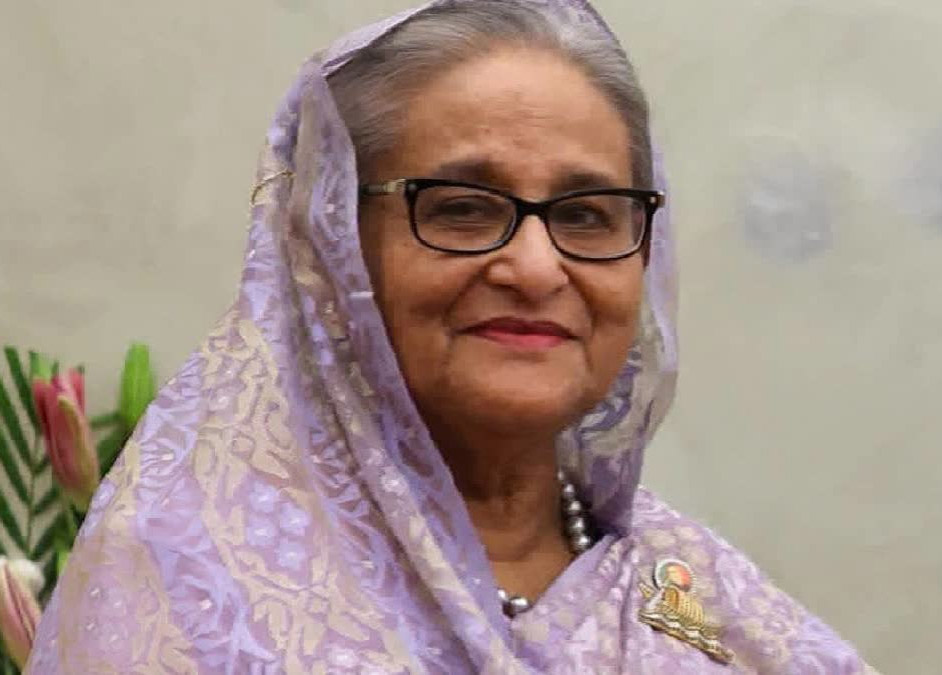
A Bangladesh special tribunal on Monday sentenced former Prime Minister Sheikh Hasina to death for crimes against humanity, a thunderous verdict against a once-dominant political force whose 15-year rule collapsed under the weight of student protests, economic frustration, and accusations of deepening authoritarianism.
The decision — delivered as crowds outside chanted “Justice for the martyrs!” — instantly reshaped South Asia’s political landscape. It also thrust India, Bangladesh’s largest neighbour and Hasina’s longtime ally, into a diplomatic crisis it has so far answered with studied silence.
Hasina, 78, convicted in absentia from her refuge in India, denounced the 453-page judgment as a “judicial charade” and demanded the interim government take the case to the International Criminal Court. “I have nothing to hide,” she wrote. “I will face any fair tribunal, anywhere in the world.”
But whether she ever sees a courtroom again remains doubtful. India has shown no inclination to hand her over — a fact that complicates Bangladesh’s quest for accountability and raises questions about the practical meaning of a death sentence that cannot be enforced.
The explosive crisis that toppled Hasina in August 2024 was rooted in a deeply emotional grievance: the country’s civil-service quota system, which reserved 30 percent of all government jobs for the descendants of independence-war veterans. Originally conceived as a gesture of gratitude to those who fought Pakistan in 1971, the system became synonymous with patronage and political favouritism.
To a new generation of Bangladeshis facing an anaemic job market, the quota symbolized a closed, corrupt political order. When student protesters mobilized in July 2024, the demonstrations quickly broadened into a nationwide revolt after social-media videos showed police firing on unarmed crowds.
United Nations investigators later confirmed that hundreds of young people, including minors, were killed in the security crackdown — an event that shattered Hasina’s claim to democratic credentials and hardened public opinion against her Awami League.
“The job quotas were just the spark,” said a senior Western diplomat in Dhaka. “This was an uprising against fifteen years of suffocation.”
With the military wavering and key ministers defecting, Hasina fled Dhaka on August 5 in a military aircraft that landed in India — echoing her 1975 flight from Bangladesh after the assassination of her father, Sheikh Mujibur Rahman. India then offered sanctuary; this time, it became a shield from prosecution.
New Delhi’s refusal to comment on the verdict reflects far more than diplomatic caution. For nearly two decades, India viewed Hasina as a reliable partner in a region where geopolitical loyalties shift quickly and where China has invested aggressively.
Under her leadership, Bangladesh cooperated closely with India on counterterrorism, border security, and transit rights. She also kept a check on Islamist political formations that New Delhi distrusts.
“Hasina was India’s most dependable friend in the neighbourhood,” said a former Indian ambassador to Dhaka. “You don’t abandon such a partner to the gallows.”
A second factor shapes India’s silence: precedent. Extraditing a former prime minister convicted by an interim government — especially one installed amid mass upheaval — could open uncomfortable questions about political asylum and judicial legitimacy in the region.
There is also a domestic political dimension. Hasina retains significant goodwill among parts of India’s political class, including senior figures in the ruling Bharatiya Janata Party, who see her as instrumental in stabilizing India’s vulnerable eastern frontier.
So while the Yunus-led interim government has formally requested extradition, India’s non-response signals what South Asian diplomats describe as “a polite but firm refusal.”
The verdict reverberated across South Asia, prompting reactions shaped as much by geopolitics as concern for human rights.
Pakistan, whose painful 1971 rupture created modern Bangladesh, responded with a mix of caution and quiet satisfaction. Hasina had long accused Pakistan’s army of genocide during the independence war and strengthened war-crimes tribunals that prosecuted pro-Pakistan Islamist leaders. Islamabad’s foreign office called for “judicial restraint” and urged Dhaka to “pursue reconciliation rather than retribution,” a phrasing diplomats say subtly underscores Pakistan’s preference for Hasina’s political eclipse.
Sri Lanka, navigating its own post-crisis political landscape, reacted in more pragmatic tones. Colombo fears that the destabilization of a key Indian Ocean economy could disrupt trade routes and migrant flows. Sri Lankan officials expressed concern about “regional instability” but avoided criticizing the verdict. Analysts say Colombo is wary of antagonizing either Dhaka or New Delhi at a time when it is courting both for financial assistance and diplomatic support.
Across the region, the deeper anxiety is whether Bangladesh — still reeling from last year’s revolt — can rebuild institutions without sliding into cycles of vengeance.
Hasina’s sentencing, while dramatic, is unlikely to be executable. As long as India offers her de facto asylum, Bangladesh’s courts cannot enforce the penalty.
That leaves the verdict straddling two contradictory roles: a legal judgment intended to deliver accountability, and a political instrument meant to exile the Awami League from future power.
“This is as much about rewriting Bangladesh’s political order as it is about justice,” said a Dhaka-based constitutional scholar. “By sentencing Hasina and her inner circle, the interim government is drawing a line under the old regime.”
Prosecutors argued that Hasina personally authorized lethal force against protesters and failed to prevent widespread abuses. Her former police chief Chowdhury Abdullah Al-Mamun, who turned state witness earlier this year, testified that cabinet-level directives sanctioned the use of live ammunition.
Human rights groups welcomed the ruling as an essential step toward accountability but expressed reservations about a trial conducted entirely in absentia. “There must be justice, but it must be seen as credible,” said an Amnesty International spokesperson. “Bangladesh has to show this is not simply political score-settling.”
For India, the immediate dilemma is managing a relationship with an interim Bangladeshi government that expects political support while hosting its most controversial former leader. Any move by India — extradition, silence, or formal refusal — risks angering one side or the other.
India also understands that Bangladesh’s stability directly affects its own northeast. A weakened Dhaka government struggling with debt, political unrest, and a demoralized bureaucracy could embolden extremist networks that both countries have fought for decades.
This explains New Delhi’s caution: it sees the interim government as fragile, the opposition as fractious, and Hasina’s Awami League — despite its tarnished legacy — as the only party with deep national organization.
As night fell over Dhaka following the verdict, torch-bearing students marched past Dhaka University, retracing the same streets where friends and classmates died just months earlier.
For them, the death sentence was less about vengeance and more about vindication — a statement that the state cannot kill its own citizens with impunity.
Yet the country’s path ahead is uncertain. The interim government must rebuild trust in institutions hollowed out over years of centralized rule, restore investor confidence, and balance justice with political reconciliation.
And the fate of Sheikh Hasina — condemned at home, protected abroad — now hangs between two nations that must navigate a storm of their own making.
Whether she ever returns to Bangladesh may matter less than the larger question her trial forces the region to confront: Can South Asia break the cycle of leaders rising through democracy only to fall through repression, exile, and vengeance?
For now, that answer remains as elusive as justice itself. (IPA Service)
 Follow our WhatsApp channel
