

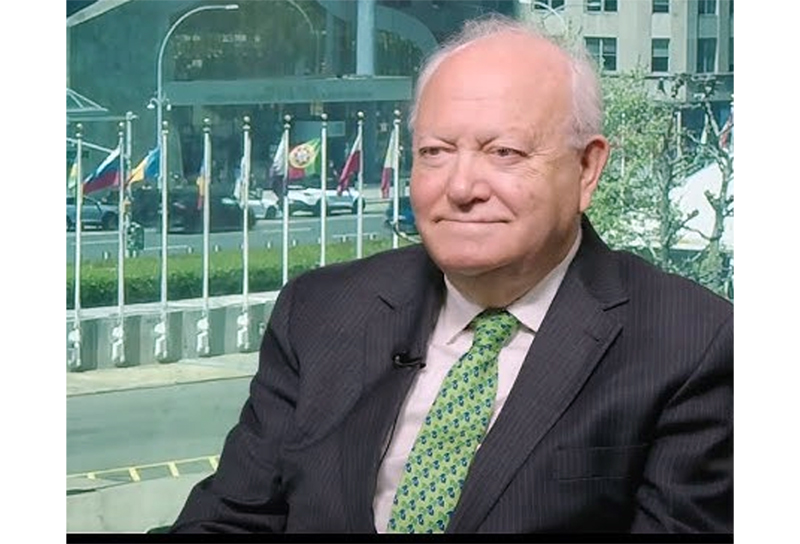
NEW DELHI, April 8 : Peace must be prioritised over security-centric approaches as lasting security can only come through peace, United Nations Alliance of Civilizations (UNAOC) High Representative Miguel Angel Moratinos said during a visit to Jamia Millia Islamia here.
Moratinos, the United Nations Special Envoy to Combat Islamophobia, visited the university on Tuesday as part of his official visit to India, according to a statement issued by Jamia Millia Islamia (JMI).
Addressing faculty members and officials at the university, Moratinos stressed the need for intercultural dialogue, inclusive societies and partnerships with academic institutions in promoting peace and mutual understanding.
Emphasising the role of universities in shaping responsible global citizens, he encouraged greater youth engagement in building bridges across cultures, officials said.
He further highlighted three key global concerns requiring collective action, namely, peace, sustainable development goals (SDGs) especially with respect to climate change, and the emerging challenges posed by artificial intelligence, also stressing the importance of ethical frameworks, multilateral cooperation, and responsible technological development.
Referring to the ongoing conflict in West Asia, Moratinos said, “Peace has to be a priority. We will never get security without peace.”
“In the last four decades, governments and state actors have placed security first, and have failed. Every time we put security, we fail. More security will provide more insecurity. We will attain security only through peace,” he insisted.
The UN special envoy also warned against excessive spending on wars at the cost of addressing pressing global concerns such as poverty, hunger, education and sustainable health. “There may be many cultures, many countries and civilizations, but we all form one humanity,” he said.
The visiting delegation also comprised Nihal Saad, Director, UNAOC; Anna Pavlyuchenko, Programme Officer, Institution and Member States Relations Advisor; Muhammed Shabeer K, Under Secretary (UNES), Ministry of External Affairs; Suresh Chandra Bhatt, PA to Joint Secretary (UNES-II), Ministry of External Affairs; and Devanshi Saxena, Officer Trainee, Ministry of External Affairs, Government of India.
The programme began with a welcome address by Md Mahtab Alam Rizvi, registrar of the university, who highlighted the institution’s legacy of inclusive education, cultural diversity and academic excellence.
He also underlined the role of Jamia’s Nelson Mandela Centre for Peace and Conflict Resolution in teaching and research aimed at peace-building.
In his remarks, JMI vice chancellor Mazhar Asif reiterated the university’s commitment to pluralism, coexistence and nation-building.
He said universities must serve as spaces for dialogue, critical thinking and engagement among diverse communities, and expressed the institution’s interest in strengthening cooperation with UNAOC in areas of intercultural understanding, youth engagement and peace-building. (PTI)
 Follow our WhatsApp channel
