

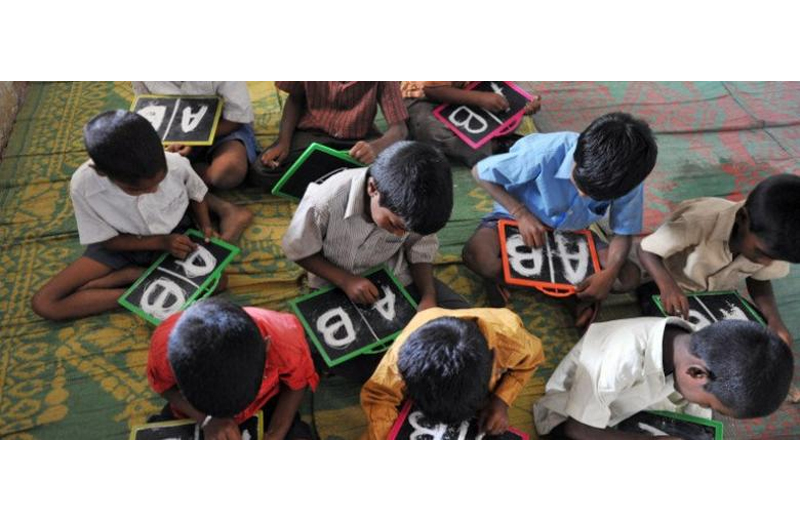
The Supreme Court’s directive to survey orphaned children denied education under the Right to Education Act, 2009, is a long-overdue acknowledgement of a glaring gap in India’s welfare framework. Beyond the immediate concern of ensuring access to schooling, the Court has urged the Centre to include orphans in the forthcoming 2027 Census-a move that could finally give statistical visibility to a group long rendered invisible. The absence of official data on orphans is both shocking and telling. UNICEF estimates that India is home to nearly 25 million orphaned children, yet there is no authoritative count. Without this baseline, policy formulation becomes guesswork, leaving millions in a limbo of neglect. While other vulnerable groups have been identified, documented, and provided with targeted benefits-be it scholarships, reservations, or financial aid-orphans remain outside the purview of most structured welfare schemes.
The Court’s intervention rightly highlights that education alone, though crucial, is insufficient. These children face a compounded disadvantage: no family support, no property, no safety net, and no clear pathway to a dignified livelihood. Even when admitted under the 25% quota for weaker sections in private schools, many drop out due to economic hardship, lack of mentoring, or social isolation. Without a holistic approach-covering sustenance, vocational training, healthcare, and psychological support-education risks becoming a token gesture rather than a genuine ladder of opportunity.
The danger of inaction is stark: without meaningful intervention, millions of orphans are condemned to cycles of menial labour, exploitation, and poverty. The state’s constitutional duty to protect and empower vulnerable citizens cannot be selectively applied. If India is to uphold its commitment to equality and social justice, orphaned children must be given the tools to lead self-sufficient lives. The Supreme Court has an extended role; it must actively track compliance, summon errant states, and push for measurable outcomes. The lives of 25 million children cannot be left to chance or piecemeal charity. It is a test of our nation’s moral conscience. For a country aspiring to equitable growth, counting its most invisible citizens is the first step towards truly including them.
 Follow our WhatsApp channel
