

Excelsior Correspondent
JAMMU, Apr 1: Supreme Court (SC) advocate Nar Hari Singh delivered a special guest lecture at O P Jindal Global University’s Jindal Global Law School, Sonepat (Haryana) on the evolving landscape of the legal profession in India, highlighting the growing role of technology and the shifting focus of legal practice.
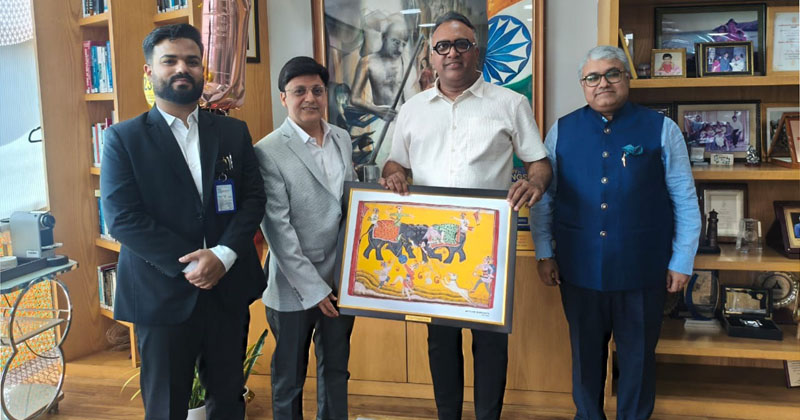
Singh was honoured by the Vice Chancellor and Registrar of the university on the occasion. The event was organized by Jindal Global Law School under the guidance of Professor Aseem and Manager Neha Rai. The session, attended by students and faculty members, focused on the “Significance and Future of the Legal Profession in India: Challenges and Prospects.”
In his address, Singh emphasized that the legal framework must continuously evolve with changing societal needs. He noted that laws cannot remain static and must adapt to emerging realities to remain relevant and effective.
Highlighting a key shift in the profession, Singh observed that the future of legal practice in India will depend on moving from litigation-driven success to a more justice-oriented approach. He stressed that lawyers today have the opportunity not only to participate in the legal system but also to act as reformers.
He further pointed out that the growing integration of technology, including Artificial Intelligence, is transforming the justice delivery system. Referring to recent Government initiatives, he noted that AI-assisted legal translation tools are being developed to make judgments and legal material accessible in multiple Indian languages, thereby reducing barriers to justice.
Singh underlined that the modern legal professional must be technologically adept, with familiarity in areas such as digital evidence, online dispute resolution, and legal tech platforms. He also highlighted the emergence of hybrid legal careers, where professionals are increasingly taking up roles as policy advisors and compliance experts beyond traditional courtrooms and law firms.
Concluding his lecture, Singh asserted that while technology may enhance efficiency and accessibility, it remains the responsibility of legal practitioners to ensure that fairness and justice are not compromised.
 Follow our WhatsApp channel
