

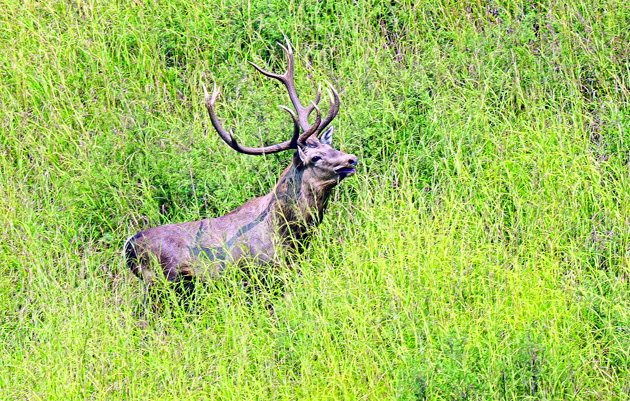
The slow but steady rise in the population of the Kashmiri stag, or Hangul, offers a rare note of optimism in an otherwise grim global narrative of wildlife decline. From 289 animals in 2023 to 323 in the 2025 census, the increase is modest in numbers but significant in meaning. It underlines that focused conservation interventions, when backed by political will, scientific planning and on-ground commitment, can still reverse decades of ecological damage. Yet, by any standard, a total population of just 323 deer is deeply alarming and a matter of utter concern. The Hangul’s story mirrors a larger tragedy: while the human population continues to grow relentlessly, wildlife populations are shrinking, fragmenting and vanishing. Once numbering around 2,000 in 1947, the Hangul plunged to near-extinction levels due to habitat loss, poaching, disturbance and prolonged conflict. That it has survived at all is testimony to nature’s resilience-and to the dedication of conservationists who refused to give up.
In this context, the Hangul Conservation Breeding Centre at Tral stands out as one of the most effective interventions undertaken so far. By protecting fawns during their most vulnerable stages and releasing them into the wild as sub-adults, the programme directly addresses low survival rates that have plagued the species for decades. The recent upgradation of the Tral landscape into a full-fledged wildlife sanctuary and habitat improvement measures such as water holes, winter feeding and reduced human disturbance are equally commendable. These steps collectively enhance the chances of survival in the wild, which remains the ultimate test of success. The officials and wildlife staff working under challenging conditions to protect the Hangul deserve all accolades. Their efforts have bought time for a species on the brink.
However, breeding centres alone cannot be the long-term answer. The survival of Hangul depends fundamentally on the protection, expansion and connectivity of its natural habitat. Safeguarding forest corridors, minimising human-animal conflict, and preventing encroachment are non-negotiable priorities. Unless Hangul can survive and breed successfully in the wild, without constant human intervention, the species will continue to remain critically vulnerable. There is also a strong case for exploring advanced scientific methods, including artificial insemination and genetic management, to enhance breeding success and genetic diversity. At the same time, conservation cannot be left solely to officials. Local communities and civil society must actively participate.
 Follow our WhatsApp channel
