

Ajaz Ahmad Bardi
informationladakh@gmail.com
Recent satellite imagery from the Pangong Tso region in eastern Ladakh suggests that the apparent calm along the Line of Actual Control (LAC) does not necessarily equate to strategic stability. While India and China continue diplomatic and military engagements following the 2020 standoff, developments on the ground indicate a steady consolidation of China’s military presence close to disengagement buffer zones.
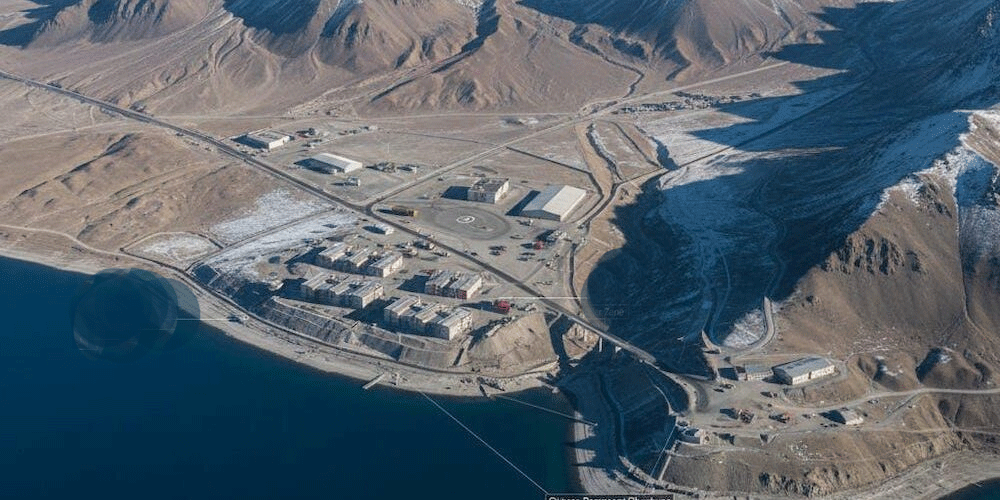
High-resolution satellite images appear to show the construction of permanent Chinese structures near Pangong Tso. Although these facilities are located within territory currently under Chinese control, their proximity to earlier confrontation sites raises significant strategic concerns. The apparent replacement of temporary shelters with durable, permanent buildings seems preparation for long-term, year-round deployment rather than seasonal or short-term occupation.
Pangong Tso remains one of the most sensitive military flashpoints in eastern Ladakh. During the 2020 crisis, the area witnessed intense face-offs involving troops, armoured vehicles, and lake-based assets. Subsequent disengagement agreements led to the creation of buffer zones aimed at reducing the risk of direct clashes. However, these arrangements did not result in complete demilitarisation. Satellite imagery indicates that forces have been repositioned just outside restricted areas, maintaining a high level of readiness while avoiding immediate confrontation. The latest construction satellite shows activity appears consistent with this posture.
Infrastructure seems on satellite increasingly emerged as a strategic tool in border regions. Permanent buildings enhance winter survivability, strengthen logistics, and enable faster mobilisation during crises. Over time, such infrastructure hardens tactical advantages and transforms temporary post-crisis arrangements into enduring realities on the ground. Similar satellite-observed patterns are visible across eastern Ladakh, seems including expanded roads, bridges, helipads, and logistics hubs that improve connectivity between forward areas and rear bases in Tibet. Much of this infrastructure is dual-use, supporting both civilian development and military operations use.
At the same time, lasting peace between India and China cannot rely solely on deterrence and vigilance. For a stable and constructive future, sustained and regular dialogue at the border remains essential. More frequent high-level political engagements, combined with continuous military-to-military border talks near the LAC, are necessary to build confidence, manage tensions, and prevent miscalculations. Meaningful engagement remains the only viable path toward resolving long-standing border issues and working toward a mutually accepted and clearly defined LAC.
For India, the challenge lies in maintaining robust preparedness through satellite-based surveillance, remote monitoring, and coordinated command structures, while simultaneously pursuing diplomacy. Peace along the Line of Actual Control can endure only if strategic caution is matched with persistent dialogue, ensuring that competition does not overshadow the possibility of lasting stability and cooperation between the two neighbours. Given that economic and trade exchanges with China continue, there remains scope for calibrated economic engagement that could contribute to broader regional stability and economic growth.
 Follow our WhatsApp channel
