

Mahi Charak
mahicharak06@gmail.com
For centuries, the quiet town of Samba in Jammu and Kashmir has carried forward a unique textile tradition known as Calico printing. Once widely known for its beautifully hand-printed bed sheets called Chheenta, Samba earned the reputation of being the “City of Sheets.” This traditional craft, created through hand-block printing on cotton fabric, reflects the artistic heritage of the Dogra region and the skilled craftsmanship of local artisans.
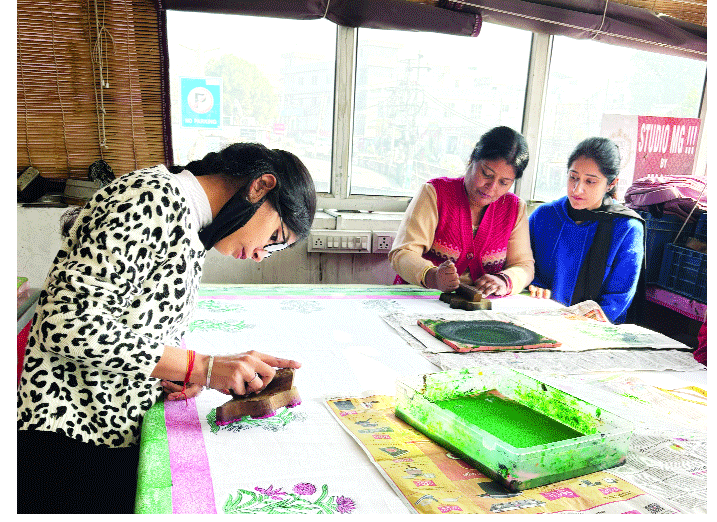
Calico printing in Samba is believed to date back to the time of Maharaja Ranjit Singh. Using carved wooden blocks dipped in dyes, artisans stamp intricate designs onto cotton fabric. The process is entirely manual and requires patience, precision and a trained eye. Floral patterns, geometric motifs and traditional designs are carefully printed one layer at a time, resulting in textiles that are both durable and visually striking.
For generations, this craft provided livelihood to families in the region and added beauty to homes across northern India. However, like many traditional crafts in India, Samba’s Calico printing began to decline in the last few decades. The growing dominance of machine-printed fabrics and changing market preferences made it difficult for artisans to sustain the craft. Many skilled workers moved to other occupations and the once thriving local industry gradually faded.
Yet, in recent years, efforts have been made to revive this heritage craft and bring it back into public attention.
The revival of Samba’s Calico printing began with the efforts of designers, local administrators, self-help groups and artisan collectives. One such initiative is Samba Sakhi, which has been working to empower local women artisans while preserving the region’s traditional textile heritage.
The initiative is led by fashion designer Mansi Gupta, who has been associated with the field of fashion and textile design for many years. She has been running a fashion design institute in the region for nearly twenty-five years, working with students and artisans interested in textile crafts.
Her involvement with Samba’s Calico printing began when she started working as a consultant under a government programme known as the Sankalp scheme. Through this programme, she trained around thirty rural artisans in the traditional techniques of block printing and Calico printing that once flourished in the Samba region.
What began as a training programme gradually developed into a structured effort to revive the craft. The trained artisans started experimenting with different designs and products and their work began receiving attention at exhibitions and craft fairs.
Initially, the project functioned under the district administration of Samba. Later, support from the Jammu & Kashmir Rural Livelihoods Mission (UMEED) and the Directorate of Handloom and Handicrafts helped artisans gain access to larger craft platforms.
Through these initiatives, the artisans were able to participate in exhibitions such as Delhi Haat, where their Calico-printed products were displayed and sold. The response from visitors encouraged the group to continue developing the craft and expanding their reach.
One of the biggest milestones for Samba’s Calico printing came in 2026 when the craft was showcased at FITUR 2026, one of the world’s largest international tourism trade fairs held in Madrid, Spain.
At the Jammu and Kashmir Pavilion, Calico-printed sarees, curtains, cushion covers and home textiles were displayed alongside other traditional art forms from the region. The exhibition attracted visitors from across the world, including tourism professionals, designers and buyers.
According to the organisers, the response to the Calico products was extremely positive. Visitors were curious about the traditional printing techniques and admired the handmade designs. Many stopped to ask questions about the craft and the process behind it.
The exposure at FITUR brought significant recognition to Samba’s traditional printing. Compared to earlier years, interest in the craft increased noticeably after the exhibition. The artisans began receiving inquiries and orders from different parts of the world.
Even Indian public figures took notice. Actress Sunita Rajwar, known for her role in the popular series Panchayat, placed an order for Calico products through her team after learning about the craft.
For the artisans involved in the initiative, this moment felt like long-awaited recognition. After years of working to bring the craft back to life, seeing their products appreciated on an international stage was both encouraging and inspiring.
At present, around thirty women artisans are regularly involved in Calico printing through the initiative. Most of them come from rural areas and are associated with self-help groups under the UMEED and Rural Livelihood Mission programmes.
For many of these women, the craft has become an important source of income and confidence.
Unlike factory work, the system of production is designed to remain flexible. The artisans work on a rotational basis, which means they do not have to work every day. In most cases, a woman works only one or two days a week depending on the production requirements.This arrangement allows them to balance household responsibilities with income-generating work. They are able to take care of their homes and families while also participating in the craft revival.
Initially, convincing families to allow women to participate in the work was not easy. However, once the artisans began earning and the quality of their work started receiving recognition, attitudes began to change. Today, many families actively support the women in continuing the craft.
Some artisans have even started forming their own small groups and societies, enabling them to expand their work independently and contribute further to the growth of the craft.
Currently, the Calico-printed products are marketed through multiple channels. Social media platforms such as Instagram are used to showcase designs and connect with customers. In addition, exhibitions and craft fairs remain an important platform for selling products.
The experience at Delhi Haat demonstrated the potential of these products in the national market. During the exhibition, almost the entire stock of Calico items was sold out, indicating strong consumer interest in handmade textiles.
However, the organisers believe that the next step for the craft lies in expanding its presence across India. Plans are now being developed to create a dedicated website and strengthen pan-India marketing so that customers from different parts of the country can access the products more easily.
Despite the positive developments, the revival of Calico printing in Samba is still at an early stage and faces several challenges.
One of the biggest issues is the lack of a long-standing artisan base. Unlike regions such as Jaipur or Madhya Pradesh, where block printing has been practised by families for generations, Samba does not have a continuous tradition of artisans working in the craft today.
Most of the artisans currently involved were trained only in the past five or six years. As a result, the ecosystem of skilled workers, suppliers and experienced craftsmen is still developing.
Another challenge lies in the availability of raw materials. Jammu and Kashmir does not currently have large-scale cotton weaving facilities, which means the fabric used for printing has to be sourced from outside the region. Similarly, the wooden blocks used for printing are also procured from other states.
This increases the cost of production and makes it difficult to compete with established block printing centres in other parts of India.
The natural conditions of the region also create certain limitations. Historically, Samba was known for its water quality, which was considered particularly suitable for dyeing and colour fixing. Today, the absence of a major running water body means artisans must adapt the process using the resources available.
Seasonal weather conditions also affect production. During winters, especially in the hilly terrain of Jammu and Kashmir, drying dyed fabrics becomes slower and more difficult.
While the artisans and organisers have received support through training programmes, exhibitions and government schemes, there is still a strong need for greater marketing and infrastructure support.
One of the major suggestions from the organisers is that government institutions could actively promote the craft by using Calico-printed products in public spaces. For example, government hotels, tourism guest houses and official buildings could use locally printed bedsheets, curtains and furnishings. This would not only create a stable demand for the products but also help showcase the craft to visitors.
There is also a need to develop craft clusters and infrastructure, where artisans can work together, access raw materials easily and receive continuous training. Such initiatives could help strengthen the industry and make it more sustainable.
Despite the challenges, the future of Samba’s Calico printing appears hopeful. The growing interest in handmade and eco-friendly textiles has created new opportunities for traditional crafts.
The experience at international platforms such as FITUR has demonstrated that there is a strong global appreciation for authentic handmade products that carry cultural stories. With continued training, better marketing and institutional support, the craft has the potential to grow into a recognised textile identity of the region.
For the women artisans who have revived this tradition with dedication and patience, Calico printing is more than just a livelihood. It represents cultural pride, creative expression and a connection to the heritage of their land.
As their work begins to reach audiences far beyond Samba, the colourful patterns stamped onto cotton fabrics carry with them a powerful message – that traditional crafts, when supported and nurtured, can find new life even in the modern world.
(The author is Student, of Mass Communication and New Media Central University of Jammu)
 Follow our WhatsApp channel
