

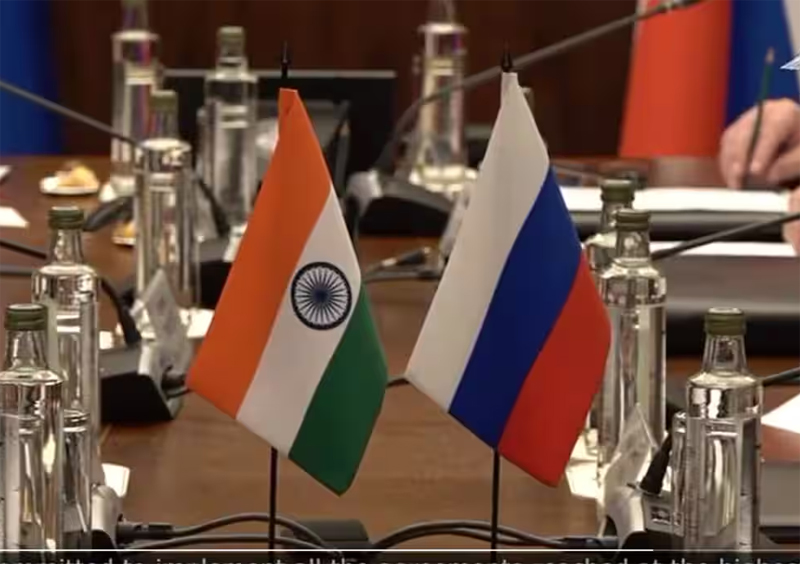
MOSCOW, Sep 14: The Russian Foreign Ministry lauded India for continuing to maintain strong relations with Moscow, even after facing massive economic pressure from the West.
In fact, Russian officials have said: “frankly, anything else would be hard to imagine,” reports RT.
Hailing New Delhi’s decision to continue its multifaceted cooperation with Moscow, the ministry remarked that Russia-India relations are “steadily and confidently advancing.”
“Any attempt to obstruct this process is destined to fail,” it added.
The ministry’s comments come amid the exorbitant 50% tariffs imposed by the US administration on Indian goods currently.
As part of the global Trump tariffs, Washington had levied 25% tariff on New Delhi’s exports. However, it levied an additional 25% on Indian goods as part of the ‘secondary tariffs’ in response to New Delhi’s continued purchase of Russian oil, accusing it of ‘funding Moscow’s war machine’.
New Delhi has rebuffed the claims, with officials having termed the tariffs as being “highly unjustified and unfair.”
The Russian Foreign Ministry remarked that India’s approach to its ties with Russia, despite Western criticism and global pressure, not only reflects “the spirit and traditions of long-standing Russia-India friendship” but also embodies what it called “strategic autonomy in international affairs.”
The partnership between Russia and India is based on “the highest value of sovereignty and the primacy of national interests,” Moscow asserted, and this is why the relationship has been “reliable, predictable and truly strategic in nature.”
Officials noted that New Delhi and Moscow are currently engaged in large-scale joint projects in various fields. This includes civilian and military production, manned space missions, nuclear power, and Indian investments in Russian oil exploration projects.
Additionally, both countries are working together on alternate payment systems, expanding the use of national currencies, and creating alternative transport and logistics routes. These efforts are described as long term and not just a response to “unfavourable geopolitical realities.”
(UNI)
 Follow our WhatsApp channel
