

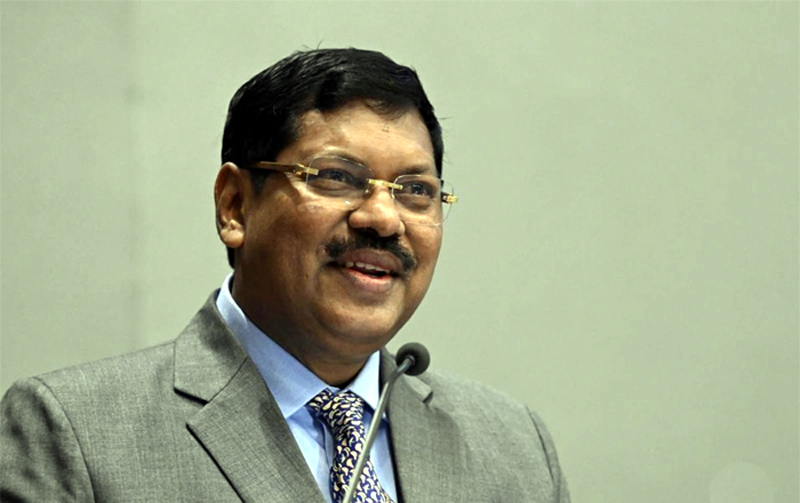
CJI urges CJ J&K to consider separate bench for Ladakh
Excelsior Correspondent
SRINAGAR, July 27: Rights without knowledge are of no use, Chief Justice of India B R Gavai said today, emphasising the importance of making citizens aware of their rights.
Addressing the North Zone Regional Conference of National Legal Services Authority (NALSA), the CJI also said there was a need to undo the aberrations of the past and restore the old Kashmir where all communities lived in harmony.
Follow the Daily Excelsior channel on WhatsApp
“The judges and lawyers together have to ensure justice for the last citizen of the country. The NALSA works in this direction, and we try to take the NALSA work to remote areas of the country — be it in Ladakh, the Northeast or Rajasthan. Unless people have the knowledge of their rights, the rights are of no use,” CJI Gavai said.
In an apparent reference to the situation in Kashmir over the last 35 years, the CJI said there have been aberrations that need to be undone.
“There have been aberrations, but we have to work to remove these. This dialogue between judges and lawyers will give a new perspective. I am sure this programme will help in rebuilding the traditional Kashmir where all communities — Hindus, Muslims and Sikhs — used to live together,” he said.
He said the NALSA should continue its work of ensuring that the last resident of the remotest area of the country gets justice as enshrined in the Constitution.
“Through the Constitution of the country, we have promised ourselves justice — political, social and economic. We are bound to see that justice is implemented in its true spirit. The legal fraternity needs to have a commitment to the true values of the Constitution,” he said.
The CJI said that while Babasaheb B R Ambedkar brought about political justice through ‘one person, one vote’, the author of the Constitution spoke about social compartmentalisation and the difficulty of moving from one compartment to another.
Reminiscing about his previous visits to Jammu and Kashmir, and Ladakh, Chief Justice Gavai said he has got immense love and affection from the people of the two Union Territories.
“I feel like I have come to my hometown. I am thankful for all the love and affection showered on me. I have been to all parts of Jammu and Kashmir and Ladakh. The tradition of sufism here promotes secularism as enshrined in the Constitution of India. People from all faiths visit the dargahs and temples, and other religious places here,” he said.
On the issues raised by the representatives of the Bar from Ladakh, Kashmir, and Jammu, Chief Justice Gavai said that while he did not have the authority to address these, he would convey the same to the concerned authorities including the Collegium.
The conference brought together Judges of the Supreme Court of India, Chief Justices and Judges from various High Courts across Northern India, senior advocates, members of the Bar, and judicial officers for a day of focused deliberations on the evolution and empowerment of the legal profession in service of constitutional justice.
On second day today, the conference was presided over by Justice B.R. Gavai, Chief Justice of India. Dignitaries in attendance included Justice Surya Kant, Justice Vikram Nath, Justice Pamidighantam Sri Narasimha, Justice Pankaj Mithal, Justice Rajesh Bindal, Justice N. Kotiswar Singh and Judges of Supreme Court of India, Justice Arun Palli, Chief Justice, High Court of J&K and Ladakh, Justice Sanjeev Kumar, Justice Rajnesh Oswal, Justice Sindhu Sharma and Judges of High Court of J&K and Ladakh.
Justice Rajnesh Oswal, Judge, High Court of J&K and Ladakh, opened the proceedings by welcoming dignitaries, Bar leaders and young advocates from across Jammu, Kashmir, and Ladakh. He emphasized the importance of nurturing a justice ecosystem that is professional, accessible and ethically grounded.
Delivering the keynote address, Justice Arun Palli, Chief Justice, High Court of J&K and Ladakh and Patron-in-Chief, J&K and Ladakh Legal Services Authorities, reflected on the rich legacy of the region’s legal institutions. He praised the younger generation of lawyers and underscored the significance of broadening professional opportunities and visibility for talent across districts, including the remote areas of Ladakh.
Haji Mohammad Amir, Advocate from the Union Territory of Ladakh, urged the Chief Justice to establish a separate bench for the Union Territory of Ladakh within the High Court of Jammu & Kashmir and Ladakh.
Justice N. Kotiswar Singh, Judge, Supreme Court, addressed the importance of cultural integration, gender inclusion, and institutional memory in strengthening the justice delivery system. He lauded the increasing participation of women in the Bar and advocated for deeper outreach into regions such as Ladakh.
Justice Rajesh Bindal, Judge, Supreme Court, reflected on his legal career beginnings in the region and stressed the need for merit-based legal education and digital literacy. He cautioned against overdependence on AI and emphasized that diligence, reading and traditional legal reasoning remain core to judicial performance.
Justice P.S. Narasimha, Judge, Supreme Court, shared a reflective address on the dynamic role of advocates in the adjudicative process. He encouraged lawyers to preserve regional languages and cultural moorings, arguing that justice is best served when expressed in the language and lived experiences of the people.
Justice Vikram Nath, Judge, Supreme Court, spoke about the vibrant presence of lawyers from all three regions – Jammu, Kashmir, and Ladakh. He celebrated the growing participation of women in law and urged members of the Bar to remain grounded in truth and compassion.
Justice Surya Kant, Judge, Supreme Court & Executive Chairman, NALSA, invoked the spirit of family unity to describe the conference. He emphasized that women empowerment in law is not a symbolic goal but a constitutional necessity. He proposed that eligible young women lawyers across the UTs be empanelled as legal aid counsels, thereby expanding both their professional opportunity and the outreach of justice services.
In a key policy suggestion, CJI Justice BR Gavai urged the Chief Justice of the J&K High Court to consider establishing a separate bench for the Union Territory of Ladakh, acknowledging the consistent demand raised by the Ladakh Bar.
In the vote of thanks, Justice Rahul Bharti, Judge, High Court of J&K and Ladakh, expressed heartfelt gratitude to the visiting Judges of the Supreme Court, High Court colleagues, bar leaders, legal services officers, and the young advocates who attended in overwhelming numbers from across 22 districts of J&K and Ladakh.
Meanwhile, CJI Justice Gavai said that over the centuries, Kashmir has enriched India’s intellectual and cultural discourse.
Addressing the Mega Alumni Meet at the University of Kashmir, CJI Gavai said that Kashmir is rich in traditions and has produced powerful voices.
“Kashmir has rich traditions and has deeply enriched India’s intellectual and cultural discourse, from Lal Ded to Habba Khatoon. Kashmir has also produced voices that resonate far beyond its valleys,” he said.
He said he felt privileged to be present in what he described as paradise on earth. “It is just like we have come to heaven; at the same time, we witnessed great hospitality,” he added.
CJI said the University of Kashmir has produced talent from various walks of life who have contributed to the judiciary, politics, medical sciences, and many other fields.
“I was particularly happy to felicitate Ghulam Nabi Azad, who has represented Yavatmal, which is my neighbouring district in Vidarbha,” he said.
He added that Azad had been a good friend of his father, and both of them had worked together in the Rajya Sabha as well as in Maharashtra politics.
The CJI Gavai urged the university to draw on the experience of its alumni for the benefit of the new generation.
“It will help them and give them a road map. The University of Kashmir will produce many students who will contribute to the development of India as a nation and of Kashmir as a region,” he said.
 Follow our WhatsApp channel
