

Swati Suman
swatisuman1106@gmail.com
Every year, International Women’s Day draws attention to the achievements and aspirations of women across the world. In the historical landscape of Jammu, the legacy of Maharani Tara Devi offers a meaningful reminder that women have shaped society in many subtle yet enduring ways. While discussions on this day often focus on contemporary achievements, it is equally important to reflect on women from the past whose influence quietly helped shape the moral and cultural foundations of society.
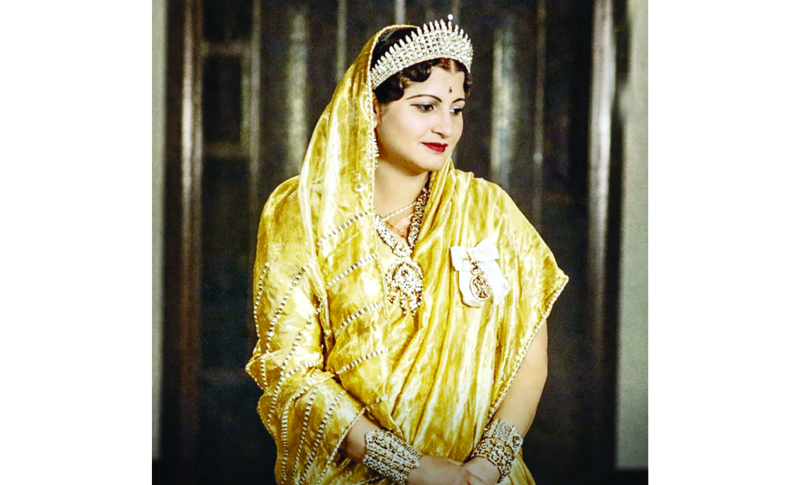
In the historical narrative of Jammu, the name of Maharani Tara Devi carries a special significance. She was the consort of Maharaja Hari Singh, the last ruling monarch of the princely state of Jammu and Kashmir. While political history often highlights rulers, treaties and administrative decisions, the presence and influence of women within royal households formed an important yet less discussed dimension of that era.
The royal courts of the Dogra period were not merely centres of political authority; they also shaped social values, traditions and cultural continuity.
Within this environment, royal women carried responsibilities that extended far beyond ceremonial presence. They were custodians of etiquette, patrons of charitable activities and quiet guardians of the moral atmosphere surrounding the royal court.Maharani Tara Devi represented these responsibilities with remarkable composure. Royal women were expected to embody dignity and restraint, but their influence often reached into the broader social and cultural fabric of the region. Through their involvement in religious observances, community welfare and the encouragement of cultural traditions, they contributed to sustaining the ethical ethos of society.
The early decades of the twentieth century were marked by change across the Indian subcontinent. Political movements were gaining momentum, colonial structures were being questioned and ideas of public participation were gradually expanding. In such a period of transition, institutions of royalty often symbolised continuity and stability. Within this framework, figures like Maharani Tara Devi represented a connection between tradition and evolving social realities.
Remembering Maharani Tara Devi on Women’s Day encourages a broader understanding of empowerment. In the modern context, empowerment is frequently associated with participation in public institutions, professions and decision-making bodies. However, history reminds us that women have always exercised influence in diverse ways, often within established social structures yet with lasting impact.
Jammu’s cultural memory continues to preserve the legacy of its royal past. The Dogra period remains an important chapter in the historical identity of Jammu and Kashmir, and the lives of those associated with the royal household form an integral part of that collective memory. Maharani Tara Devi represents a generation of women who upheld values of dignity, commitment and social responsibility in a world shaped by tradition.At the same time, the role of women in contemporary Jammu and Kashmir has expanded significantly. Women today are visible participants in education, governance, entrepreneurship, sports and public service. Their growing presence reflects the aspirations of a society that increasingly values equality and opportunity.
The journey from the royal households of the past to the dynamic roles of women today illustrates how social expectations have evolved over time. While the forms of participation may have changed, the spirit of resilience and responsibility continues to connect women across generations.
On International Women’s Day, remembering Maharani Tara Devi is therefore not only an act of historical reflection but also a recognition of the many ways in which women have shaped society. Some have done so through visible leadership, while others influenced the cultural and moral foundations of their communities.
History often records the voices that speak the loudest, yet the quieter contributions of women have always played a vital role in sustaining social harmony and cultural continuity. The legacy of Maharani Tara Devi reminds us that leadership can also be expressed through grace, dignity and an enduring commitment to the values that hold a society together.
As Jammu reflects on the meaning of Women’s Day, acknowledging such figures enriches the region’s understanding of its past. It highlights that the story of women’s contribution does not begin only with contemporary achievements but is deeply woven into the historical and cultural fabric of the region.
 Follow our WhatsApp channel
