

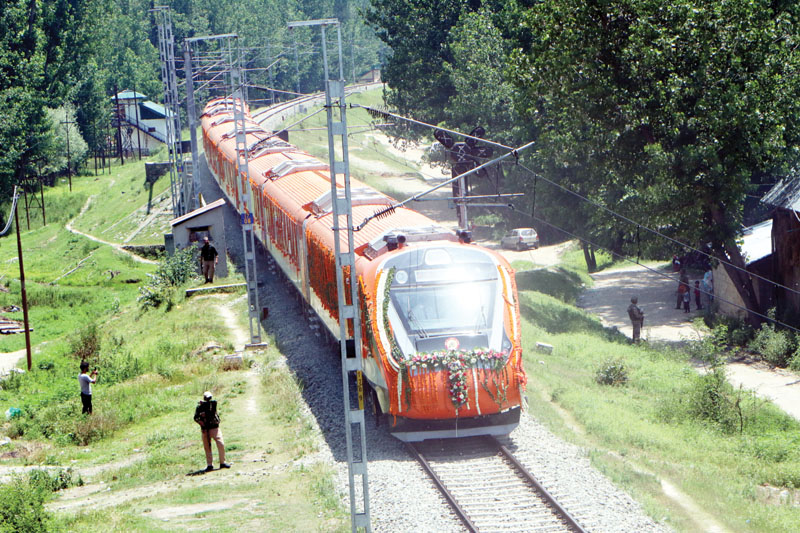
The arrival of the first Food Corporation of India food-grain freight train in Kashmir marks far more than a logistical milestone-it signals a structural shift in how the region connects with the rest of the country. For decades, Kashmir’s economy and daily life remained hostage to geography, weather, and the vulnerability of National Highway-44, the Valley’s lifeline. With rail freight now reaching Anantnag, that dependence is finally easing. Rail connectivity has fundamentally altered the economics of movement. Bulk transportation of essentials such as food grains, cement, fertilisers, and automobiles by rail is faster, cheaper, and far more reliable than road transport through landslide- and snow-prone terrain. The ability to move over 1,300 metric tonnes of food grains in a matter of hours-unaffected by rain or winter blockades-ensures supply certainty. For ordinary people, this translates into stable availability of essentials, lower transportation costs, and ultimately reduced market prices. When transport rates drop by more than half, the benefit is felt directly by consumers.
Beyond essentials, rail connectivity has opened Kashmir’s economy to national markets. The horticulture sector, particularly apples, benefits from quicker and less expensive access to mandis across India, reducing spoilage and improving farmers’ margins. For traders and entrepreneurs, predictable logistics improve ease of doing business, encourage investment, and help local enterprises scale beyond regional constraints. Employment opportunities emerge not just in transport and warehousing but across allied services, logistics hubs, and market networks. The commissioning of goods terminals like Anantnag also decentralises growth. South Kashmir, long perceived as economically fragile, has now become an active node in national supply chains. This inclusive development strengthens social stability by linking livelihoods to sustained economic activity rather than seasonal uncertainty.
Strategically, the Udhampur-Srinagar-Baramulla Rail Link stands out as a classic example of dual-use infrastructure. A robust civilian logistics backbone provides strategic depth, reducing reliance on vulnerable road corridors and strengthening national security without militarising daily life. Most importantly, rail connectivity has changed the rhythm of ordinary life in Kashmir. It has reduced isolation, brought predictability, and replaced uncertainty with confidence. What was once a long-cherished dream is now a tangible reality-steel rails stitching the Valley more firmly into India’s economic, social, and strategic fabric.
 Follow our WhatsApp channel
