

Prof. Umesh Rai, Prof. Shyam Narayan Lal
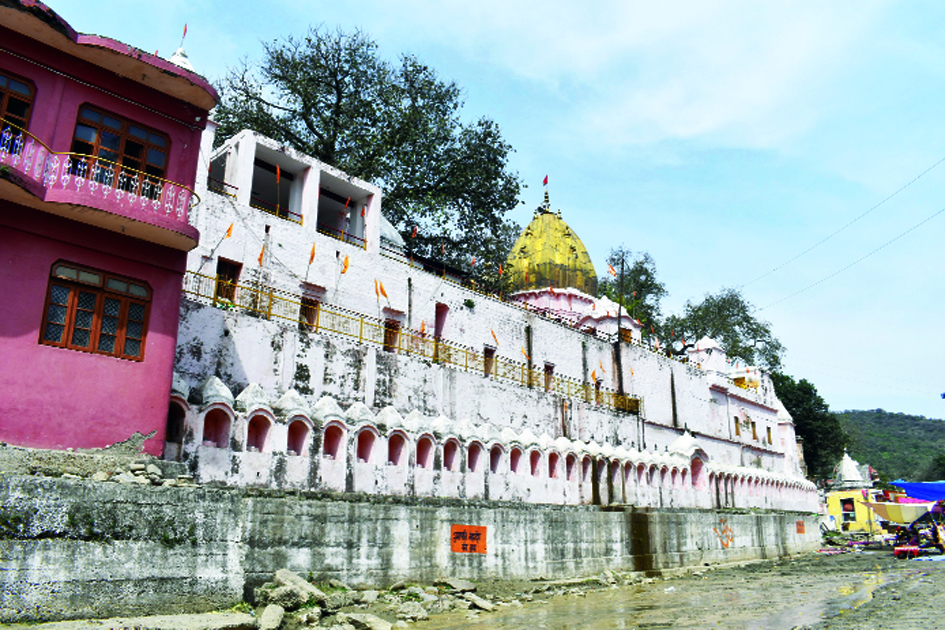
Purmandal-reverently hailed as Chhota Kashi-is far more than a settlement on the banks of the sacred river Devika. It is a living palimpsest where faith, memory, and history are etched together, creating a sacred landscape that embodies the spiritual and cultural essence of Jammu. Situated barely thirty kilometres from the city of Jammu, it occupies a singular place in the spiritual geography of the region and stands as one of its most vital heritage sites, inseparably tied to the very definition of the cultural identity of Jammu.
Its sanctity and antiquity are affirmed through a rich constellation of sources-vibrant oral traditions that keep myth and legend alive, historical narratives that situate it within the broader currents of regional geography, and inscriptional records of the Dogra period that testify to royal patronage and devotion. For centuries, Purmandal has served as a confluence of pilgrimage, centre of learning, and ritual practice, where the rhythms of devotion merge seamlessly with the pulse of history. In its temples, ghats, and living traditions, one perceives not only the continuity of faith but also the deep cultural memory of Jammu itself-making Purmandal a site where heritage and identity converge in enduring resonance.
The sacredness of the site is rooted in myths as ancient as the river itself. The Devika-celebrated in the Padma Purana as the “Gupt Ganga”-flows northward at Uttarbani, a rare and auspicious phenomenon that lends the site an aura of otherworldly grace. Along its banks, local traditions recall the divine union of Shiva and Parvati and the creation of Ganesha from sandalwood paste-narratives not only remembered but ritually enacted within the community. During Shivratri and the Chaitra Chaudash Mela, Purmandal becomes a vibrant stage where mythology comes alive.
Several legends explain Purmandal’s rise as one of the most revered tirthas of the region. One tradition recounts that Rishi Kashyapa, dismayed by the moral decline of humanity in the Kaliyuga, undertook severe penance to appease Lord Shiva. Responding to his austerities, Shiva commanded Goddess Parvati to descend as the Devika River, sanctifying Duggar Desh with her waters and granting it the power to absolve sins.
The most celebrated legend links Purmandal to Raja Veni Dutt of Kashmir-identified by historians as either Vinayaditya or Avantivarman (855-883 CE)-who is credited with building its central Shiva temple. Behind the sanctum lies the enigmatic figure of a vixen, tied to a striking oral tradition. According to this narrative, the Raja’s daughter was the reincarnation of a jackal slain near the linga by a hunter’s arrow. Tormented by an incurable headache in her human life, she was eventually healed when astrologers traced the cause to the jackal’s remains and removed the arrow. Interpreting this as divine will, Raja Veni Dutt brought his family to Purmandal, offered worship, and constructed the central shrine. Within its sanctum, a hooded stone serpent rises from a natural rock cistern, venerated as a unique manifestation of Lord Shiva, believed to be without parallel in India.
Raja Veni Dutt’s shrine formalized worship at the naturally occurring Ap Shambhu Shiv lingas, placing Purmandal firmly within pilgrimage circuits linking the Siwalik hills with the Gangetic heartland. Its openness to wider spiritual currents is further illustrated by the patronage of Maharaja Ranjit Singh. According to the Udmat-ul-Twarikh, Ranjit Singh visited Purmandal in 1838 CE, where he bathed in the Devika, offered generous alms to the poor, and ensured the upkeep of its sacred spaces. The prominence of the site as a tirtha is also affirmed by Rajdarshani, and Gulabnama , two of the earliest historical narratives on Jammu.
Purmandal rose to even greater prominence under the Dogra rulers, who maintained ancestral ties with the region. Maharaja Gulab Singh recognized Purmandal as not merely a place of worship but as a potent emblem of the cultural identity of his newly consolidated state. He launched a comprehensive project of expansion. An inscription from the site records his vision of establishing a pancakosi tirtha by integrating Purmandal with Uttarbani, evident in the proliferation of dehris and devalayas along both banks of the Devika. He constructed the Shri Gadadhar Ji and Dasavatara Temples, rebuilt the Umapati Mahadeva shrine, and reinforced the ritual ghats. His patronage extended beyond architecture: he established a satram to provide food for pilgrims and the needy. A Sanskrit inscription in Nagari script within the temple complex documents Gulab Singh’s devotion, his temple works, and his endowments of land and revenue for worship, for the sustenance of scholars, and for the maintenance of ritual practices.
Maharaja Ranbir Singh (r. 1856-1885) further enhanced Purmandal’s status as a preeminent centre of devotion and learning. During his reign, he built and renovated several shrines, including those dedicated to Bhairava, Kartikeya, Ganesha, and Lord Shiva, thereby strengthening both the architectural and ritual fabric of the site. His patronage extended to intellectual life: Purmandal flourished as a vibrant centre of Sanskrit scholarship, attracting scholars from Banaras, Prayag, and Kashmir who debated Saiva Agamas, Smrti literature, Nyaya philosophy, and temple architecture. Its temple library grew into a repository of palm-leaf manuscripts, copperplate charters, and rare sastras, making Purmandal a unique confluence of worship and scholarship.
Historical accounts further suggest that Ranbir Singh envisioned elevating Purmandal to the stature of Chhota Kashi, aspiring to parallel the prominence of Varanasi. In doing so, he not only reinforced the cultural identity of the Dogra state but also embedded Purmandal more firmly within the wider sacred geography of Hindu India. The precincts were embellished with Dogra-style carvings and adorned with murals that departed from the regional norm: unlike most Jammu paintings centred on the Ramayana or Krishna legends, those at Purmandal depicted Shiva, Parvati, Ganesha, and associated deities, giving the site a distinct iconographic identity. This was more than restoration-it was an act of cultural affirmation, signalling that political authority was inseparable from the guardianship of sacred tradition.
The Purmandal Mela, institutionalized under Dogra patronage, carried this cultural legacy into the public sphere. Pilgrims thronged the ghats, storytellers recited epics, sastrarthas (scriptural debates) tested the learning of scholars, folk theatre animated by Shaiva themes enthralled audiences, and artisans displayed their crafts while bards wove songs of devotion. For those days, Purmandal was transformed into a radiant confluence of faith, art, and intellectual exchange-an enduring sanctum not only of worship but of cultural efflorescence. For centuries, it has linked hills and plains through pilgrimage routes, embodied royal patronage that fused devotion with governance, and provided a space where saints, scholars, and communities converged. Its temples, ghats, murals, and resthouses testify to a cultural synthesis unique to Jammu.
Yet the passage of time has not been kind to Purmandal. The signs of decay are stark. Eleventh-century temples-constructed without mortar, their walls narrowing elegantly into curved tops-stand in partial ruin. The faint relief of a Ganesha peers from weathered stone, while a small Hanuman idol lies unattended. Nineteenth-century havelis and dharamshalas, once alive with pilgrims and scholars, crumble in silence as their Dogra-era murals fade under rain and dust. The sacred ghats are fractured, bathing terraces broken, pilgrimage paths overgrown. Even the river’s revered name has been diminished in official signage, reduced from “Gupt Ganga” to “Devika Nallah,” eroding not only sanctity but memory.
To lose Purmandal is not merely to lose stone and mortar; it is to erode the cultural identity of the region. Its temples, inscriptions, and pathways must be carefully documented; its structures restored with respect for historical authenticity; and its social vibrancy revived through festivals, artisan traditions, and community rituals. To save Purmandal is to reaffirm Jammu’s cultural identity and ensure that the sacred waters of the Devika continue to carry not only offerings of faith but also the enduring story of a heritage determined not to let its voice fade. For the community, it safeguards customs and memories handed down through generations; for the region, it remains a cultural anchor binding the Siwalik foothills to the Gangetic plains.
(Prof. Umesh Rai, is Vice Chancellor, University of Jammu & Prof. Shyam Narayan Lal is Senior consultant, IIM, Jammu)
 Follow our WhatsApp channel
