

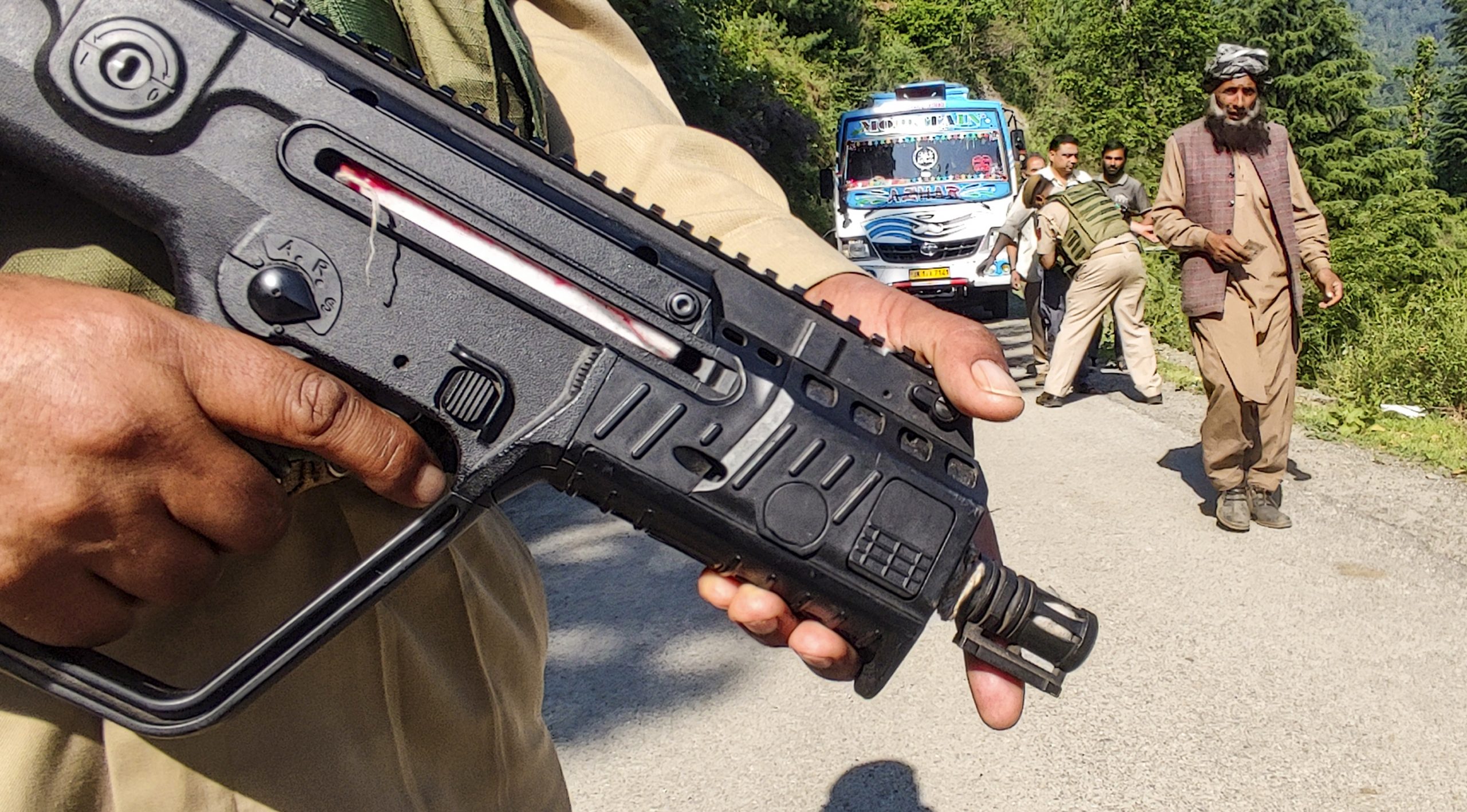
Chief of Army Staff’s statement on the sharp decline in terrorism in Jammu and Kashmir is more than a situational assessment-it is a reaffirmation of India’s evolving and assertive national security doctrine. Over the past decade, India has transformed its approach from reactive diplomacy to proactive, calibrated, and, when required, punitive action against terror networks and their sponsors across the border. The message from New Delhi is unmistakable: terrorism-whether executed by state or non-state actors, proxy groups or their sympathisers-will invite swift and proportionate repercussions. For years, India presented dossier after dossier to Pakistan, exposing the involvement of terror outfits nurtured on its soil. The response was a familiar pattern-denial, deflection, and delay, while the masterminds of major attacks roamed freely under state protection. The world repeatedly heard the rhetoric of “non-state actors,” a convenient shield Pakistan used to evade accountability. That era is over. India’s position today is clear: there is no distinction between state and non-state actors when terrorist infrastructure continues to thrive under Pakistan’s security umbrella.
This shift in doctrine has been demonstrated through decisive action. The Uri attack was followed by surgical strikes targeting terror launch pads across the LoC, signalling that India would no longer absorb blows silently. The Pulwama attack of 2019, which claimed the lives of 40 CRPF personnel, led to the Balakot air strike, destroying a Jaish-e-Mohammed training camp deep inside Pakistan. More recently, the Pahalgam terror attack triggered Operation Sindoor, a coordinated and precise response that inflicted significant damage on Pakistan’s military infrastructure, communication grid, and airfields. By all accounts, the operation stunned Pakistan’s defence establishment and showcased the operational superiority of Indian forces.
These actions mark a paradigm shift in India’s posture: terror will be met with deterrence, and deterrence will be enforced with capability. India today is not vulnerable to nuclear blackmail or coercive diplomacy. The nation’s political leadership has shown the resolve to authorise strong retaliatory operations and recalibrate long-standing agreements-including placing the Indus Water Treaty effectively in abeyance-to build strategic pressure.
On the domestic front, the gains are unequivocal. Post-abrogation of Article 370, Jammu and Kashmir has seen a dramatic decline in violence. Separatist networks have collapsed; their leaders are either incarcerated or facing courts. Stone-pelting, once a daily occurrence, has vanished. There are no shutdown calls, no street violence, no grenade attacks, and cross-border infiltration has fallen sharply. This transformation is not incidental-it is the result of meticulous intelligence-based operations, improved coordination among security agencies, and sustained political clarity at the national level.
Yet, as the Army chief cautioned, the shadow of terrorism has not fully lifted. Pakistan-based handlers are resorting to new tactics. The cycle of terrorism has evolved-from mass attacks and grenade lobbing to hybrid terrorism, involving targeted killings using pistols, attacks on tourists, and even white-collar terrorism rooted in radicalisation, financial networks, and ideological influence. The attempt is clear: to indoctrinate local youth and create micro-cells capable of sporadic violence that disrupt peace. But India’s counter-terror ecosystem has evolved equally fast. The recent seizure of explosives in multiple cities, disrupted modules in metros, and the arrest of radicalised operatives show that intelligence agencies are not merely monitoring threats-they are pre-empting them. Enhanced inter-agency coordination, strengthened laws, digital surveillance of terror financing, and grassroots policing have formed a robust firewall against Pakistan’s attempts to revive militancy by proxy.
The message to Pakistan is sharper than ever: any misadventure will carry consequences far more severe than the provocation. With Pakistan’s economy in distress, internal politics fractured, and global credibility diminished, it can ill-afford a confrontation with India. India today is shaping a new counter-terrorism narrative-one that is firm, proactive, and uncompromising. The era of waiting for international mediation or depending solely on diplomacy is over. New Delhi has shown that it will defend its sovereignty with calibrated force and make terrorism a costly proposition for its sponsors. As terrorism mutates, India’s security apparatus is already adapting, ensuring that peace in Jammu and Kashmir is sustained and that the nation remains resilient against any future threat.
 Follow our WhatsApp channel
