

Dr Kanika Gupta
“Breastfeeding: Nature’s First Vaccine and a Mother’s Gift for Life”
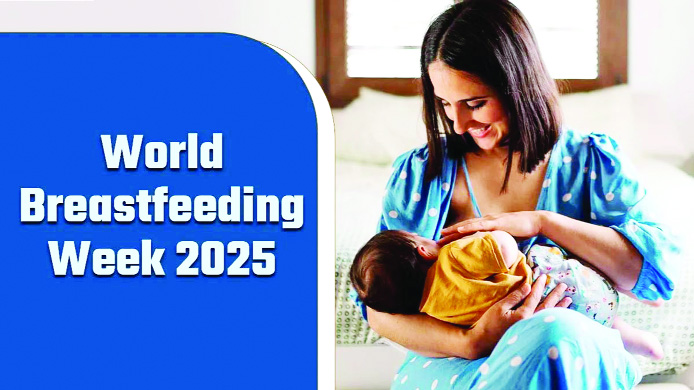
Every drop of breast milk is a miracle in itself. Rich in nutrients, antibodies, and love, breastfeeding is more than just nourishment it is a mother’s first act of protection, care, and bonding. As we observe World Breastfeeding Week (August 1-7), it’s time to celebrate, promote, and support this natural act that ensures a healthy start to life, with the theme “Prioritize Breastfeeding: Create Sustainable Support Systems” reminds us that breastfeeding is not a solitary act it is a shared responsibility that begins in the cradle but must extend into the community.Breastfeeding is the foundation of lifelong health, yet millions of mothers around the world struggle to continue this natural practice due to lack of support at home, in workplaces, and across healthcare and policy systems. The World Health Organization (WHO) and UNICEF jointly state:
“Breastfeeding is one of the most effective ways to ensure child health and survival. If every child were breastfed within the first hour of birth, given only breast milk for their first six months of life, and continued breastfeeding up to the age of two years, about 820,000 child lives would be saved every year.”
Why Breastfeeding Matters:
Immunity Booster: Breast milk is packed with antibodies that protect infants from infections and diseases.
Emotional Bond: The skin-to-skin contact promotes emotional closeness, reduces stress, and supports mental well-being for both mother and baby.
Brain Development: Studies have shown that breastfed children often score higher in cognitive tests.
Cost-effective and Sustainable: It’s natural, eco-friendly, and doesn’t burden household finances.
The Benefits Are Clear-But the Barriers Persist: Breastfeeding provides infants with the ideal nutrition and boosts their immune system. It also fosters bonding between mother and child, reduces the risk of childhood infections, and lowers the mother’s risk of breast and ovarian cancers. Despite these well-documented benefits, global breastfeeding rates remain suboptimal.
According to the Global Breastfeeding Scorecard 2022, only 44% of infants under six months are exclusively breastfed worldwide. The reasons range from lack of maternity leave and inadequate facilities at workplaces, to misinformation, social stigma, and inconsistent support from healthcare providers.
Support Begins at Homebut Must Extend Beyond: For many mothers, support from family members, particularly spouses and elder women, plays a crucial role in initiating and sustaining breastfeeding. However, this informal support is often not enough.
To create a sustainable breastfeeding ecosystem, interventions must extend to:
* Hospitals and healthcare providers who guide and encourage breastfeeding from birth.
* Workplaces that offer paid maternity leave, nursing breaks, and lactation rooms.
* Communities that destigmatize public breastfeeding and offer peer counselling.
* Governments and policymakers who enact and enforce breastfeeding-friendly laws and policies.
As UNICEF puts it:
“Breastfeeding is not just a mother’s job. It requires encouragement and support from families, communities, health care providers, employers, and governments.”
India’s Progress and the Road Ahead: India has made significant strides in recent years. Schemes like the Pradhan Mantri Matru Vandana Yojana (PMMVY) and initiatives like MAA (Mothers’ Absolute Affection) aim to promote breastfeeding through awareness and financial incentives. However, the country still faces challenges, especially in rural and underserved areas.A National Family Health Survey (NFHS-5) report shows that while 63.7% of Indian children under six months are exclusively breastfed, disparities exist across states and communities.For states like Jammu & Kashmir, where healthcare infrastructure has been improving, more needs to be done to ensure access to lactation consultants, mother support groups, and baby-friendly hospitals; especially in remote areas.
What Can We Do?
Families: Normalize and actively encourage breastfeeding at home. Involve fathers and grandparents in support.
Healthcare workers: Provide accurate information, reassure anxious mothers, and avoid promoting formula unnecessarily.
Employers: Ensure breastfeeding-friendly policies. Empower working mothers without compromising infant health.
Policy makers: Invest in maternity protection, healthcare training, and public education campaigns.
Conclusion
Breastfeeding is more than a personal choice; it’s a public health priority. By strengthening support systems from cradle to community, we can empower mothers, nourish children, and build healthier, more resilient societies. Let World Breastfeeding Week be a reminder that our responsibility does not end at birth; it begins there and let us all commit to turning intention into action because when a mother is supported, a generation thrives.
Together, let us create an ecosystem where every mother in every corner of the country including the UT of Jammu & Kashmir can breastfeed with dignity, confidence, and joy.
(The author is a Child Development Specialist)
 Follow our WhatsApp channel
